I was thumbing through the Kerrian’s Notebook file cabinet, checking for the articles written about bodies – where and how to hide them and various problems with methods used on TV and in the movies. I was a Homicide Detective for a good many years and saw my share of cases that made my jaw drop. I can’t go into detail about my own cases, but the links to real world cases within the Kerrian’s Notebook articles are authentic. Stranger than fiction? Perhaps. But then, criminals often defy logic.
Take a look at ten of the most frequently read posts about how people wind up dead, and where some criminals attempt to hide the bodies. (Click on the titles)
Travel abroad is more affordable during September and October. The airlines drop their high season prices, and package deals abound. Everybody loves a bargain and if you have a sense of adventure, travel to a foreign country might just fit into your budget at this time of year.
However, traveler beware: you might get less than you paid for and be faced with more challenges than you ever expected. Or, you might have great fun exploring new worlds.
Here are some truths about travel myths that might put that foreign trip into perspective:
Myth: everybody all over the world speaks English.
Reality: That’s not even remotely true. It is likely that more English speaking people can be found in major cities in Europe (some servers in restaurants, some taxi drivers at the airports, some bank managers, some bookstore cashiers, some grocery cashiers) but be ready to do a lot of pointing to your chosen purchase when outside the tourist areas.
Kelvingrove Art Gallery, Glasgow, Scotland
Myth: language apps will get you through the communication gaps
Reality: Your cellphone plan may not cover other countries, in which case you will pay roaming charges as soon as you turn on the phone in any foreign country. 24 hours a day of roaming charges. Call your phone company before you travel to see what plans are available. They are not one-size-fits-all. PLUS, even if you have an in-country plan, there are dead zones everywhere, just like in the States. So, when you have to translate what you need for the train station ticket guy, the app may not work. Or, the guy in front of you in line may not have the app at all. During our latest trip, we missed our train connection (true story) because a guy in front of us in line could not make himself understood. The line grew longer and longer behind us.
BUT, you sputter, the ticket guys are supposed to speak English! Nope, there might be one person per shift and you might not be in the right line. Allow LOTS of extra time, because most of the countries we have visited have excellent, exactly on-time, public transportation. The train leaves the station on time, whether you are on the train or not, even if you have paid for the ticket. No refunds.
AND, the Post Office – for mailing great finds back – might not have any English-speaking employees. There are forms to fill out, so communicating about that is important. If you’re nervous about sending items back, see if your hotel (or the business itself) will handle it for you.
Of course, you can take English-only tours, or hire a translator, and these should be booked well in advance.
Myth: There are taxis everywhere
Reality: Not when the taxi drivers are on strike. Yup. Happened to us on an earlier trip. The news showed pix of tourists walking with luggage long distances (a mile or more) to get from the airports to their hotels or to other transport. TAKE UBER? Not when Uber is barred from the airports and is the target of the taxi strikers. Be flexible in your travel arrangements.
Sidewalk, Ponta Delgado, Sao Miguel, Azores
Myth: You are gonna love the food!
Reality: Years ago, a stumbling block for our possible trip to Greece was whether or not we would like Greek food. We attended a local Greek festival, loved the food, and booked the trip the next day. The country’s food might be new to you, but go ahead, order menu items even if you don’t know what they are. No dead bodies lying on the ground around the tables means it’s probably safe to eat at that location.
I ordered codfish, salad, egg, and fried potatoes in Europe. I envisioned a piece of cod, a tossed green salad, a fried egg, and French fries. What I got was a famous local dish: mashed cod mixed in with straw potatoes and the egg. The salad was on the side. The straw potatoes are crunchy fries the size of those skinny, crunchy, chow mein noodles. The mashed cod was seasoned with a mustard flavored sauce. The straw potatoes were fried in olive oil. The plate had about two cups of the cod/potato/egg mixture piled in the middle. It was not at all what I had pictured in my mind and I questioned the waiter as to whether he had delivered somebody else’s order. We figured out with my limited Portuguese and his limited English that it was the correct dish. It was delicious. Truly. I would eat it again, but othertravelers seated near us were horrified and left 90% of the food on the plate.
Vegetarian dishes are tough to find on the menus. Gluten-free is a challenge in most places. Be creative in your dining choices and be willing to experiment.
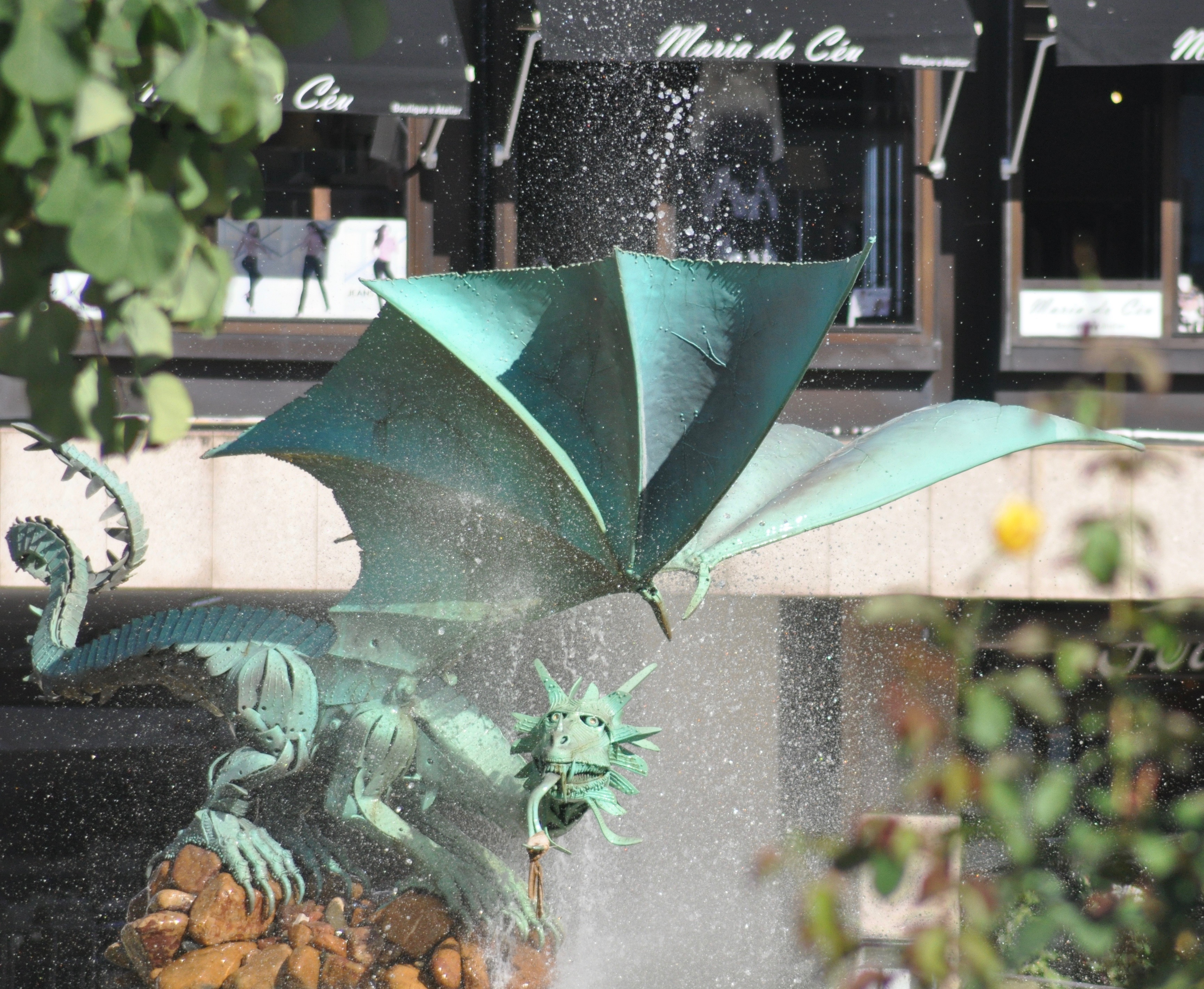
Metal Sculpture, Braga, Portugal
Myth: A resort hotel is the only way to go
Reality: If you want to travel less expensively, remember that ‘all-inclusive’ does not mean the same thing everywhere. In fact, the hotel may supply cheap liquor, badly prepared food, and no off-site excursions in the ‘all-inclusive’ price. Ask the travel agent lots of questions.
Renting an apartment or staying at a B&B are other options, especially if you have dietary restrictions and need to have some control over your food. We’ve done all three, and had wonderful in experiences in each, without tripping over any bodies anywhere. Promise.
Myth: You can travel with your prescription medication as long as you keep the meds in the original container and have a paper copy of the prescription with you.
Reality: We followed all the rules and an over-the-counter cold medicine (sold in their country) packed in the suitcase, was confiscated by the foreign country officials. No idea why.
Travel outside the country is an adventure. You learn astonishing things about the rest of the planet – culture, language, religion, incredible food, politics – and can witness some of the most majestic sights on Earth.
Notre Dame Basilica, Montreal, Canada
Book that trip! Be surprised. Be flexible. Fall in love with the world. 🙂
Charlie is outside shoveling the walk again, so I’m posting my own Resolutions for 2018. First, a word about the fruitcakes that just kept coming, no matter how many moans and grumbles Charlie shared with the Kerrian readers. Personally, I think the Post Office gals are in on the joke, since more than half the fruitcakes (we counted 53 this year) were delivered anonymously between Thanksgiving and Christmas. I mean, how many return address labels can you ‘lose?’ LOLOL
I never stick to any of my own resolutions unless they are about cooking, reading, or gardening, so here goes – a doable list for me for 2018.
1) Create some recipes that contain chocolate. Chocolate is good for you. 🙂
2) Eat more chocolate. See #1.
3) Do the 10,000-step program. The back garden needs a few changes, so 10K a day should be easy. Bad weather? I’ll do laps inside the house or ride my stationary bike to get credit.
4) Plant some vegetables in the garden this year. It would be great to have fresh tomatoes and squash for the late summer quiches we make.
5) Take a golf lesson with my new driver. Maybe two lessons. I keep topping the ball.
6) Schedule a daily time to read. Right now, it’s hit or miss and I really want to read a few of the mysteries and thrillers that the gal at www.nightstandbookreviews.com has recommended.
7) Learn to make a flaky pie crust. I read that mixing cold water and cold vodka in equal parts to add to the flour, guarantees a flaky crust. Could that be true?
8) Clean out the attic. Charlie says it’s all my stuff up there, so if he cleans out the garage, I’ll do the attic.
9) Try new brands of chocolate. See #1. The local grocery store has added an entire six-foot section to the chocolate bar area. They finally know who their customers are.
10) Work on a guacamole dip for the playoff season. I have a secret ingredient. If it’s any good, we’ll share it in Kerrian’s Kitchen.
There you have it. A list that includes both self-improvement and bucket-list goals, but all possible. Except maybe the attic, because I really don’t want to do that one. One box at a time, right?
Thank you, the Kerrian readers, for your terrific support throughout the years. You are the BEST group of followers and we can’t brag about you enough. 🙂 🙂