true crime

Books of Note – November, 2025

If there are no paragraph separations in this article, double-click on the title and they will appear.  🙂

Mardi Gras Murder,” by Ellen Byron, is an Agatha Award winner. The family of Magnolia Marie (Maggie) Crozat, an artist/B&B owner, has lived in Louisiana for generations. In the weeks before Mardi Gras, a torrential rain hits the Parish, submerging houses as the water rises. Wreckage is left behind, but so is the body of a stranger, found at the back of the Crozat property. But Mardi Gras will go on in the tight-knit community, despite the damage and the dead body.

In this entertaining Cajun mystery, gumbo pots are sacred and locked in safes along with secret recipes. Happily, because of the internal Crozat family competition for the top gumbo prize, there are several cooking scenes. I could smell the fabulous seafood gumbo while it simmered on the stove, and learned there are as many kinds of gumbo as there are cooks to debate their choices. Byron cleverly included that banter in the book.

“Mardi Gras Murder” engages and informs us with local history and dialect while supplying us with more than one mystery to solve, more than one body, and more than one plausible suspect, along with yummy sounding recipes.


“The Fixer”
by Joseph Finder

Former legitimate journalist, Rick Hoffman, is down on his luck, his girlfriend has thrown him out, and he has to sleep on a couch in his dad’s old home. In the process of chasing squirrels in the house that has been neglected for years, Hoffman discovers a secret in the attic – a $3 million stash.

Finder has a genius for making his heroes real and as un-Bond-like as possible, yet with enough smarts as necessary to get them out of trouble, and trouble abounds in this barn-burner of a book.

Hoffman looks into what his father was doing before his severe stroke twenty years earlier. Word gets out and bad guys trip over each other in “The Fixer” to keep Hoffman quiet, including car trunks, plastic ties, tracking devices, and assorted other scare tactics. With lots of action and jaw-dropping twists, there are moments when you wonder if our hero, Rick Hoffman, will live through it all.

The reason behind the $3 million stash is absorbing and serious at its core. Finder made me wonder if the plot was based on a real-life incident, but only he and some of the citizens of Boston know the truth for sure. “The Fixer” is one of the best thrillers I’ve read.


Death by Chocolate Cherry Cheesecake” by Sarah Graves

Sarah Graves, author of the popular Home Repair Is Homicide series, has a spinoff series that begins with “Death by Chocolate Cherry Cheesecake,” featuring Jacobia Tiptree and Ellie White from Eastport, Maine. They now own a chocolate shop, The Chocolate Moose.

When Jacobia arrives at The Chocolate Moose one morning, the place is dark and she trips over a very dead health inspector, his head leaning into a pot of chocolate. A health inspector she and Ellie have been battling with.

Can a chocolate shop recover from a dead guy falling into its signature chocolate? “Death by Chocolate Cherry Cheesecake” features a great mystery with clever misdirection, warm friendships, touching scenes with her father that brought tears to my eyes, a missing son with a surprise of his own, a hurricane, and a Maine setting that is a character in itself.


Unholy Covenant” by Lynn Chandler Willis

“Unholy Covenant” is a fascinating fictional account of Patricia Kimble’s real-life murder in small town North Carolina. Willis, former newspaper owner/reporter, followed the Kimble case during the investigations and the trial, and had access to all the major players. I was thoroughly engaged as she described what led to the murder of this inconvenient wife.

Willis gives us a chilling look at the ways Kimble ruled his corner of the world by fear, lies, intimidation, and a bit of charm, taking advantage of the weaknesses he saw in the people around him.

Follow along as accusations, confessions, arson, burglary, and hit lists are revealed in “Unholy Covenant,” an amazing look behind the scenes of a case that still intrigues the public decades later.


Books of Note – November, 2025 Read More »

KN, p. 322 “Training for a Career in Forensics”

If there are no paragraph separations in this article, please double-click on the title to create a more readable version.The CSI shows on TV have generated a tremendous amount of interest in the field of forensics, whether the technicians are in the lab or out in the field at crime scenes. Crime shows (and movies) have changed the way the public looks at law enforcement – not only in how quickly crimes are solved, but how cases are brought to court. As technology has improved, and more efficient ways of assessing evidence have been developed, more careers in the forensic sciences are available than ever before.

It used to be that cops on the beat, or detectives looking into a potential crime, picked up techniques along the way that pointed them to possible suspects. They learned where evidence (like fingerprints or footprints) might be found by using their experience on the job and continued training after attending the police academy. Not necessarily scientific, but hard work and diligence usually paid off.

These days, crimes can involve the dark web, human trafficking, and international cartels, in addition to the forgeries, kidnappings, and drug busts (etc). Heists are more sophisticated, crime lords sink to greater depths of evil, and crimes against humanity are more widespread and complex. We still need the cops on the beat to help keep our neighborhoods safe, but we also need forensic scientists to help unravel the latest iteration of criminal activity.

Let’s take a look at what kind of training is needed for seven of the various fields. You may know someone who’d like to serve in law enforcement, but who doesn’t want to shoot or chase anyone down an alley in order to catch the bad guys/gals. The following specialties are areas in which they can assist without the need of a bulletproof vest.

Computer Forensics: Identity theft via the internet is on the rise, as is corporate hacking, and cyberterrorism. Highly skilled computer analysts are sought after in almost every area of today’s  cyber world. Think ‘Bobby’ in TV’s “Tracker.” Most two and four-year computer forensics programs deliver instruction in investigative techniques, white-collar crime, as well as the laws that oversee the work of searching & seizing digital information, since computer forensic specialists can recover information to be used later in criminal trials.

Cybersecurity: Cybersecurity concentrates on protecting information. Cybersecurity specialists track data thieves, thwart e-terrorists, and guard sensitive electronic information. They generally need at least a bachelor’s degree for entry level jobs, but lots of experience counts.

DNA Analysis: Several colleges and universities have programs to train wannabe DNA analysts, who most often need a bachelor’s degree to start. In order to advance in a career or to work in  a more demanding work environment (think the FBI), a master’s or doctoral program might be necessary. What’s interesting to note is that a career in DNA analysis might be reached through a degree in organic chemistry, quantitative analysis, and/or biochemistry, each part of the DNA investigative process.

Forensic Accounting: This career deals with a great deal more than looking into sloppy bookkeeping. Forensic accountants examine flaws in the records of suspected criminals to find financial crimes such as money laundering, insurance fraud, and embezzlement. The Association of Certified Fraud Examiners (ACFE, a certifying agency) reveals that a job at the FBI requires the minimum of a four-year degree, but another year (Master’s level training), is sought after by employers. This field pays very well.

Forensic Anthropologists: People in this career path diagnose posthumous death by analyzing  skin tissue, bones, as well as the area where the body was found. The skills needed have helped families find closure in cold cases, and are essential in identifying large numbers of persons who have perished in natural disasters, multiple vehicle crashes, and/or in war zones. Training takes years, however, with the minimum requirement of a Master’s Degree (about 6 years of higher education). Anyone with a wish to get ahead in this field would need a Doctorate as well as Certification in the specialty of choice.

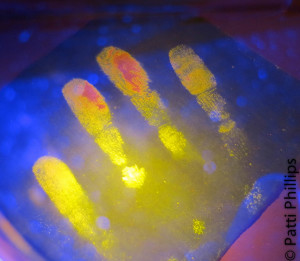
Forensic photographers document a crime scene visually, and the job includes taking images of tire tracks, fingerprints, intentional wounds, and blood spatter patterns. Training as a professional crime scene photographer focuses on understanding crime scene investigation and learning about the types of photos needed to document clues and details. The details in the photos can be essential for solving the crimes and helping to prosecute at trial. Since some photos must be taken at night, without bright lights available to backlight the scene, the photographer must be able to take low light (or no light) shots.

In many jurisdictions, the crime scene isn’t cleared until the photographer and videographer have finished recording all of the evidence. This means that if murder is suspected, a dead body is part of the photography assignment. Training would cover what to do (or not) so that evidence isn’t damaged or destroyed, as well as how to collect, store, and authenticate the crime scene photos. (No photos can be deleted from the memory card, even if blurry.) Training doesn’t always cover the fact that dead bodies smell, a crime scene involving said body is horrific, and that everyone must have a strong stomach to deal with all of the blood and sometimes gore.

Smaller jurisdictions don’t often have enough crimes that need photographic evidence (i.e. a fulltime photographer on staff), so this job may be handed to someone a cop or firefighter knows who can take detailed shots. Not the local wedding photographer, but someone who has the stomach for the gritty stuff. A strong academic background in criminal justice and crime scene investigation techniques might be the best way to move to a career in forensic photography.

Forensic toxicologists use scientific knowledge to decide if accidental or intentional poisoning was a cause of death and to determine fault. A degree in biology or chemistry is generally required at entry level. But some universities offer one-year certificate programs and associate’s and master’s degree programs in forensic toxicology to add to the undergraduate degree. Forensic toxicologists might never see an actual crime scene.


*Some degree requirement information is from forensics colleges.


KN, p. 322 “Training for a Career in Forensics” Read More »

KN, p. 308 “Tax Fraud”

If this post has no paragraph separations, please double-click on the title to create a more readable version.

In 1789, Benjamin Franklin said, “Nothing is certain except death and taxes.”

236 years later? It’s still true.

April 15th is tax day in the USA. By midnight that day, the bill must have been paid, either via mail date-stamped by the Post Office, or online. After that, if you owe money and don’t send it in, penalties began to add up.

Government at every level imposes taxes in order to pay its bills. Roads, schools, civil defense, water control, government employees, and more…all get a piece of the revenue pie.

So what happens if you don’t file taxes? It is a crime not to pay and a definite no-no not to file. Since this is about money and the government needs more of it to run the programs, there are fines if you forget (or don’t want to pay), even jail time in certain cases.

Penalties

  • Not filing taxes: 5% of the tax owed for each month the return is past due.
  • More than 60 days late filing: A minimum fine of $435. Maximum fine is 25% of the total owed. (Plus the amount you owe)
  • Not paying at all: 0.5% of the unpaid taxes for each month the outstanding taxes aren’t paid, plus interest. Ouch.

The government can choose to play nice with people “who have never done this before” and there are extensions available. BUT, not everyone gets a pass and only in rare instances.

Your house burns down? Better call the tax people and get an extension in writing. Those taxes are still due and penalties still accrue, but there might be a bargain to be struck if the agent is having a good day. You might be able to negotiate a six-month extension, but you still owe the money.


True story: a former colleague hired a tax firm to do her taxes – fill out forms and assess the amount owed. The firm underestimated the debt and overestimated the deductions. The IRS conducts random audits and contacted her one year – after she had left the paperwork to the firm for about five years in a row. Short version: the firm had done a lousy job. She wound up paying back taxes and fines of over $20,000. Yup. Four zeros. She appealed. She was allowed to pay it back over time, but she still owed all the back money. The firm did little to help her, citing that they based their figures on the information she gave them. Hmmm.


How long can you avoid filing taxes?
The powers-that-be have “six years to charge you with criminal tax evasion.” It can take as long as it likes to collect the money owed. Don’t forget, there’s interest charged on top of the penalties and money owed. Jail time is possible if they get you for criminal tax evasion. It’s a felony, folks. PLUS, you’ll probably get audited for years afterward.


What’s the difference between evasion and avoidance?

  • Tax evasion is fraud and means that you have used illegal ways to conceal income, with fines, penalties, and possible jail time (maybe five years) if found guilty. You lied on the forms. They can even charge you for the cost of prosecution.
  • Tax avoidance uses legal ways to reduce income with tax credits and allowable deductions.

WAIT!  What counts as under-reporting?
Not reporting cash ‘under the table’ for legal or illegal activities. Whether child-care or gun-running, income is income, according to the IRS.

Cryptocurrency transactions are taxable, so if you thought there were no rules, think again.

Whistleblowers:
There is a special IRS office that pays for information leading to the arrest (and conviction) of major tax fraud perpetrators. Big bucks are at stake if money is hidden in illegal overseas accounts. If it involves a criminal organization, witness protection might be part of what happens next.


My advice? Pay what you owe. There are legitimate tax planners out there who can possibly help reduce your tax bill, but to evade altogether? Seriously bad idea if you’re allergic to jail and big fines.

*information source: the IRS.


KN, p. 308 “Tax Fraud” Read More »

Scroll to Top