For Writers

KN, p. 261 “Forensics – What’s It All About?”

If there are no paragraph separations in this article, please double-click on the title to create a more readable version.
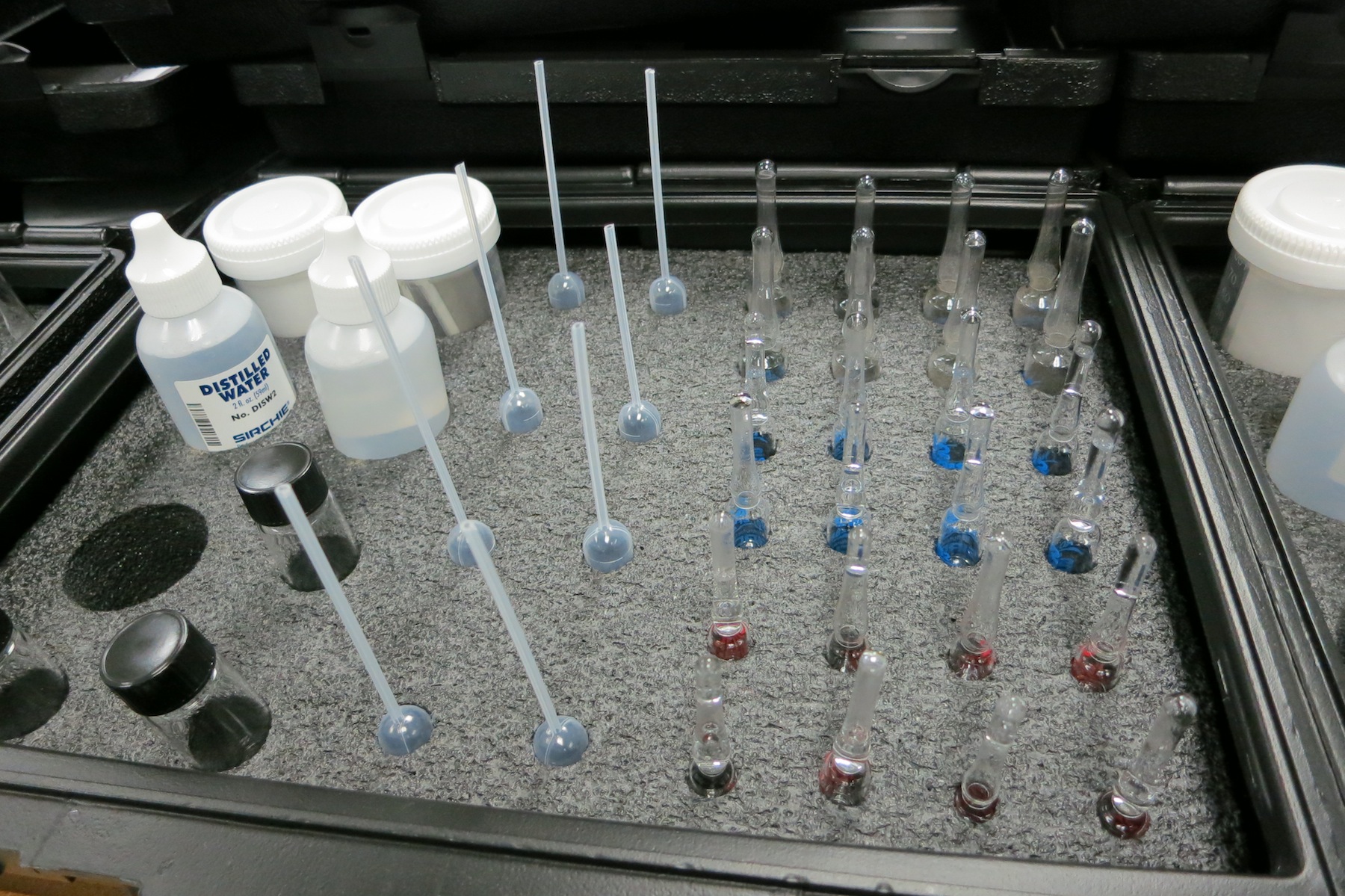
CSI Field Kit

Forensic: relating to or dealing with the application of scientific knowledge to legal problems (Merriam-Webster dictionary definition)

Back when I began in the Police Department (longer ago than I care to admit) the word ‘forensic’ was rarely used by police officers on the street. We knew to be careful if we were first to arrive at crime scene so that potential evidence wouldn’t be compromised, and the detectives pointed us to what needed to be preserved or uncovered so that a case could be proved. We dealt with physical collection, not analysis.

Analysis of the evidence is in the purview of the forensic scientists, the detectives, and the D.A.’s office.

Forensic Science is the broad term encompassing a wide range of forensic specialties and these days, is often shortened to ‘forensics,’ as in: ‘Let’s take a look at the forensics on the case.’ But what area of forensic science is required to solve a case? It depends. The prosecutor doesn’t need the findings from a dental x-ray when dealing with a known victim, but might need the results of a forensic toxicologist’s tests to determine a seemingly suspicious cause of death.

Most evidence is collected from the scene of the crime by trained local law enforcement personnel (that includes the photographer and the fingerprint person) in smaller jurisdictions, specifically assigned crime scene investigators (CSIs) in larger municipalities, and if needed, the forensic scientists themselves.

Underwater Recovery Bag

For the most part, the processing of body evidence is completed in labs or during autopsies in hospital, police, or State morgues. Other than body tissue or bodily fluids, things that shouldn’t be there (bullets, metal fragments, gravel, etc.) are sent out for testing. Experts might be tapped for their opinions about certain marks on the body that would have caused a blunt force trauma or other types of violent death, or for the condition of recovered remains.

Non-body evidence would be gathered from the scene and sent for processing to a lab that specializes in that area of analysis. Most States in the USA have centralized labs for various umbrellas of expertise, since smaller towns just don’t have the financial wherewithal (equipment and personnel) to handle finite investigations. In these days of post CSI TV shows, prosecutors and defense attorneys alike need to nail down the suspect’s guilt with absolute certainty for the public, so they rely on forensic test results and/or experts in the field to convince the jury of a suspect’s guilt or innocence.

So, who does what and how do they help the prosecution or defense teams? Listed below are some of the many forensic specialties.

Bloodstain Pattern Specialist determines the point of origin of an impact pattern as well as the movement of people after being hit or shot.
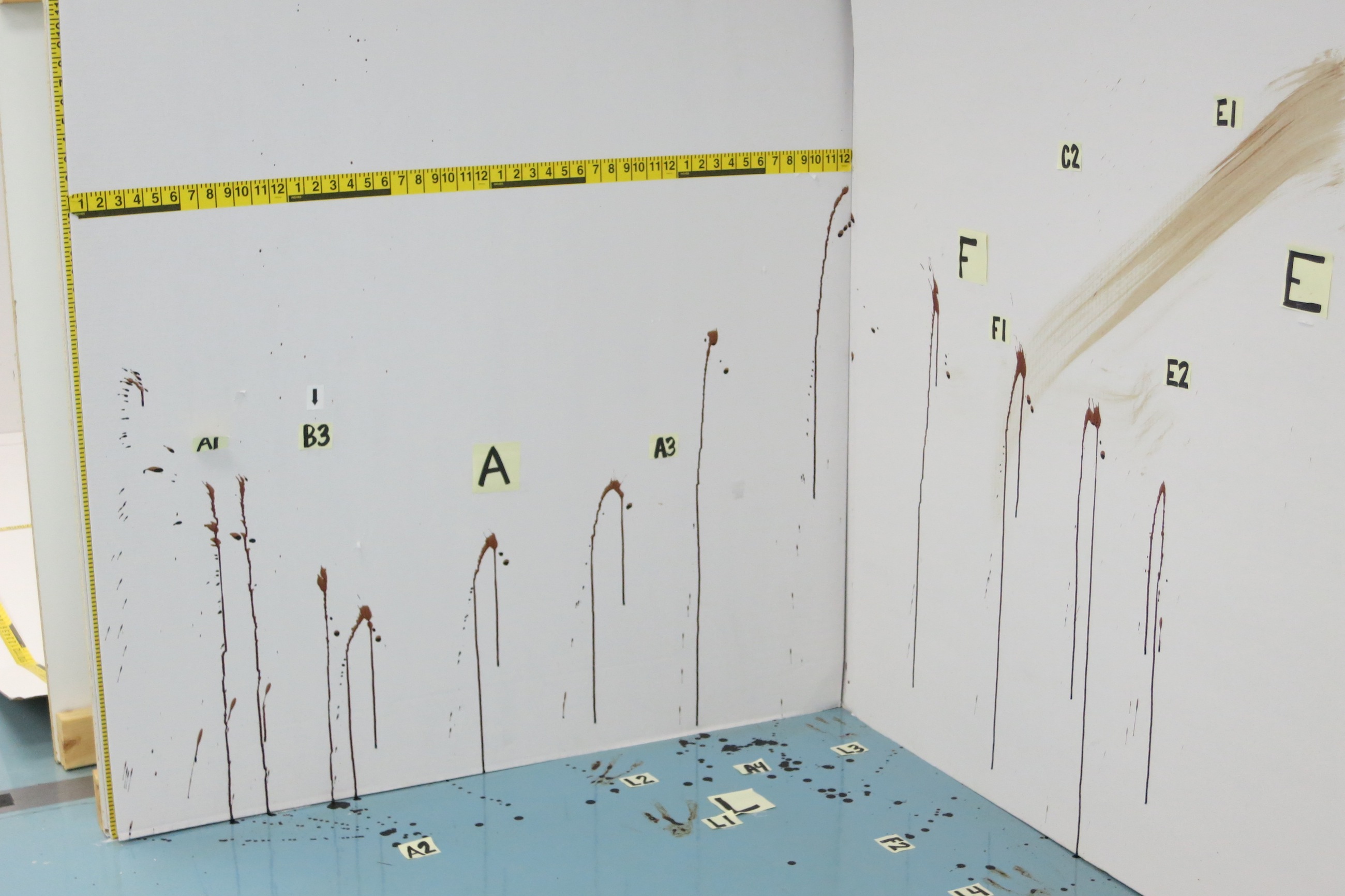
Drip Patterns

Digital Forensic Analyst recovers or investigates data from electronic or digital media, including audio and video recordings, and computers. These days, the skill set may also include the ability to investigate cellphones and other mobile devices for the call history, deleted messages, and corrupted SIM cards.

Forensic Accountant finds accounting discrepancies and interprets them for fraud or tax evasion cases as well as other criminal activities.

Forensic Anthropologist helps identify skeletonized human remains.

Forensic Ballistics expert investigates the use of firearms and ammo from a crime scene.

Forensic Botanist can determine where a body or suspect may have been because of the plant life found in or around the body or suspect.

Forensic Chemist detects and identifies illegal drugs seized during a drug bust, or found in a body.

Forensic DNA analyst does paternity/maternity testing or places a suspect at a crime scene.

Forensic Document Examiner interprets document evidence to determine authenticity of wills or potential forgeries.

 

Ninhydrin-Noveck sprayed on outer envelope

Forensic Entomologist exams insects in, on, and around human remains to help establish the time and place of death.

Forensic Facial Reconstructionist works with the skulls of recovered remains to identify them.

Forensic Geologist analyzes trace evidence establishing where a body was killed or whether it was moved to a different location.

Forensic Limnologist analyzes evidence collected in or around fresh water sources. Examination of biological organisms can connect suspects with victims.

Forensic Odonatologist compares dental records with teeth of the corpse when facial recognition isn’t likely or possible.

Forensic Pathologist applies principles of medicine and pathology to determine a cause of death or injury for legal purposes.

Forensic Photographer creates an accurate photographic record of a crime scene to aid investigations and court proceedings.

Forensic Serologist tests body fluids for rape cases or to determine if blood on the body belongs to that person or someone else.
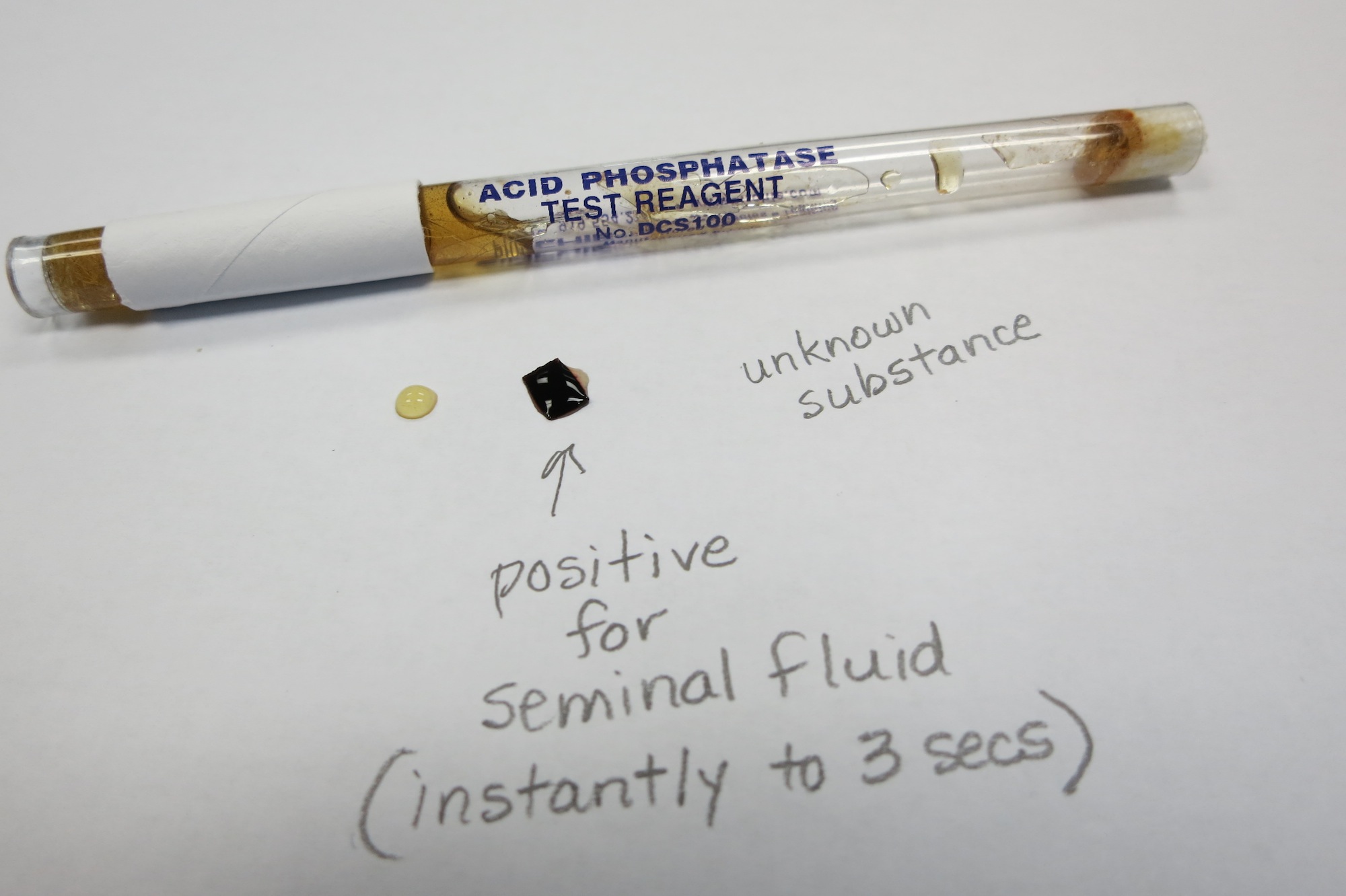
 

Forensic Toxicologist analyzes the effect of drugs and poisons on the human body.

Trace Evidence Analyst analyzes trace evidence including glass, paint, fibers, hair, etc. that occurs when different objects contact one another.

Shoe companies, gun manufacturers, tire companies, etc. all keep records of their products made and distributed over time. In the age of computers, some enterprising criminalists created a variety of national databases with information on multiple companies and their products. The goal? To make it easier to match up shoe prints, or skid marks, or bullets to a particular person or crime scene. With a little luck, and research/chemical testing, even filed down serial numbers can be revealed, and a firearm can be traced back to its manufacturer, point of sale, and the owner. Tire impressions at a crime scene can be matched to a database to discover the make and model of a vehicle that may have been there. Distinctive shoe prints in the mud outside a house can be matched to a suspected burglar, or rule him/her out.

Who makes sense of all of the information observed and gathered at a crime scene? Generally, it’s a team effort, not the achievement of just one person that heroically solves the mystery of the who, what, when, where, and why of a crime scene. But the Forensic Scientists (or Criminalists) play a big role in identifying the pertinent pieces of the puzzle. They can answer questions about what they discovered while comparing body evidence, trace evidence, fingerprints, footwear impressions, drugs, ballistics, paper trails, etc., and the detectives or investigators most familiar with the case pull it all together.
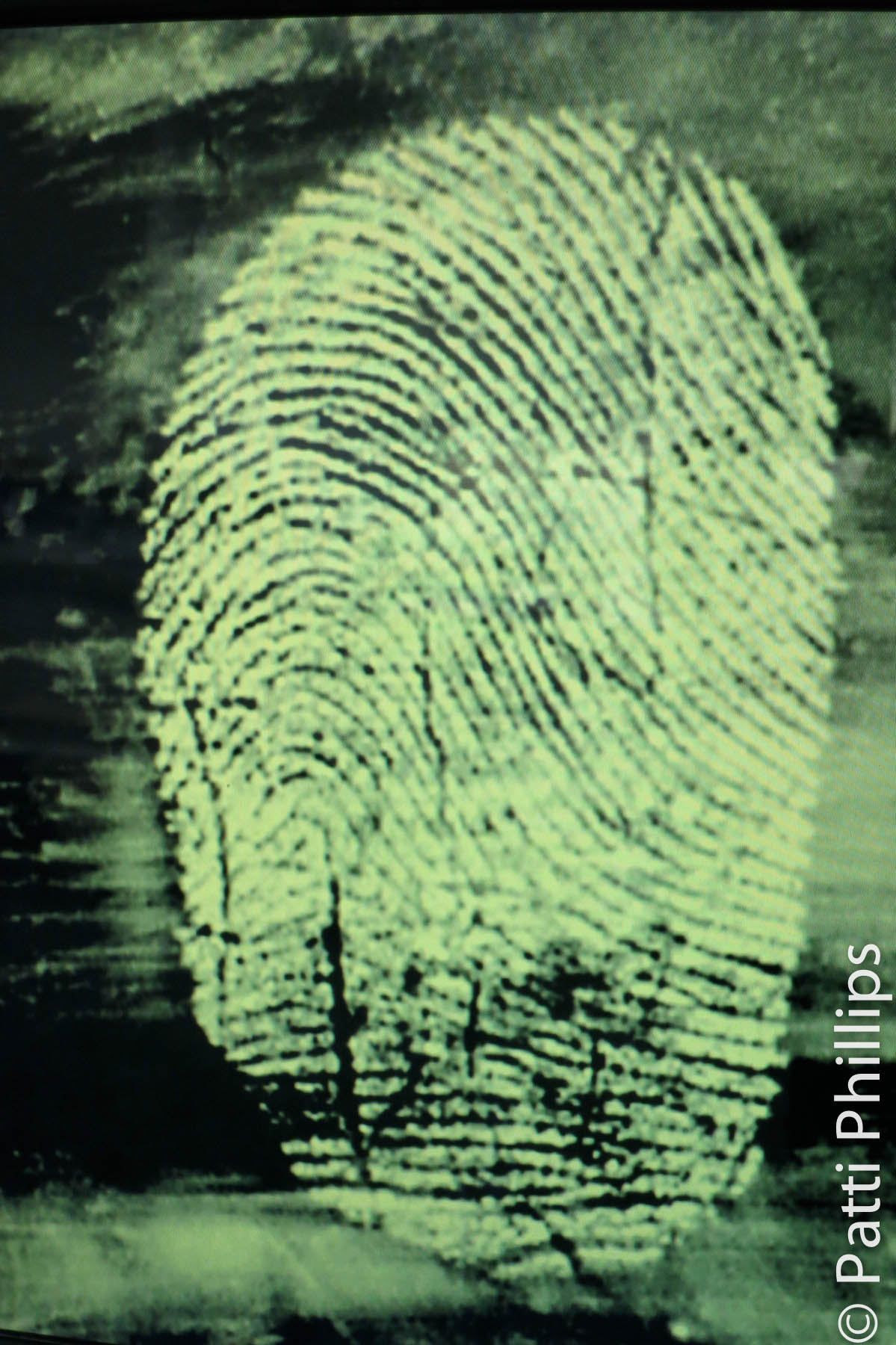
Wet Lift Print as seen on a Comparator

Somebody asked me recently if just anyone can tack ‘Forensic’ in front of their job title. Not likely. For instance, a Forensic Accountant is much more than a savvy bookkeeper. They have advanced degrees and certifications specifically geared toward discovering whether a crime has occurred in complex situations, evaluating whether there might have been criminal intent, and then communicating that information in a way that a layperson can understand it. From Investopedia.com: “The reason we understand the nature of Bernie Madoff’s Ponzi scheme today is because forensic accountants dissected the scheme and made it understandable for the court case.”


This level of expertise is required in every area of forensic analysis.

Related articles:

Can’t Get Rid of the Blood?” 

Crime Scene at the Beach”    

“Who Murdered Jake?” in Kerrian’s Notebook, Vol. 2: Fun, Facts, and a Few Dead Bodies


*Photos by Patti Phillips


KN, p. 261 “Forensics – What’s It All About?” Read More »
KN, p. 220 “FBI Academy Training at Quantico”


Picture an FBI agent in your mind. Most of you will envision neatly dressed men or women, garbed in conservative dark suits, plain blouses, and shirts and ties. An alternate view might be that of the navy blue windbreaker with the foot high, yellow FBI lettering emblazoned on the back. Haircuts are conservative for both men and women. If not exactly a uniform, very close. So, if you like to wear purple shirts to work and dye your hair turquoise, the job of a Special Agent is not the perfect fit for you.

What Does the FBI Do?” dealt with a bit of history – how/why the FBI came into being and what it is responsible for now.

The Road to Quantico” dealt with entrance requirements for the FBI Academy at Quantico.

You’ve passed the preliminary tests, set your sights on a life in law enforcement serving in one of the most famous agencies in the world. You’ve competed against hundreds of thousands of other applicants, and feel more than ready to take on the Academy challenges. What’s next?

You will report to Quantico for 21 weeks of intensive training and will live in dormitory style accommodations during your stay. The Academy site is much like a college campus, in that it has classrooms, conference rooms, a library, a gym, a pool, and a dining hall. What sets it apart in structure is that it also has a firing range, a mock town, and a high-speed 1.1-mile oval road track.

Much of the Basic Field Training Course will take place in a classroom, while candidates study a curriculum that reflects the experiences most likely to be encountered in the field. Special Agent trainees and Intelligence Analyst trainees will work together to develop the skills to collect, share, and use the information available to investigate terrorists and dangerous criminals. If the trainees fall short of the FBI standards, they will be sent home.

Basic Field Training Course includes:

  • Academics
  • Case exercises
  • Firearms training
  • Operational skills
  • Physical Fitness

Academics 
Among other areas, the trainees study applications of the law, ethics, human behavior, report writing, intelligence techniques, and forensic science. Students learn how to manage and run a variety of investigations, including those dealing with counterterrorism, spies, weapons of mass destruction, and cyber crimes.

Case Exercises 
At Quantico, case exercises are a method of presenting real-life situations to prepare the candidates for their future of working in the field. A typical exercise starts with a tip and ends in the arrests of the suspects. Hogan’s Alley is a mock town at the Academy where some of this action may take place. In some scenarios, candidates might get to try the case in a mock trial.

Firearms Training
It is assumed that at some point in their service, FBI Special Agents will have a deadly force encounter, so they must prepare for it. As of this writing (2018) the new agent trainees work with a Bureau-issued pistol, carbine, and shotgun. They focus on marksmanship, but also receive instruction on firearms safety and live fire situations.

Operational Skills 
Acquiring information in the classroom is only part of the training at Quantico. The ability to apply that information to real-life circumstances is essential to the success of any operation. The candidates work on the basics of disarming and handcuffing suspects, searches, surveillance, and tactical driving.

At Hogan’s Alley, trainees practice different arrest options, as well as street survival techniques. Realistic drills might include how to handle a bank robbery or a kidnapping.


Physical Training 
Aside from acquiring the basic knowledge needed to do the job successfully, the agents must be in top shape. To that end, even after passing the entrance level of fitness tests, fitness training continues and so does the testing. Nobody is likely gain any extra weight during the 21 weeks at the Academy, but they may acquire a few more muscles. They must continue to do well in the number of sit-ups in one minute, a timed 300-meter sprint, a significant number of push-ups (untimed), and a timed 1.5-mile run. See the “The Road to Quantico” for more fitness details.

Intelligence Analysts
The rise of terrorism and the shrinking global community has forced law enforcement agencies all over the world to evolve. The FBI Academy now offers more focused training for intelligence analysts, recognizing that more informed collection and analysis of certain data can help to eliminate threats against our country. Teaching tradecraft is an aspect of the training. These days, it’s standard practice for the Intelligence Analysts and the Special Agent candidates to work side-by-side in the classes, developing a collegial approach to solving cases.

Car Chases
TV and the movies show us enough car chases to imply that this is a part of the daily life of any and all law enforcement officers. While not exactly true that it happens to everyone and/or on a daily basis, the men and women that attend the Academy must know how to handle those rare occasions when it does.

For an FBI agent, real life might include high speeds and guns and terrorist activity. At the Tactical and Emergency Vehicle Operations Center (TEVOC), candidates, the DEA, and other government and military personnel are taught how to maneuver at high speed, how to spot threats with a second’s notice, and how to react effectively. Onsite is the oval road track and off road training is given as well.

Specialized Training
Many types of FBI and government personnel are sent to high-risk postings overseas and they might receive more specific training at TEVOC. Awareness of the risks and the sophistication of enemies here and abroad has caused an uptick in the need for curriculum that blends survival training and driving techniques in meaningful ways for many law enforcement groups.

Long after graduation, the Special Agents and the Intelligence Analysts will return to the Academy for fine-tuning and for courses that will keep them updated on the latest techniques and threats. Academy training is considered among the best in the world, so international groups and people in private security work have been trained here as well. In addition, other United States law enforcement groups have participated in training at Quantico as threat levels from all sides have ramped up.

*All photos from the FBI website.


KN, p. 220 “FBI Academy Training at Quantico” Read More »

KN, p. 259 “Poison Gardens, Here and Abroad”

If there are no paragraph separations in this article, please double-click on the title to create a more readable version.

Pokeweed

Our Carolina cousins have an enthusiastic love of gardening, so hauling dirt and digging holes for their plants is part of our semi-annual visits. As an extra bonus, Sheila enjoys learning about the Southern flower and tree varieties that our chilly Northern weather prevents us from growing.

This last visit was busier than usual after I noticed quite a few poisonous plants that cuz had added to the garden areas. I mentioned my discoveries about foxglove and a few other attractive specimens and we came up with a landscaping design that would feature their own choices in a special section, nestled up against the deadly oleander. We got busy and transplanted the varieties, gloved up and wearing long sleeves and pants while doing the work.

Here’s a list of the ones we placed in the poison grouping, along with the effects of the plants on humans when not handled properly. There is a mixture of sun and shade during the day in this area, so many of these plants are shade loving or at least shade tolerant under all the pines and in the intense summer heat.

Azalea – all parts of the bush are toxic and can cause progressive paralysis

Bleeding Heart – leaves and roots toxic in large quantities

Chrysanthemums – leaves and flowers can cause blisters, diarrhea, nausea, lack of coordination

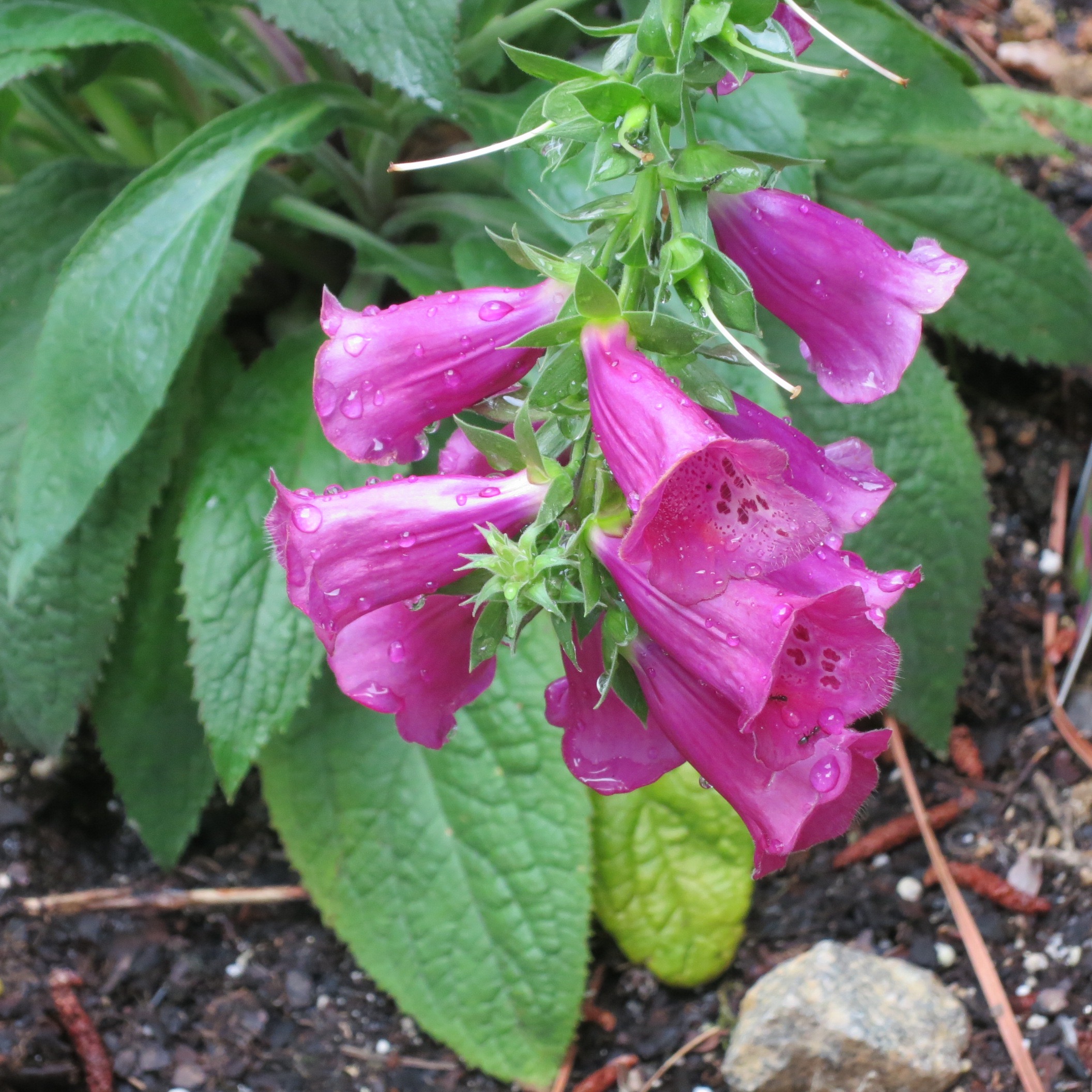
Foxglove – all parts toxic, but berries especially poisonous and can kill

Geraniums – handling the plants can cause irritation

Holly trees – eating the berries can cause death in children

Hydrangea – leaves and flowers can cause convulsions and coma if ingested

Iris – underground stems cause severe digestive upset

Lantana – unripened berries can cause difficulty breathing or death if ingested

Lily of the Valley – can cause death in children if any part is eaten

Oleander – all parts are toxic and can kill

Peonies – eating flowers and seeds can cause tremors, severe diarrhea, and vomiting

Pokeweed – all parts of the plant are toxic, and it gets deadlier as it gets bigger and older


Hydrangea

Why have all these poisonous plants? With the variety of colors, leaf textures, and overlapping blooming schedules, that area of the yard is a constant source of enjoyment for people and the bees. The cousins don’t have pets or young children, so there are no safety concerns, other than always wearing gloves (and sometimes long sleeves) when caring for the garden.

Some toxicity information is from www.thespruce.com

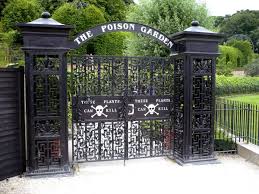
One of the most famous poison gardens in the world can be found in the Alnwick Castle Gardens in Northumberland, England. In the late 1990s, the Duchess was tasked with improving the neglected landscaping. Rather than repeating the layout found in other famous gardens, she created a poison garden, where every one of the 100 toxic plants has the ability to kill you. The reason for her decision? She thought it would be much more interesting on the tours to chat about what was deadly, rather than what was merely pretty.

Finished in 2005, many are considered cottage garden plants, since they are found in ordinary gardens around the country. Most people just are not aware of how deadly the plants can be, but the workers wear gloves and sometimes full Tyvek suits while working with the specimens. Below is a partial list of the lethal flowers and shrubs in the Alnwick Poison Garden.


Alnwick Poison Garden
  • Aconitum
  • Brugmansia (a type of trumpet vine)
  • Castor Bean plant
  • Foxglove
  • Belladonna – deadly nightshade
  • Hellebores
  • Hemlock
  • Laburnum
  • Laurel hedge (leaves in a jar kill insects dropped in, but leave them otherwise undamaged)
  • Lily of the Valley
  • Oleander
  • Poppies
  • Pokeweed
  • Rhododendron
  • Vinca major
Foxglove

One representative is a plant that both helps and kills. Castor Oil is made from the plant (Castor Bean Plant) Ricinus communis, but a single seed from the same plant will kill an adult in the most horrible way. Ricin causes nausea, severe vomiting, convulsions and subsequent disintegration of the kidneys, liver and spleen.

The Blarney Castle Poison Garden, in County Cork, Ireland, has been nestled against the battlements since the 1400s. Laid out beautifully, it is updated periodically and the head gardener is planning an expansion with a display of carnivorous plants. Open to the public, there are warnings everywhere not to touch the plants.

The Medici Poison Garden, in Padua, Italy, is part of the oldest botanical garden in a university setting in the world. It dates from 1545 and was established because the Medici family developed poisons from plants so that they could dispatch their enemies. These days, the site has a more medicinal/research theme.

Poison or medicine? Sometimes, the difference is in the dosage.

But, no matter what, be careful in your garden. There are many more plants that could be dangerous to your health. Ask questions at the garden center if you have pets or small children at your house, but still want to have a great garden.


*Flower photos taken in North Carolina by Patti Phillips

*Poison Garden entrance – the Alnwick garden website


KN, p. 259 “Poison Gardens, Here and Abroad” Read More »

Scroll to Top