For Writers

KN, p. 219 “The Road to Quantico”
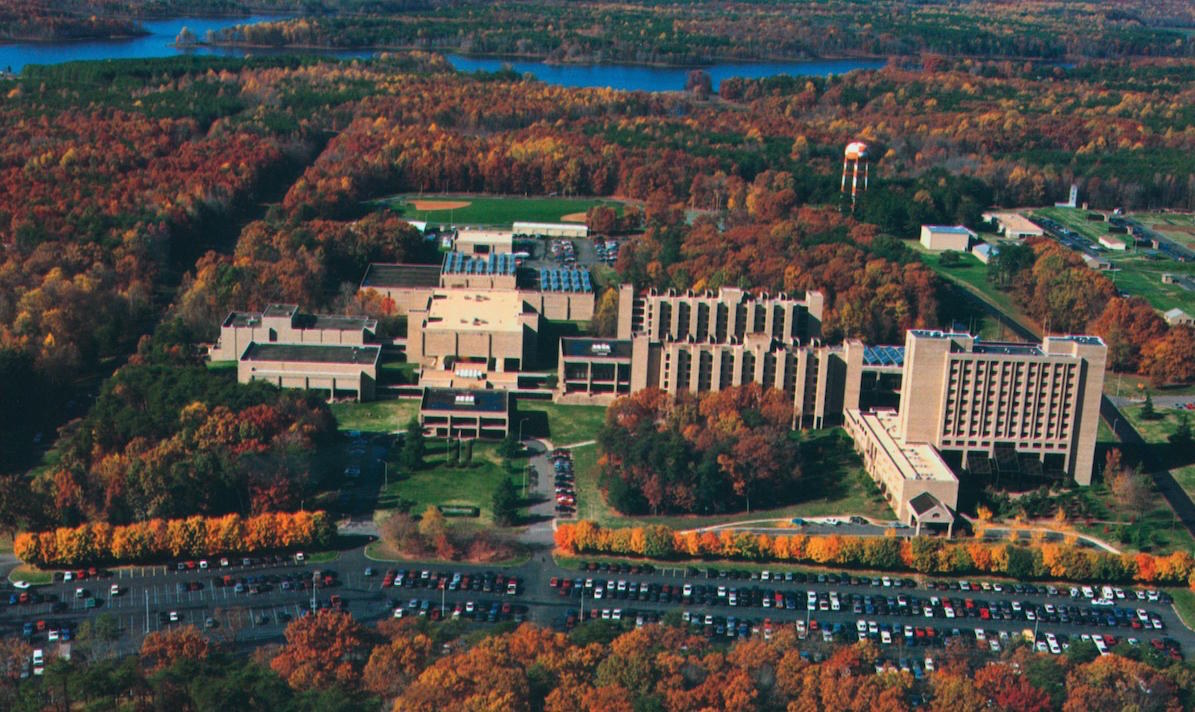
 

The name ‘Quantico’ has been synonymous with FBI (Federal Bureau of Investigation) training for decades, but in fact, Quantico is the town where the Marine Corps Base is situated in Virginia (USA). The FBI Training Academy is located on 547 acres within the Base, and is run by the FBI’s Training Division. Additional training happens elsewhere.

Special Agents are the most visible FBI agents to the public at large and for the most part, those are the men and women we see depicted on TV and in movies.

So, how do you get to become an FBI Special Agent? Only the best and brightest need apply.

Before you ever get to the Academy, there are a few items to check:

  • U.S. Citizenship
  • Between the ages of 23 and 36
  • B.A. from accredited U.S. college or university
  • Three years full-time work experience
  • Be eligible for top-secret clearance
  • Physically Fit (in ways most people are not)

If you can say with certainty that you meet the minimums listed above (there are others as well) then you might be eligible to apply to be a Special Agent.

But before you fill out the paperwork, consider what you will be asked to do. The application process takes at least a year. Then, if you pass all the tests, get through Quantico, this is a twenty year commitment, not a six months to a year try-it-see-if-you-like-it job. You will be required to:

  • Stay at the training facility for the 21 week course
  • Maintain a high level of fitness throughout your career
  • Stick to a strict code of conduct throughout your career
  • Work a minimum of 50 hour weeks
  • Be available for posting anywhere in the world for temporary or long-term assignments
  • Be on call 24/7 (weekends and holidays as well)
  • Carry a firearm and be willing to use deadly force if needed
  • Place yourself in situations that may result in personal bodily harm

Would you and your family be on board with all of that?

Then here’s what the recruiters and interviewers are looking for:

  • Leadership
  • Ability to work well with others – if you are a loner, this job is NOT for you
  • Organization & Planning
  • Problem Solving
  • Adaptability
  • Initiative
  • Communication

Still interested? Here’s a little of what to expect:

  • You’ll submit the application and be screened for the minimum requirements listed above.
  • Have the first of several rigorous interviews and computerized tests.
  • You’ll do a self-assessment of your physical fitness level and hand it in – no cheating on the times or the reps, because they’ll figure it out fairly quickly if you do and there is zero tolerance for fudging anything, anywhere along the way.
  • Have various health screenings.
  • They will conduct a very deep background check.
  • Pass the timed in-person Physical Fitness Test at least twice during the application period, before actual attendance at the Academy.

Once all that is completed satisfactorily, then the candidate might be invited to attend the FBI Academy.

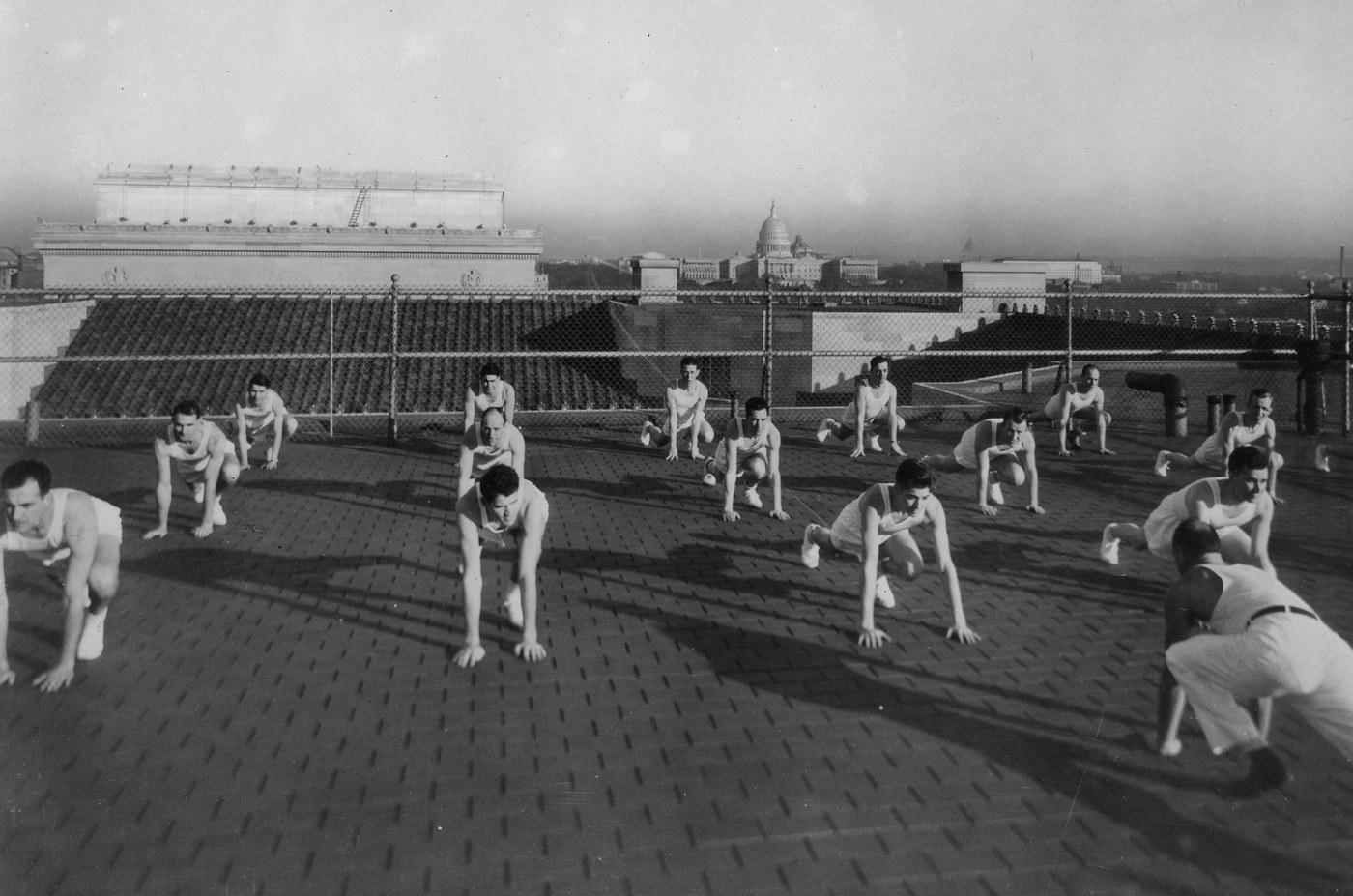
The application testing process deals with academics, analytic ability, and health related questions, but the Physical Fitness Test is the one that points to a lifestyle commitment. For the Special Agent applicant, there are four challenges to be tested:

  • Maximum number of continuous situps in one minute
  • Timed 300-meter sprint (about 328 yards)
  • Maximum number of continuous pushups
  • Timed 1.5 mile run

To give you an idea of what is involved:

A woman can score 1 (one) point for doing 35-36 situps in one minute. 10 (ten) points can be scored for doing 57 and over in one minute. That’s not a typo. Try doing that many situps unless you are in really good shape. Right. I never liked situps. If the candidate stops at any point during the minute, only the situps completed up to that time are counted.

The 300-meter sprint looks easier to me, because I ran sprints (and won races) when I was younger. Now? I’d be happy to score 2-3 points, but then I’m not 23 (or even 36) years old anymore.  😉

Now for the pushups. These must be performed with a straight body, arms fully extended and elbows away from the body, feet together, and continuously. 45 pushups or more without stopping will earn you 10 (ten) points – guys must do 71 (seventy-one) without stopping to earn the 10 (ten) points. Women can actually get points subtracted if they only do 4 (four) pushups, and won’t earn any points unless they can perform at least 14 (fourteen) pushups without stopping. There is no time limit for the pushup event, but the candidate must score at least one point in order to pass this section. If the candidate pauses at any time during the event, only the pushups completed up to that point are counted.

The 1.5 mile run is a timed event. The female candidate must complete the course in no slower than 13:59 in order to get on the board with one point.

You are allowed no more than five minutes between each activity and are scored on each one. If you fail one, but do well on the others, it doesn’t matter. You fail the entire test and can retake it at a later date. But not too much later. There is a time limit to re-taking this particular test. Even if you have done well in all other testing, if you can’t pass the PFT, you will not become a Special Agent.

Now what? You’ve passed the tests, you’re smart enough, fit enough, and work well with others. You’ve been accepted to the FBI Academy at Quantico.

Stay tuned for information about the FBI Academy Training.
*Photo credits: the FBI website


KN, p. 219 “The Road to Quantico” Read More »
KN, p. 238 “American Civil War Battles of Manassas”

If there are no paragraph separations in this article, please double-click on the title to create a more readable version.


First Battle of Manassas was the first major battle of the American Civil War. It’s also known as the Battle of Bull Run because of its proximity to the Bull Run River in northern Virginia. Manassas is located 30 miles from Washington, D.C., about a ten hour walk. There are two battles with that name: the Battle of First Manassas was fought in 1861; the Second in 1862 when the Union general decided that it was time to get revenge for the first rout.


In late June, 1861, President Lincoln, who had been elected to office only a few months before, got word that there were Confederate troops guarding strategic locations near the Manassas railway junction. This proximity to D.C. made President Lincoln more than a little nervous (he had been surprised by the fall of Fort Sumter in April) and he wanted the Confederate Army quashed. This had become an in-your-face armed conflict, not just a small rebellion aimed at the policies of the newly elected government.


Early in July of 1861, Gen. Irvin McDowell’s army of 35,000 very green, 90-day volunteers left Washington, D.C. and headed toward the railroad at Manassas. McDowell hoped to capture the junction, then travel to the newly proclaimed Confederate capital of Richmond. The goal was to capture Richmond and end the war. A Union defeat was not remotely anticipated, and as was the custom at the beginning of the Civil War, people were prepared to line up with picnic baskets to observe the show.


McDowell arrived in the area on July 18, astonished to discover that the Confederate contingent was 22,000 strong. He attempted to approach both left and right flanks for the next two days. During that time, the Confederate General Beauregard sent word to Richmond for backup. 10,000 additional troops under command of General Johnston from Shenandoah Valley, gave the Union Army the slip along the way and arrived on July 20-21. Now the two armies were essentially equal in size.

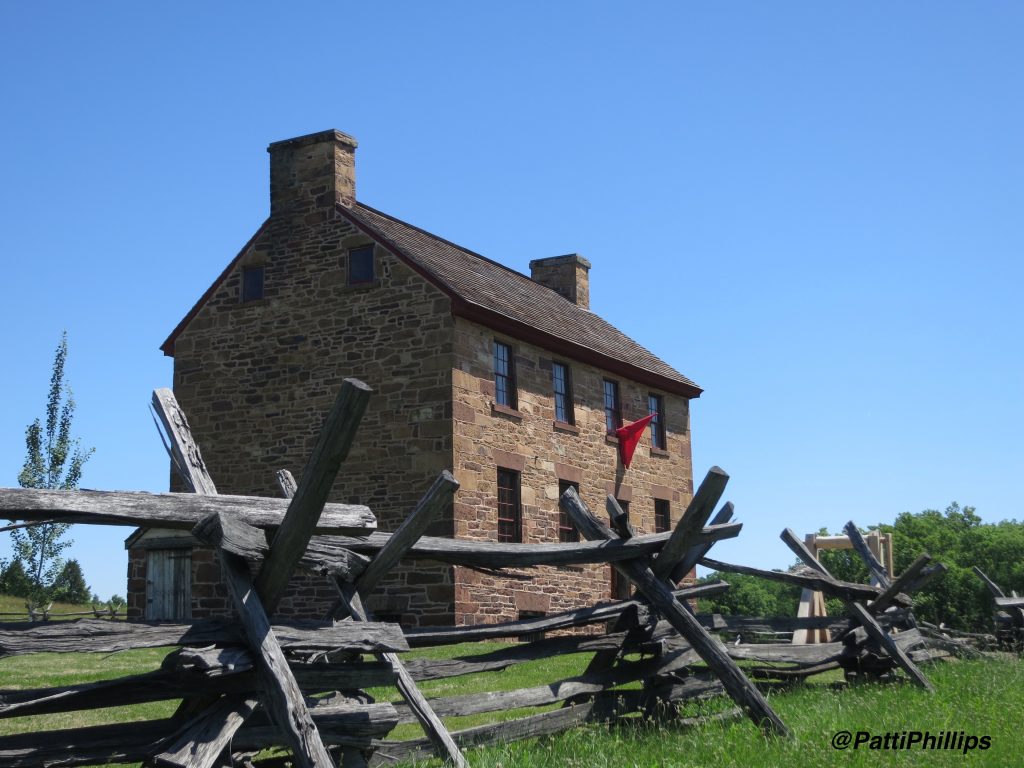
Stone House, located at intersection of Warrenton Turnpike and Manassas-Sudley Road. Used as a field hospital by the Union army in both Battles of Manassas.

McDowell’s plans of distraction and surprise under the cover of darkness and from different directions might have succeeded if he’d had a more seasoned fighting force. However, unfamiliar woods and hilly terrain were the Union Army’s enemy on the 21st. The Confederate Colonel Evans figured out that the attack at his location was a diversion and was able to briefly check the forward movement of McDowell’s troops at Matthew Hill.


But then, even with help, the Confederates had to fall back to Henry Hill, a relatively high position in the area. At that point, new brigades arrived to bolster the Southern troops (the nickname ‘Stonewall Jackson’ may have originated at Henry Hill).


Timing is everything in battle, and sometimes, taking a break to reorganize can be disastrous, even if necessary. The Union side paused for about an hour to regroup, and during that time, the Confederates took advantage of the reprieve to reform their own lines. The goal didn’t change for either side: to retain claim of Henry Hill. Renewed fighting went on for several hours until new Southern troops arrived to join the fray, forcing McDowell’s men to retreat.


In the long run, July 21st did not end all that well for either side. The withdrawing Union volunteers found the road back to Washington crammed with sightseers, preventing an orderly retreat. Panic ensued. The Confederates were too tired and disorderly to follow up on their success, so by the morning of the 22nd, the defeated Union army was safely back behind their lines.


Learning from that defeat that taking poorly trained and undisciplined soldiers into battle would end badly, Gen. George B. McClellan took charge of the Washington based Federal forces, established the Army of the Potomac and whipped them into combat readiness. The Union plan was to still to stop the Confederates by attacking Richmond, the Southern capital. When McClellan was ready in March of 1862, he left D.C. and had Richmond in his sights by May.


The Southerners left the Manassas position and after a series of bloody battles and a change of Confederate leadership to Robert E. Lee, pushed McClellan away from Richmond. In the next few weeks, Lee’s tactical advantage would shift back and forth, and he knew that to finally defeat the Union troops, he would have to send Jackson to outflank and defeat them decisively. On August 27th, Jackson’s well-trained troops seized the supply depot at Manassas Junction, burned the Union supplies, and moved to the woods near the first Manassas battlefield to wait for the Confederate army to return.


General Pope was angry that his supplies had been destroyed and left a successful battleground to take revenge on Jackson at Manassas. But, Jackson was ready and attacked part of the Union line as it passed on Warrenton Turnpike in a nasty battle that lasted for several hours. On the 29th, Pope’s information was faulty and hampered by a lack of strategic planning, kept throwing his men at Confederate positions, without doing sustained damage to their lines.

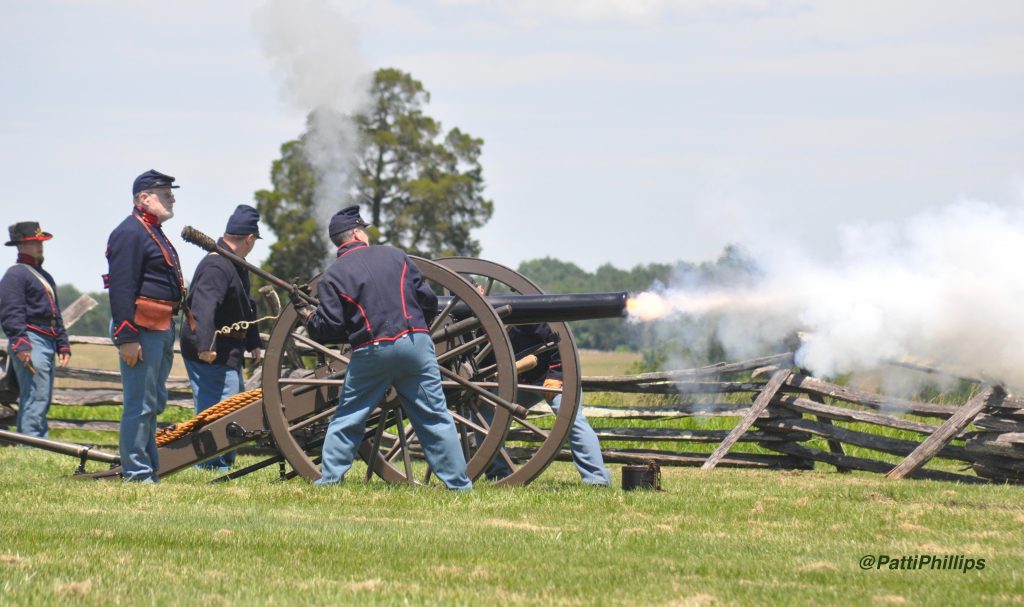
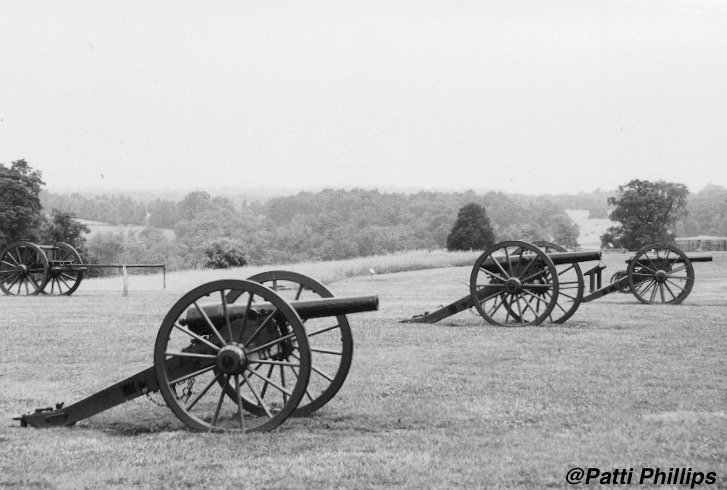
Re-enactment of cannon firing at Manassas

On the 30th, with poor intel again, Pope thought that the Confederates were in retreat, but in fact had not gone anywhere. Pope sent more men at Jackson’s line, a group attacked at the unfinished railroad’s Deep Cut area, but the Southerners prevailed in another bloody action. The Union Army was in disarray, and the Confederates pressed their advantage. Heroic fighting by the Union soldiers saved them from annihilation, and after dark, the remaining Union forces were able to escape back across the Bull Run River to Washington, D.C.


The Second Manassas campaign opened the way for the south’s first invasion of the north.

Stats:

First Battle of Manassas lasted one day.
Combined forces of Union and Confederates:  59,200
Death toll: 870
Wounded: 2600
Missing: 1200+

In the year between the First and Second Battles of Manassas, the weapons became deadlier, the soldiers better trained, and the generals more determined to wipe out the opposing forces. Each side was deeply committed to the rightness of their own ideals.

Second Battle of Manassas lasted three days.
Combined forces of Union and Confederates: 125,000
Death toll: 3,300
Wounded: 14,654
Missing or captured: 5,000+


Not long after, the two armies would meet again at Antietam, the bloodiest battle in American history.

Memorial Day now falls on the last Monday in May in the U.S. It is a day to honor and remember those who gave their lives in active duty military service. If you have the opportunity, a visit to one of the national battlefield parks will explain in depth why we were at war, while paying tribute to those who made the ultimate sacrifice.

https://www.nps.gov/mana/index.htm


*Photos by Patti Phillips


KN, p. 238 “American Civil War Battles of Manassas” Read More »

KN, p. 169 “WitSec and the US Marshal Service”

If there are no paragraph separations in this article, please double-click on the title to create a more readable version.

USMarshalSeal-300

The Witness Security Program (WitSec), was started by US Marshal, Gerald Shur, in the late 60s as a way to get witnesses to testify against high-ranking mobsters and still stay alive. While controversial at the outset, there were enough resulting convictions by 1970 to convince government officials to put money into a formal program to help get dangerous criminals off the streets and disrupt their criminal ventures. As WitSec evolved, the safety of family members became part of the package as well.

Why get protection?

In general:

  • The kinds of cases that would need to have witness protection attached are those where the defendants are so dangerous that the lives of the witness and his/her family would definitely be in jeopardy if testimony were even considered.
  • The prosecutor is fairly certain that a conviction cannot be guaranteed unless the particular witness testifies.
  • The witness(es) may have seen a murder or other criminal activity and be reluctant to testify against the suspect unless they can be guaranteed protection.
  • Before WitSec came along, “finks’ or ‘rats’ would wind up dismembered and very dead, in retribution for speaking up against powerful mob bosses.
  • More than 80% of the witnesses have been criminals themselves, and are testifying in order to stay alive or to get back at a boss they no longer trust/like.
  • Some of the witnesses have been ordinary citizens that just happened to be in the wrong place at the wrong time, and saw something horrific. The criminal knows he/she has been spotted and WitSec is the only protection the witness has.


What happens to the witness and the family?

Once the witness has agreed to testify, he/she and the family might be placed in the custody of the Marshal service until the trial comes up – sometimes many months – but this may be the only way to keep the witness alive until the court date.

For high profile cases, the U.S. Marshal Service handles 24 hour protection right up until the testimony, then provides new identities and moves everyone involved to an undisclosed location. This location is known only by a handful of government people. If the location is compromised for whatever reason, the US Marshals will find a new location for the family and begin the process again with new identities and jobs.

Once in the new location, average housing is provided, along with job prospects. The monthly stipends continue until the family can support themselves, usually only a few months. Early in the program, there were few monetary limits which led to abuses of the program by seasoned criminals, but that has changed.

Over 19,000 people have been relocated since WitSec began.

Some have left the program voluntarily, finding it too restrictive, and some of those people lost their lives as a result. It’s not a bad deal for some, because they get a truly fresh start away from a bad neighborhood, but for most, it is a drastic change.

It is possible to get kicked out of the program and it has happened. Returning to a life of crime is cause to get booted out, but the rate of recidivism while in WitSec is less than half that of the rest of the formerly incarcerated population. Less than half.

Interesting note: for criminals that testify and are in jail (or about to go there) when they testify, there is a parallel prison system. If they went into the general population, it would be easy to find them and they wouldn’t last long.

A few States (California, Illinois, New York, and Texas) have Witness Protection Systems of their own, but the protections and benefits are limited and less broad in scope.

Nobody who has followed the federal WitSec guidelines has been killed while under the protection, but it’s not easy to walk away from extended family and friends in the middle of the night, never, ever to see them again. Cell phones with the old names and contacts are gone, losing social media is a problem for some, new identities may mean that new careers must be chosen. A familiar lifestyle must be abandoned.

If given a suitcase and told to pack in 20 minutes, what would you take? What could you leave behind?

Additional information can be found at:

http://priceonomics.com/what-happens-when-you-enter-the-witness-protection/ 

www.usmarshals.gov


Photo credit: US Marshal Service


Save

KN, p. 169 “WitSec and the US Marshal Service” Read More »

Scroll to Top