crime

KN, p. 181 “Is there a body in that suitcase?”

If there are no paragraph separations in this article, please double-click on the title to create a more readable version.
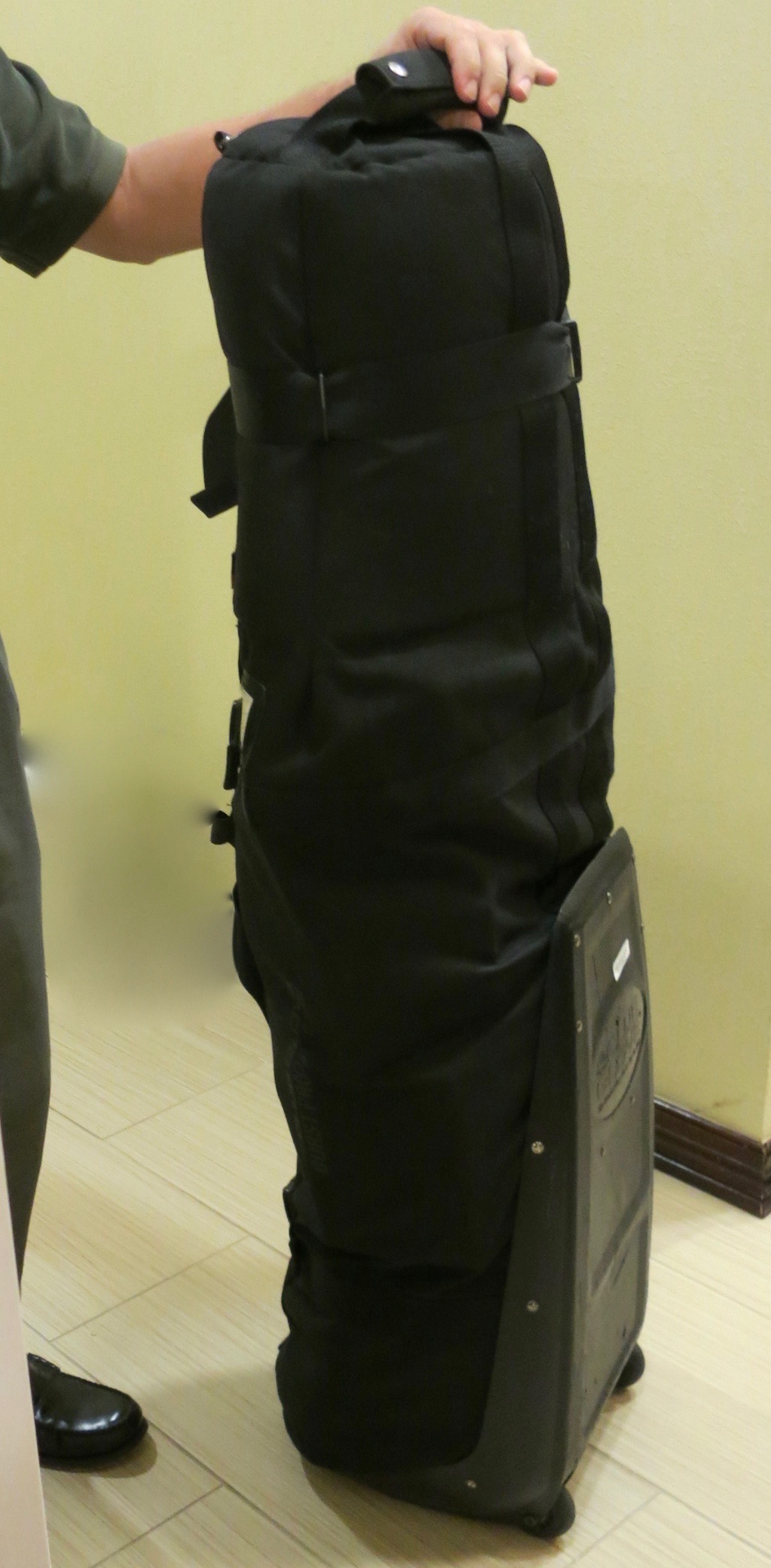
SuitcaseDuffleIMG_5845

TV shows and movies have long used the ‘put-the-body-in-the-suitcase’ mode of hiding a body when someone dies in a nefarious way during a vacation. But is it realistic? Could it really be done?

 If we set aside the smell factor (bodies start to stink within 24 hours if left unrefrigerated) corpses need to be hidden while they are still flexible and ‘stuffable.’ Rigor mortis (post-mortem stiffening of the body) sets in fairly quickly, so any book or TV show that shows the body being stuffed into a container in the first hour or so after death, is probably fairly accurate in that detail. Cold temperatures slow down the rate of rigor mortis and warm temperatures speed it up, so the surrounding environment plays a big factor in how speedy the corpse disposal must be.

Bodies are bulky and have those inconvenient limbs that don’t want to stay where they are put. In “Is that a body in the rug?” I chatted about why carrying a body around in a rug is a dumb idea. Waaay too many things can go wrong.

So, what to do? If the evildoer needs to move the body away from the scene of the crime in order to allow him/her to establish an alibi, a large container with wheels might be a solution. A laundry cart would fill the bill in a limited way if the victim died in a hotel, but what if the murderer wants to get the body out of the building?

The photo above shows my travel golf bag with a man standing next to it. As you can see, it’s not really long enough for stowing a grown man’s body, even though it looks like it should be when seen rolling through an airport. I tried getting into it, scrunching down, bending my knees, holding my arms tightly to my body, but nope. Not long enough even though I’m less than six feet tall. Maybe for somebody shorter?

Season #4 of the popular TV show, “Longmire,” included an episode featuring a body found on the side of the road in a large duffle bag after a tour bus had left the scene. There was an assumption that it had been inadvertently forgotten after a highway traffic accident. Until somebody tried to lift the bag. And then looked inside. Ooops.

Bodies are waaay heavier than can be handled by normal luggage seen in department stores. I did find a company online that makes six-foot long duffel bags complete with heavy duty stitching and zippers – important for those times when something other than tent poles would be in the bag. 

Would it be possible to send the body by commercial airline? Aside from the logistical problems of getting the body to the airport and the smell factor – who would carry it, etc. – commercial airline restrictions limit baggage to 50 pounds each. Some airlines (not all) will allow overage in some cases for an extra fee, but that’s at the discretion of the agents at the airport and/or requires special permission. If the flight is fully booked, an agent will check the cargo weight before takeoff and leave bags behind if the safety weight limit for the total cargo has been reached. My mother asked me once how I could manage carrying my travel golf bag (filled with the clubs as well as golf clothes, shoes, gloves, and golf balls). First of all, the bag has wheels, and the clubs themselves weigh less than 25 pounds.

And then there is the size restriction and no airline employee can fudge on that without someone in the baggage chain questioning an extra-large bag. Remember, baggage handlers have to pick these bags up and hand load them onto baggage movers. The upper limit on size is 72” – that’s a combination of the length, width and height measurements. The 6’ duffle would be long enough for the average adult, but it doesn’t take into account the width of the bag or height, thereby eliminating it from travel by commercial flight without those special fees and permissions. Plus, most duffles don’t come with wheels.

The “Longmire” body was that of a petite young woman, so she fit easily into a six-foot duffle. The gal probably weighed about 100-120 pounds, but there were no wheels attached to the bag. How did the murderer remove the fully packed bag from the crime scene? No spoiler here, but he/she had to have help, even with the handles on the bag. The use of the tour bus as the would-be mode of transportation was believable, since the fully loaded duffle would never have made it through all the security checks on a commercial airline, even a cargo flight. Kudos to “Longmire” for realism.

Having said all that, as one advertisement said, you need a bag that “will carry you through any situation or season.”

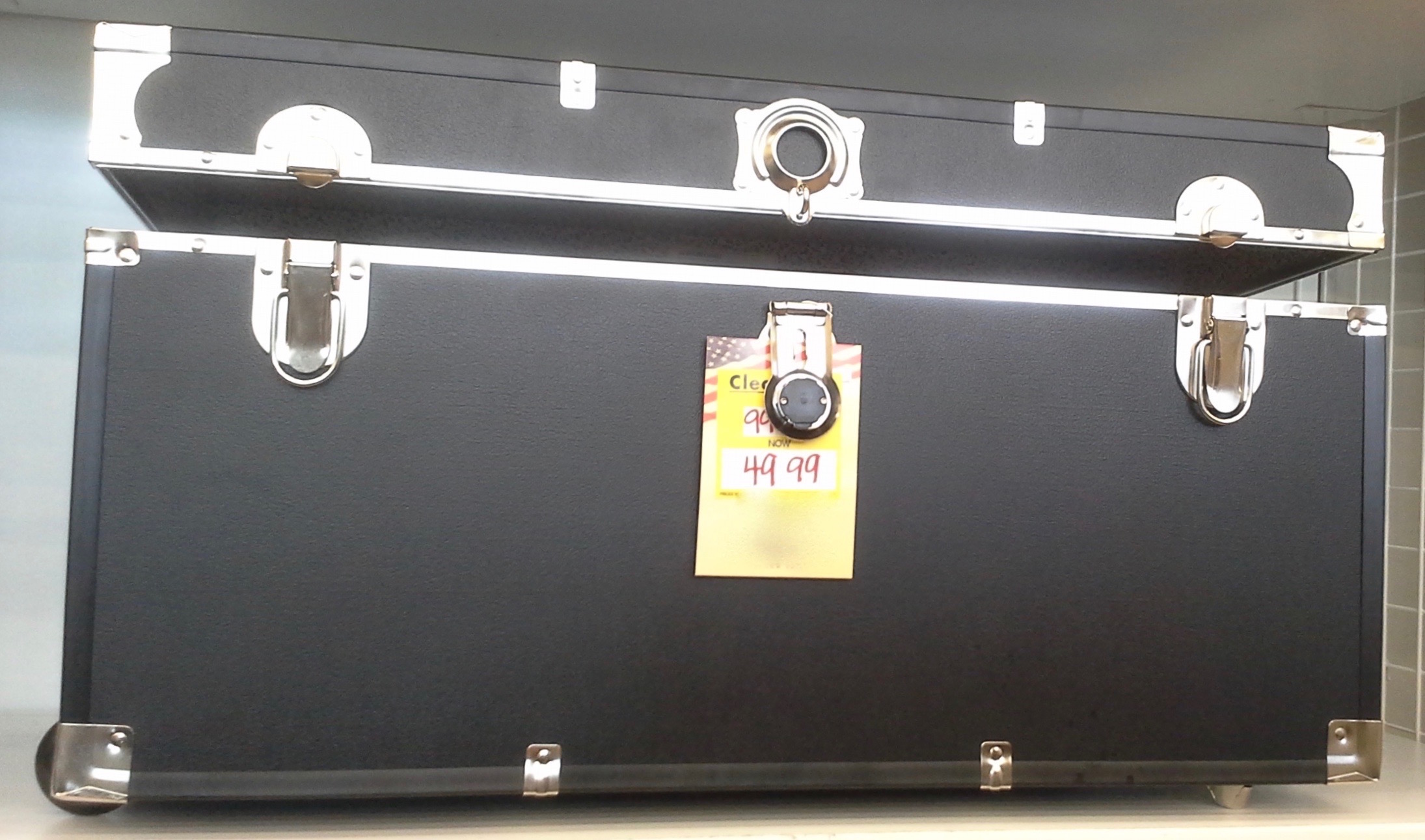
For all around ease of use (wheels, size) a trunk probably is the best choice. And, they’re even on sale right now at some locations. Kidding. 😉

 

SuitcaseTrunk

But, as a long-term way of establishing an alibi? Face it, you’re gonna get caught. Moving large duffles or trunks? Somebody is going to see you do it and remember it. After all, it’s not a bag of groceries.

*Note: no bodies were found in any of the suitcases or trunks we used for research.

**Further note: this information is for entertainment purposes only. Seriously.

***Photos by Patti Phillips


Save

Save

Save

Save

Save

Save

Save

Save

KN, p. 181 “Is there a body in that suitcase?” Read More »

KN, p. 212 “Sheila Sees a Body in the Brush Pile”

If there are no paragraph separations in this article, please double-click on the title to create a more readable version.

Sheila here. This morning, I finished trimming one of the backyard crepe myrtles and hauled the branches out to the curb. I had to use a reciprocating saw to cut through part of the tree, but was able to use a handheld clipper for some of the smaller sections. I felt that clipper fall out of my pocket while I stacked the debris at the curb. It wasn’t going anywhere, so I finished dragging and piling the branches before I looked for the wayward tool.

Guess what? It took me a few minutes to find it, even though I basically knew where it had fallen and had a limited area in which to search.

We frequently watch TV shows and movies telling the tales of people that go missing in the night, people who might have wandered off from a campsite, people or children who might have been separated from a touring group, but who then get lost. Nothing nefarious suspected, but the person hasn’t turned up in a reasonable amount of time. Maybe they tripped and fell, hit their head, and became unconscious.

There are search and rescue groups organized for just this purpose, and most of the members are well-trained volunteers. See Fiona Quinn’s article here.

We, the public, think a body in the woods would be easy to find, unless buried in the ground, or hidden behind a rock, so why do we need all the people and the dogs walking close to each other in a well-defined, mapped out grid?


How hard could it be?


Charlie’s crime oriented brain has rubbed off on me, so this is what I did. I stuffed an old pair of jeans, stuck one of my bright pink wellies at the end of a leg, piled the branches on top of ‘the body part’ and took photos. My apologies to the new neighbors who don’t know what Charlie and I do in our spare time. 

Can’t possibly miss that bright pink wellie I showed you at the beginning?

This is what you’re searching for:


The ‘leg’ is fully visible from this angle, right?


All I did was walk to the other side of the brush pile. A glimpse of the jeans can be seen, but not the bright pink wellie.


I did not remove ‘the body part’ before taking this picture, I promise you. I knew right where the jeans and wellie were and could not see them. Standing right over the ‘crime scene,’ and just because I was at a different angle, and a few steps in a different direction, the area looked quite innocent. Just another gardening pile, in the middle of a nice neighborhood, waiting for pickup from the city refuse truck.

This is why we need Search and Rescue teams walking close together, looking at every blade of grass in front of their feet. In this case, if the ‘body’ had been in the woods, the dogs would probably be called out as well.

Many thanks to all the hardworking volunteers who train vigorously in tough terrain to get certified and are ready to help whenever called upon.


Disclaimer: I did not use a real body part. The jeans were stuffed with t-shirts. Seriously.  😉


KN, p. 212 “Sheila Sees a Body in the Brush Pile” Read More »

KN, p.185 “Is the mouse dead yet?”

If there are no paragraph separations in this article, please double-click on the title to create a more readable version.

It’s been a very wet year. We have lived through a hurricane, flooding, high water levels, squishy lawns, damp/wet cellars, and fewer sunny days during the summer than I can ever remember from the past. That leads to outdoor creatures being flooded out of their nooks and crannies below the ground and in the woods. Mice and most snakes and insects don’t like wet feet any more than humans do, so they tend to go to places like houses and barns to dry out.

Not long ago, Sheila had a late evening craving for a cup of tea, went to the kitchen and turned on the overhead light.

And saw a mouse racing toward the stove along the top of the half-inch wide backsplash.

Then screamed that horrible, deep-throated scream that always makes me think that Freddy Krueger is headed our way with a meat cleaver.

After the screaming and barking stopped – I’m not admitting to more than one person screaming – we did the snap mousetrap bit, but he was smarter than we were. He knew what we were up to – or else he just didn’t like our goodies. Almond butter? Bird seed? Bits of fruit? Cheese? Nope, not a nibble. Placing poison inside the house was not an option because of Hammett, our wonderful Irish Setter.

We finally called the Killer Elite Squad – the exterminators. They came, they saw, and did things under the house. We wanted the furry creature gone or at least chased back to his old home in the woods. The plumber came and plugged up holes under the house. The electrician came and closed up gaps near a socket in the garage. Mission hopefully accomplished.

We haven’t seen the invader since and Sheila has finally returned to the kitchen after a week of carefully avoiding that scary room. Hammett has snuffled at the doorway. Big sigh of relief here. I can cook, but only to survive, and take-out dinner from a limited selection of restaurants every night is not as exciting as you might first imagine.

Part of the solution under the house involved poison and it made me think about the consequences of it getting into conniving, possibly murderous  hands. Mice and humans are both mammals, after all, and what is lethal for one might also be deadly for the other in the right quantities. Rodent poison is readily available to anyone, sitting on grocery, hardware, and big box store shelves alike. Bonus? There is a perfectly good reason to buy it. Who would suspect anything devious behind the simple purchase of a couple of boxes of the stuff, especially this time of year?

Why does it work? The main ingredient, brodifacoum, causes blood to stop coagulating. Brodifacoum causes death in mice by thinning their blood so much that they hemorrhage. Death is not immediate, so they crawl away or return to eat more of the stuff, oblivious to its harmful effect.

In theory, mouse poison could kill a person if administered in enough quantity over a period of time, also causing them to hemorrhage. But, in all honesty, the flu-like symptoms of nausea, vomiting, stomach pain, etc. would send you to the doctor long before death could occur, especially if the symptoms worsen. Who would want to deal with that any longer than necessary? Plus, the amount needed to do in a grownup is considerable. And there is an easy antidote – vitamin K – which acts as speedy coagulant.

Poisons are used in books and other media to get rid of victims all the time, but is feeding rat poison to the potential victim a method that is used outside the entertainment industry?

It turns out that about ten years ago in real-life, a disturbed teenager from the Midwest decided to make his family sick, a little at a time. He mixed the poison in with their food over several weeks until they finally realized that they were getting lots worse, with numerous bouts of painful symptoms. A doctor visit revealed the truth.

http://www.slate.com/articles/news_and_politics/explainer/2005/01/can_mouse_poison_kill_you.html

At this point I usually say that no bodies were found while researching and/or writing this post. Maybe not this time, but if you hear screaming in the future, I promise you: There will be. Of the furry kind.


*Photo credit? PestWorld.org. Sheila was too busy screaming to take a photo.  😉

The Kerrians are fictional characters, but the mouse debacle really happened.


Save

Save

Save

KN, p.185 “Is the mouse dead yet?” Read More »

Scroll to Top