law enforcement

KN, p. 240 “The SWAT Team Experience”

If there are no paragraph separations in this article, please double-click on the title to create a more readable version.
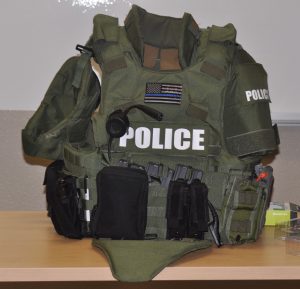
S.W.A.T. stands for Special Weapons and Tactics, implying a special level of training and weaponry for the team members. When we hear that a SWAT team has been deployed, we know that a serious law-enforcement-required incident and threat to public safety has occurred, which may be beyond the scope of the typical police department or first responder.


The Los Angeles Police Department (LAPD) has the reputation of creating the first SWAT teams in the USA, but Philadelphia coined the Special Weapons and Tactics phrase first, in 1964. Philly established a large team whose sole responsibility was to combat the rising number of bank robberies in the city, hoping to stop them in progress. LAPD organized their own program around the same time, but the focus was different, using their teams during civil unrest and riots, when people attacked police and attempted to overwhelm them from all sides.

SWAT team members always have experience in other agencies or departments before applying to and being accepted into this specialized arena.

Depending on the needs of the towns/counties, SWAT teams are larger or smaller, relative to the size and needs of the rest of the police force. The Wichita Falls, Texas, Police Department SWAT Team members are trained in everything from Hostage Rescue to Dignitary Protection during a 60 hour basic SWAT school. Wichita Falls has a little over 200 sworn officers, with a SWAT team of 18. The Wisconsin department we observed was a 40 person department, with a SWAT team of 10, including two snipers.


A SWAT team is called out for:

  • Hostage Rescue
  • Barricaded Rescue
  • Suicide Situations
  • High Risk Search Warrant Services (i.e. drugs)

The team’s mission is to save lives. A hostage rescue is the most complex and the most man power intensive of the possible assignments. The goal is to end it sooner rather than later. If there is no hostage in the house, with just one person in an isolated place, then a negotiator might be used, since the safety of others and time considerations would not generally be a factor.


The National Tactical Officers Association (NTOA) sets the standard for the country for the management and protocols in a hostage situation. The participants are identified and divided into categories:

  • Hostages
  • Civilians (neighbors)
  • Law enforcement
  • Suspects

The civilians are cleared out before a SWAT assault begins. Other jurisdictions may be called in to help. Past experience has shown that in situations like school shootings or bank robberies where a number of people are involved, everyone, including small children, is asked to leave the building with hands up in the air. This way, the law enforcement groups on the scene will know that the children have nothing hidden in their hands and/or are not being used to create more chaos or danger for the waiting crowd(s).


It’s important to note that school patrol personnel might have been employed a few years ago to keep drug dealers off the campus just by their very presence, without any expectation of violent confrontation. Now, more and more often, they are being trained in active shooter scenarios in order to be pro-active in the minutes before a SWAT team can arrive.


A SWAT team member’s mindset:

The men and women in SWAT have a warrior mindset and are confident in the fact that they will get the job done, that they are the best candidates for the job, and they are not afraid of being under fire. For a set period of time (6-12 months in various departments) after training, Field Training Officers (FTO) guide rookie SWAT officers through the many different scenarios that may occur. Team members are always ready for the callout, so training is intense and constant. If the team stays trained and never gets called upon, that can be tough on morale – “when am I going to be able to show what I can do?” It’s like a fine-tuned machine that never gets used. In big cities, that would never be an issue, but in smaller, less populated areas with fewer SWAT-needed situations, it might become a factor.

Many of today’s police departments have a greater social work component to hostage situations than in the past, so a hostage negotiator gets involved before SWAT starts knocking down doors. Often, negotiators are specifically assigned to the SWAT teams.

There is a certain gender bias that women must fight against in the job, mostly because it is thought by some that a woman may not be strong enough or tough minded enough to carry through in a hostile situation. The capability to shoot is never in question, but sometimes the willingness to shoot is a factor in the negative thinking. The physical tests are not adjusted in most jurisdictions, so women must do the same pushups and gear carries that men do. In truth, women perform valuable functions on the SWAT teams in the roles of negotiators, even if they can’t pass the physicality tests to breach buildings. In general, women have been found to be more observant, better at interviewing than some men, and more emotionally aware at a crime scene, valuable attributes for negotiators.


If negotiations fail, and/or the hostages are at risk of being injured or killed, more aggressive methods are used.


Unless a police department is headquartered in a big city, SWAT teams are often part-time, coming together as a unit when needed, perhaps once a month. However, training continues whether there is a case or not. It’s important for safety and efficiency for the team to train as a group on a regular basis – In Neenah, Wisconsin’s case, they train together for about 16 hours a month.


A team might be shared by other towns in a county, and the home town team members often perform other duties within the department until required for a bank robbery or other kind of hostage scenario. There just isn’t enough money in the budget for a small town to support a team they only need occasionally, but when SWAT is required, it’s essential that they be highly trained. It’s smart to share that capability.


Training, training, always training

You may have noticed photos of law enforcement officers on the front lines carrying large shields. The men carrying those shields must have excellent upper body strength, since they have to carry the shield in place with one hand and a rifle (or baton) in ready-to-fire position in the other. Try keeping your arms chest high in front of you, bent at the elbows, while holding ten pound weights in each hand. How long can you do it continuously without getting tired or losing focus?

Physical Fitness training needs to be done on their own time, and SWAT members make sure it gets done. Their lives and those of their team may depend on maintaining that strength, agility, and split second timing while carrying the 25-65 pound gear/equipment in all kinds of weather during attack or defensive actions.


A typical practice for snipers includes (while carrying a 25 pound pack)

  • 50 yard sprint
  • 25 yard high crawl
  • 25 yard low crawl
  • 20 push ups with the pack

Followed by a 2 minute break then (perhaps) 40 overhead lifts of that pack in 2 minutes.

Then, a two minute break followed by holding a plank position for 80 seconds.

Then, a standing broad jump of 6-7 feet, followed by a two minute break.

Then, a timed 1/4 mile run with the pack on the back.

Then, they repeat the whole routine in reverse.


*Many thanks to the Neenah, Wisconsin SWAT team members who shared their knowledge and experiences during a Writers’ Police Academy session held in Wisconsin.


Next up:  “SWAT Equipment and Strategies”



KN, p. 240 “The SWAT Team Experience” Read More »

KN, p. 218 “What Does the Federal Bureau of Investigation Do?”

If there are no paragraph separations in this article, please double-click on the title to create a more readable version.

“The Federal Bureau of Investigation (FBI) is an intelligence-driven and threat-focused national security organization with both intelligence and law enforcement responsibilities.”*  It is the chief fact-finding branch of the Department of Justice and helps other agencies by sharing that information and providing training.

Its mission is:

“To protect the American people and uphold the Constitution of the United States.”*

In 1908, the United States had about 100 cities with 50,000 people. The rest of the population (about 83 million) was spread throughout the rural areas of the country. Law enforcement personnel at the local level were often poorly paid (and were sometimes volunteer) members of the community. Murders were handled by local investigators and still are to this day. For the majority of the cases, murder is not a federal crime, unless carried out across State lines.

Prosecution of border security issues or organized crime was limited in 1908 since there was no adequate way to enforce the law at a national level. In fact, few criminal laws even existed at a federal level. For the most part, individual States and local jurisdictions handled their own criminal investigations, and sometimes that led to political corruption, corporate criminal behavior, and even slave labor in factories. Federal agencies were stretched thin or were nonexistent in some parts of the country.

President Teddy Roosevelt supported the idea of modernizing law enforcement, so when his Attorney General hired 34 of his own investigators (including nine seasoned Secret Service agents) to assist the Department of Justice, Roosevelt wholeheartedly endorsed the action. A few months later, the Bureau of Investigation was officially created. Hardly a large force, but it was a start.

At the beginning, incidents involving car theft across State lines, civil rights, and various kinds of fraud were the typical cases. The FBI also took on treason and domestic terrorism, and Congress (previously reluctant to loosen the purse strings) began to see the value of a national law enforcement agency.

It’s interesting to note that the Mann Act or “White Slave Traffic Act,” was passed in 1910 to help stop interstate prostitution and human trafficking, and the FBI had a role in the early investigations. One hundred years later, it has become an international problem and requires cooperation from many different agencies to obtain successful prosecutions.

World War 1 brought us the problems of sabotage by foreign agents against our military ships and munitions plants, as well as international smuggling. The FBI had entered the so-called spy business and worked hard to eliminate those threats.


In 1924, it was recognized that fingerprinting was a reliable way of connecting (or eliminating) individuals to a particular scene, and to collect that information in a central location would be helpful to other law enforcement agencies in the United States. Now, the FBI gathers and classifies fingerprints from convicted felons and other criminals, military personnel, federal applicants and employees, and shares that information with appropriate agencies. Additionally, fingerprints of military detainees and other persons of national security interest are being collected for national security purposes.

Formerly called Automated Fingerprint Identification System (AFIS), the program processes over 63,000 prints a day, is now integrated with other forms of identification and called IAFIS, and can deliver digital information in as little as two hours. It is used in connection with biometric databases (facial and voice recognition) for more accurate identifications. Next Generation Identification (NGI) combines biometrics, fingerprints, and palm prints to expand identification possibilities.

One of the programs developed by the FBI is the ‘Ten Most Wanted’ list. It began in 1950 as a way to call attention to fugitives who might otherwise remain at large. Each new list is posted in United States Post Offices and on the FBI website.

Since 1950, 518 fugitives have been on the list, and 484 have been apprehended or located. The stats below are from the FBI site:

    • 162 fugitives have been captured/located as a result of citizen cooperation.
    • Two fugitives were apprehended because of visitors on an FBI tour.
    • The shortest amount of time on the list was two hours, by Billy Austin Bryant.
    • The longest amount of time on the list was over 32 years by Victor Manuel Gerena.

With the advent of increased world-wide terrorism, the computer and cyber-security age, more complex corporate crimes, and a global awareness of human trafficking, the focus of the FBI has shifted.

At the end of 2017, there were over 35,000 employees, made up of intelligence analysts, field agents, language specialists, scientists, and information technology specialists. They are tasked with investigating:

  • Terrorism
  • Counterintelligence
  • Cyber Crime
  • Public Corruption
  • Civil Rights
  • Organized Crime
  • White-Collar Crime
  • Violent Crime
  • WMD (Weapons of Mass Destruction)

Stay tuned for posts about Quantico and training for the FBI, and interviews with former FBI agents.


*Photo and quotes credit: (from FBI website)

1969 Latent Print Match
A latent print removed from a 1969 murder victim’s car was later determined to be a match to the suspect’s fingerprint (inset) contained in the FBI’s Integrated Automated Fingerprint Identification System (IAFIS). The Houston police detective and Texas Department of Public Safety latent print technician instrumental in solving the cold case were honored by the FBI with the 2011 “Latent Hit of the Year” Award.


KN, p. 218 “What Does the Federal Bureau of Investigation Do?” Read More »

KN, p. 234 “Do you want to be an FBI Agent? Part 2”

If there are no paragraph separations in this article, please double-click on the title to create a more readable version.

Do you want to be an FBI Agent? Part 1” highlighted the backgrounds of two former FBI Special Agents, their differing career paths, salary, and job aspects. Bucky and Chris Cox continued to chat, revealing more agency specifics and notes about a wide range of cases that the FBI oversees, in Part 2. Take a look:


FIELD OFFICE PERFORMANCE

Every field office undergoes performance reviews. The FBI is a statistic driven agency. Among other things, internal inspectors count the number of arrests and convictions at each office, looking for reasonable numbers of completed cases, and how efficiently they were concluded. But, the type of crimes is taken into consideration. While a specialist in bank robberies might clear 10-15 cases a year, white collar cases such as bank fraud, health care, or telemarketing can take longer to investigate and prosecute because of their complexity and the fact that they may be occurring in more than one State. Agents also have to prove that the suspect knowingly and willfully committed the crimes.


There are mandatory reports to be written after a case is completed. The standard rule applies: “If there is no paperwork, it didn’t happen.” Forms MUST be filled out so that people can be prosecuted and a decision can be made on what parts of the evidentiary findings can be more solidly prosecuted and whether the case will be tried in a federal or state court.


If you think this is a 9 to 5 profession, it’s not. There are many wakeup calls in the middle of the night because an agent is on duty 24/7. FBI agents may be called to other States or even to other countries beyond the home base if the case takes them there. If you are counting on a permanent posting in one city, look elsewhere for a career.


When applying to attend the Academy, you won’t be able to hide anything in your background and will have absolutely no secrets from your employers. Because of Robert Hansen, an FBI agent who was a spy for the Russians on and off from 1979 until 2001, there are now polygraphs administered at the beginning of the application process as well as several times during a career in order to avoid further infiltrations by a foreign agent. Your personnel file is available to the Defense Attorney that represents the suspects (defendants) in the cases you work on, so if you have Lack of Candor (you lied or covered up a mistake during your career) in your file, you can be discredited on the stand in court. Agent credibility is essential for successful prosecution of the case.


The FBI’s Wide Variety of Cases 

KIDNAPPINGS

After 24 hours, kidnappings that cross state lines come under FBI jurisdiction – use of the telephone or email can make it an interstate crime. The FBI is called in (usually by the police) because of their expertise, resources, ability to negotiate, and quick access to required warrants. The FBI can’t tell families whether to pay any ransom or not, but there is surveillance on the payout if that choice is made.


FYI – In general, international kidnappings are handled by negotiators working for the big companies whose employees have been snatched.


BOMBINGS

If the FBI is the lead agency, the teams will arrive after First Responders have secured the scene. If the mail is involved, then Postal Inspectors will work the case as well, but if not, then the Alcohol, Tobacco, and Firearms (ATF) unit and an Evidence Response Team (ERT) will be involved. There is some negotiation between the different agency teams so that no duplication of effort occurs.

DEATH ON THE JOB

People see agents depicted as tough and resilient, but let’s face it, field work can be dangerous. Chasing and apprehending fugitives sometimes includes guns and shooting. Bank robberies and other crimes can involve hostages and lethal force.


DUPLICATE DRUG INVESTIGATIONS

It doesn’t often happen, but various other government agency investigations might target the same or overlapping drug cartels. Blue on blue conflict can be very risky, so big cities have de-confliction rooms. Before a big bust, someone checks a database for scheduled buys, so that law enforcement agencies aren’t tripping over each other at the scene.


COURT OF PUBLIC OPINION

For people doing the day-to-day work, it’s not about the politics, but agents are cast in the same light as Senior Management. That can happen even if the agents personally might have nothing to do with what’s unfolding in Washington, DC or elsewhere in the world. The FBI played no part in the Rodney King events, but after the Rodney King riots in Los Angeles, a big bank case came up. A juror on that case said, “If the LAPD can lie, so can the FBI” and that works both ways.


WHITE COLLAR CRIME

White-collar crime refers to fraud perpetrated because of a desire for financial gain. Some scams have cost companies/investors billions of dollars and wiped out entire life savings. Among others, the FBI has investigated cases involving money laundering, securities and commodities fraud, bank fraud and embezzlement, election law violations, telemarketing fraud, and health care fraud. They have worked with the Securities and Exchange Commission, the IRS, the U.S. Postal Inspection Service, and the Treasury Department to catch the worst offenders.

Corporate Fraud is a serious threat to the economy and the FBI concentrates on cases that involve accounting schemes designed to deceive everyone about the true financial condition of a company. Agents specializing in white collar crime look for bogus accounting entries, and fake/illegal trades rigged to protect the trader or avoid regulation. They keep an eye out for insider trading, misuse of corporate property, and tax fraud.


LOVE IN THE BUREAU

Relationships have been known to begin within the agency, because not many people outside law enforcement understand/accept the demands of the job. For FBI couples that marry, if both spouses are street agents, the relationship is not an issue. But, if one or the other reaches management level, one can’t supervise the other. If a slot opens up where a spouse is posted, the other can apply, but there is no guarantee that the married applicant will get it.


WRITE ALL ABOUT IT?

Everyone must sign a non-disclosure agreement because they can never talk about classified cases. There is a special unit that handles whether or not an agent can write about something – all manuscripts must go through pre-publication review. The only cases that can be written about are those closed cases which are part of the public record. Also, former agents are not allowed to write about investigative techniques or their sources.


Besides being a top investigator, AN AGENT IS:

  • a sales person (must be able to sell yourself and your case to the Assistant US Attorney, Judge, and Jury)
  • a communicator (talk, write a convincing document, listen well)
  • a business owner (how much will it take to run the case)


Ready to sign up?

Many thanks to Bucky and Chris Cox for generously sharing their time and knowledge about the details of the job of Special Agent in the FBI.  🙂


*Photo credits: official photos from the FBI     


KN, p. 234 “Do you want to be an FBI Agent? Part 2” Read More »

Scroll to Top