For Writers

KN, p. 270 “Recovery Times for On-the-Job Injuries”
 

The human body is a remarkable, self-contained skin, blood, water, and bones system. It has the capability of withstanding deep cuts and bruises, and even with the loss of limbs and blood, can still keep functioning. Amazing as this is, we are expected to accept on TV and in the movies that people can walk away from serious injury, take an afternoon/day off from work and get right back to the job of running after criminals and taking them down. That our heroines/heroes train a little harder than ordinary humans, face the pain in ways that mere mortals can’t, then get on with their service to the community.


Not so fast.


Yes, there is intense physical training at some of the law enforcement academies and in the special ops branches of the armed services. Physical training is included so that patrol officers will have the stamina to chase suspects up staircases and through neighborhoods without having coronaries. Special ops personnel have specialized continuous training because of the harsh conditions and challenging terrain encountered during their service around the world.


BUT, after I watched yet another 40+ year old actor ‘survive’ several jumps onto adjacent roofs a story below, continue to run after the suspect, tackle, subdue, and arrest that suspect, I rolled my eyes and questioned a couple of doctors in the know.


Repeated landings onto hard surfaces from elevations that are greater than your own height will most likely result in injury to the legs. Knees, hips, femur, tibia, fibula, ligaments, and tendons all feel the shock of repetitive pounding. Hair line cracks in the bones of legs and/or feet (as well as varicose veins) can result, even for people in their twenties. The cop may be able to chase the suspect on level ground for a few blocks if his/her cardio is in great shape, but jumping and landing from a height of more than a few feet should be followed in the books or movies by ice and/or splints and feet up for more than ten minutes. Ignore the first aid and the injury gets worse, and may result in chronic pain and/or a limp, no matter how heroic the character. Keep jumping over walls onto concrete sidewalks and an orthopedic visit will be on the schedule.


Fight scenes:

After an intense fight, there will be cuts, swelling, and bruising all over body. The body’s own natural adrenaline will carry you through the fight, but sleep, first aid, and ice packs are required to combat the ensuing pain and stiffness. Those bruises will start out as blue/purple, and as they heal will turn yellow/green. It takes about 10-14 days for the bruises to disappear, so the guys in the fight should still have some sign of the struggle on their faces or body for at least a week.


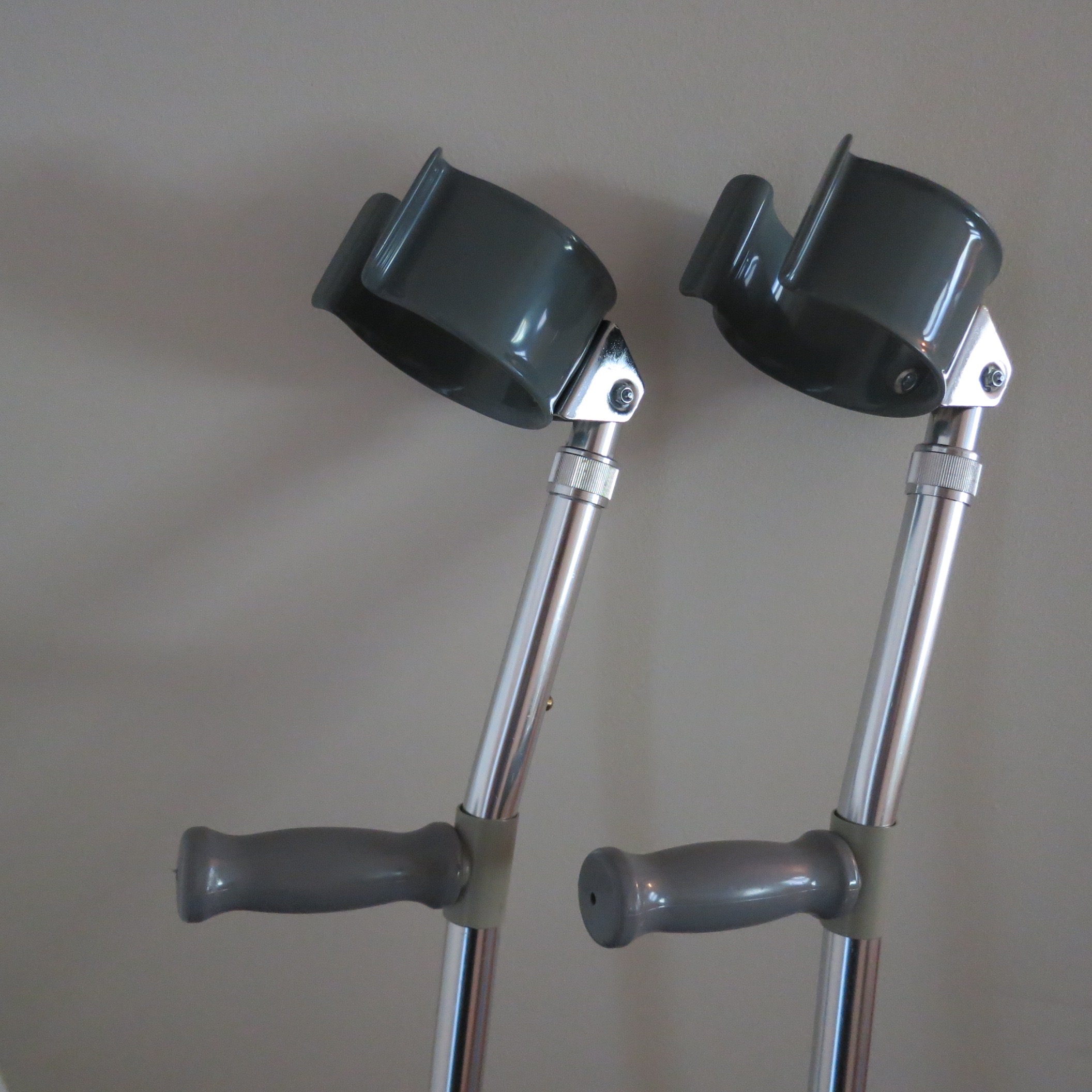
Kneecap injury: Ouch! Ligaments and tendons tear and pop and hurt A LOT! You can walk on an injured knee for weeks, but unless you like to limp, surgery is in your future. Whether minor or major surgery is part of the package, the doc will have you up and walking (with crutch, cane, or walker) the next day. There will be a load of Physical Therapy and maybe a desk job until that knee is fully recovered. (Based on my own knee surgery experiences.)


Broken bones:

A clean break in an arm requires a splint/sling to keep it more or less stable until it can be set. Recovery takes 4-6 weeks, but return to work might only take a few days because an arm is not weight-bearing.

A clean leg bone break? Depends on which bone in terms of recovery, but it could take up to 8 weeks. High on the thigh, or a compound fracture are awful breaks in terms of pain, physical therapy, and recovery, and might even be career-ending injuries. In the real world, nobody chases a suspect anytime soon on a compound fractured femur, even in a cast.
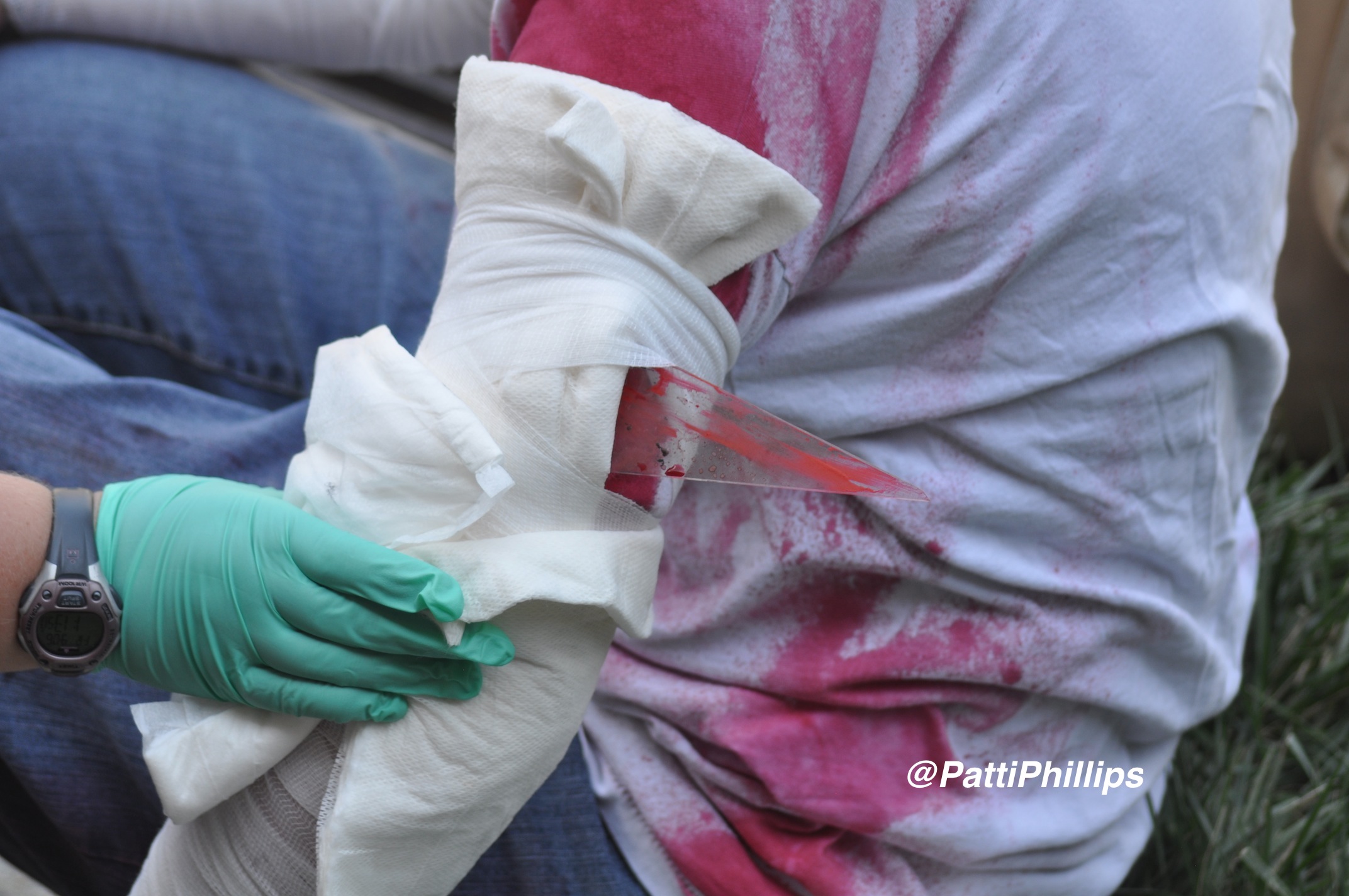
 

Fall through a plate glass window: the actors jump through ‘sugar glass,’ not actual glass. Anybody that gets through a plate glass window for real would have lacerations on any exposed skin, and other injuries as well, depending on the distance of the fall and what frames the glass. Most people are not big or heavy enough to break through the plate glass, but might get a concussion from collision with it.


Please note: the person in the photo was taking part in a re-enactment of a multiple injury accident scene, complete with fake blood. She was not injured in any way.


GSW (Gunshot wound): Recovery depends on where the GSW is on the body, and how severe the wound. There might be no hospital time with a couple of stitches and a light painkiller, or weeks of recovery, multiple surgeries, infection, and permanent disability.

A bullet graze is usually the equivalent of a deep cut. It hurts, but nobody is going to die from it or need an overnight stay in the hospital.

A bullet that goes through and through will hurt a great deal even if it misses vital organs. Bleeding must be stopped until help can arrive. An abdominal wound requires surgery and recovery time in bed. Holding onto your side after getting shot while you chop through the jungle with a machete ain’t happenin,’since moving increases the bleeding.

If the bullet nicks a major organ and the cop survives long enough to get to a hospital, surgery will be performed. Recovery time? Count on months away from work, not a few days.

If the bullet nicks an artery? It’s possible to bleed out in less than ten minutes (and die at the scene) before help can arrive.


My sources of information: anonymous, but include a Physical Therapist, an Orthopedic Surgeon, and active friends that have sustained a variety of injuries over the years.


KN, p. 270 “Recovery Times for On-the-Job Injuries” Read More »
KN, p.185 “Is the mouse dead yet?”

If there are no paragraph separations in this article, please double-click on the title to create a more readable version.

It’s been a very wet year. We have lived through a hurricane, flooding, high water levels, squishy lawns, damp/wet cellars, and fewer sunny days during the summer than I can ever remember from the past. That leads to outdoor creatures being flooded out of their nooks and crannies below the ground and in the woods. Mice and most snakes and insects don’t like wet feet any more than humans do, so they tend to go to places like houses and barns to dry out.

Not long ago, Sheila had a late evening craving for a cup of tea, went to the kitchen and turned on the overhead light.

And saw a mouse racing toward the stove along the top of the half-inch wide backsplash.

Then screamed that horrible, deep-throated scream that always makes me think that Freddy Krueger is headed our way with a meat cleaver.

After the screaming and barking stopped – I’m not admitting to more than one person screaming – we did the snap mousetrap bit, but he was smarter than we were. He knew what we were up to – or else he just didn’t like our goodies. Almond butter? Bird seed? Bits of fruit? Cheese? Nope, not a nibble. Placing poison inside the house was not an option because of Hammett, our wonderful Irish Setter.

We finally called the Killer Elite Squad – the exterminators. They came, they saw, and did things under the house. We wanted the furry creature gone or at least chased back to his old home in the woods. The plumber came and plugged up holes under the house. The electrician came and closed up gaps near a socket in the garage. Mission hopefully accomplished.

We haven’t seen the invader since and Sheila has finally returned to the kitchen after a week of carefully avoiding that scary room. Hammett has snuffled at the doorway. Big sigh of relief here. I can cook, but only to survive, and take-out dinner from a limited selection of restaurants every night is not as exciting as you might first imagine.

Part of the solution under the house involved poison and it made me think about the consequences of it getting into conniving, possibly murderous  hands. Mice and humans are both mammals, after all, and what is lethal for one might also be deadly for the other in the right quantities. Rodent poison is readily available to anyone, sitting on grocery, hardware, and big box store shelves alike. Bonus? There is a perfectly good reason to buy it. Who would suspect anything devious behind the simple purchase of a couple of boxes of the stuff, especially this time of year?

Why does it work? The main ingredient, brodifacoum, causes blood to stop coagulating. Brodifacoum causes death in mice by thinning their blood so much that they hemorrhage. Death is not immediate, so they crawl away or return to eat more of the stuff, oblivious to its harmful effect.

In theory, mouse poison could kill a person if administered in enough quantity over a period of time, also causing them to hemorrhage. But, in all honesty, the flu-like symptoms of nausea, vomiting, stomach pain, etc. would send you to the doctor long before death could occur, especially if the symptoms worsen. Who would want to deal with that any longer than necessary? Plus, the amount needed to do in a grownup is considerable. And there is an easy antidote – vitamin K – which acts as speedy coagulant.

Poisons are used in books and other media to get rid of victims all the time, but is feeding rat poison to the potential victim a method that is used outside the entertainment industry?

It turns out that about ten years ago in real-life, a disturbed teenager from the Midwest decided to make his family sick, a little at a time. He mixed the poison in with their food over several weeks until they finally realized that they were getting lots worse, with numerous bouts of painful symptoms. A doctor visit revealed the truth.

http://www.slate.com/articles/news_and_politics/explainer/2005/01/can_mouse_poison_kill_you.html

At this point I usually say that no bodies were found while researching and/or writing this post. Maybe not this time, but if you hear screaming in the future, I promise you: There will be. Of the furry kind.


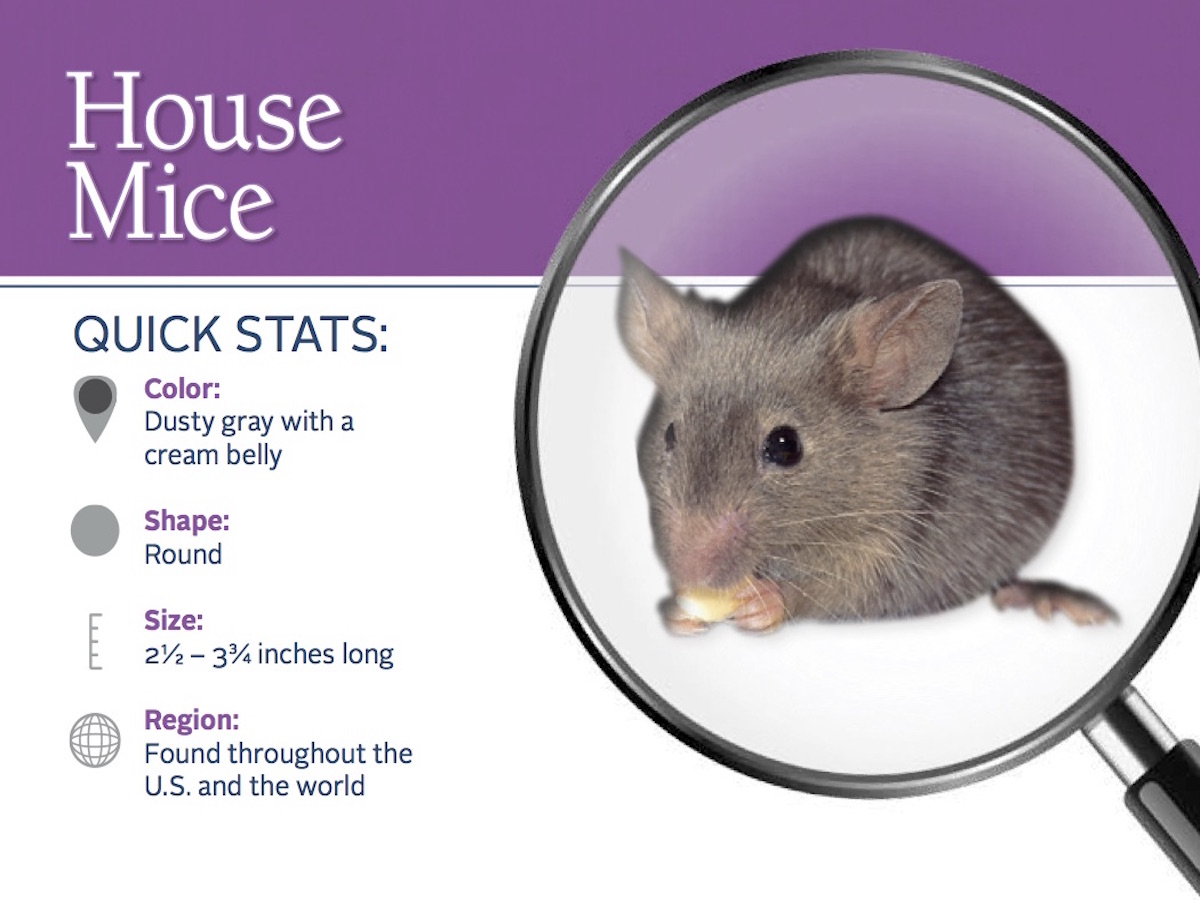
*Photo credit? PestWorld.org. Sheila was too busy screaming to take a photo.  😉

The Kerrians are fictional characters, but the mouse debacle really happened.


Save

Save

Save

KN, p.185 “Is the mouse dead yet?” Read More »

KN, p. 156 “Motivation for Becoming a Law Enforcement Officer”

If there are no paragraph separations in this article, please double-click on the title to create a more readable version.

WWetLiftComparatorIMG_0392-2 copy

Police Officers have as many different backgrounds as the general population these days. Depending on where they live, candidates can come from poor neighborhoods as well as better ones, arrive fresh out of high school or (increasingly) college graduates, and they have all types of ethnic backgrounds. Except for the male/female balance, the mix is becoming more representative every year of our culture as a whole.

Just as educational, economic and ethnic backgrounds differ, so do the reasons for applying to the academy. Take a look at a few of them:

Help the Community  Some of the candidates reveal in their preliminary interviews that they just want to help make their towns safer. Growing up, they may have witnessed crime in their neighborhoods and now want to protect or defend law-abiding citizens. And, it’s not uncommon for younger members of police families to want to carry on the family tradition. 

By becoming a police officer, they will be able to:

  • assist in evacuations before, during, or after natural disasters.
  • keep the peace after power outages (guard neighborhoods from looters, patrol the streets, keep riots from breaking out when tempers flare).
  • search for missing persons.
  • take over traffic control at dangerous intersections when traffic lights don’t work.
  • investigate and solve crimes


WSashaBodyPart FlipWPA-2

Have an Exciting Job  For some, even the thought of a 9 to 5 desk job is out of the question. TV shows and movies with their inaccurate portrayals notwithstanding, the idea of being on the streets and solving crimes can be a real draw. Depending on the department or the size of the city, the level of real excitement might range from that 9 to 5 desk job they didn’t want to actual street time on the narcotics squad. The assignments may not be glamorous to most people, but to a dedicated police officer, investigations are what gets them up in the morning (or more likely, middle of the night).

Authority  Some potential candidates are looking for jobs with a bit of authority, where civilians will look to them for direction or guidance every day on the beat. In most areas, the police are treated with respect.

Military Feel  Many potential police officers prefer a life that resembles the military, with its department ranks and orderly chain of command. Careers in law enforcement are actually fairly easy transitions for men and women who are leaving military duty and moving into civilian life. The mental and physical training they’ve already received during military service is very helpful during the specialized training they will receive at the various law enforcement academies.

Once the initial decision is made to become a Police Officer or other Law Enforcement agent, the next step is to decide which area is the best fit.

Here are links to posts that give overviews of the requirements for a few different types of law enforcement. A smart potential candidate takes a look before he/she makes career plans.


TexasRangerBadgeIMG_3560_2_2Texas Ranger: https://pattiphillipsbooks.com/kerriansnotebook/i54l


SniperSecretServiceWhiteHouseWikipediaSniper: http://bit.ly/1Kal2lz


WDFOLuminesceIMG_0189_2-2

Detective: http://bit.ly/1CfG3IR


If somebody you know wants to become a cop, please pass this along.  🙂


*Photos by Patti Phillips with the exception of the sniper photo.

Sniper photo from Wikipedia


KN, p. 156 “Motivation for Becoming a Law Enforcement Officer” Read More »

Scroll to Top