For Writers

KN, p. 212 “Sheila Sees a Body in the Brush Pile”

If there are no paragraph separations in this article, please double-click on the title to create a more readable version.
Sheila here. This morning, I finished trimming one of the backyard crepe myrtles and hauled the branches out to the curb. I had to use a reciprocating saw to cut through part of the tree, but was able to use a handheld clipper for some of the smaller sections. I felt that clipper fall out of my pocket while I stacked the debris at the curb. It wasn’t going anywhere, so I finished dragging and piling the branches before I looked for the wayward tool.

Guess what? It took me a few minutes to find it, even though I basically knew where it had fallen and had a limited area in which to search.

We frequently watch TV shows and movies telling the tales of people that go missing in the night, people who might have wandered off from a campsite, people or children who might have been separated from a touring group, but who then get lost. Nothing nefarious suspected, but the person hasn’t turned up in a reasonable amount of time. Maybe they tripped and fell, hit their head, and became unconscious.

There are search and rescue groups organized for just this purpose, and most of the members are well-trained volunteers. See Fiona Quinn’s article here.

We, the public, think a body in the woods would be easy to find, unless buried in the ground, or hidden behind a rock, so why do we need all the people and the dogs walking close to each other in a well-defined, mapped out grid?


How hard could it be?


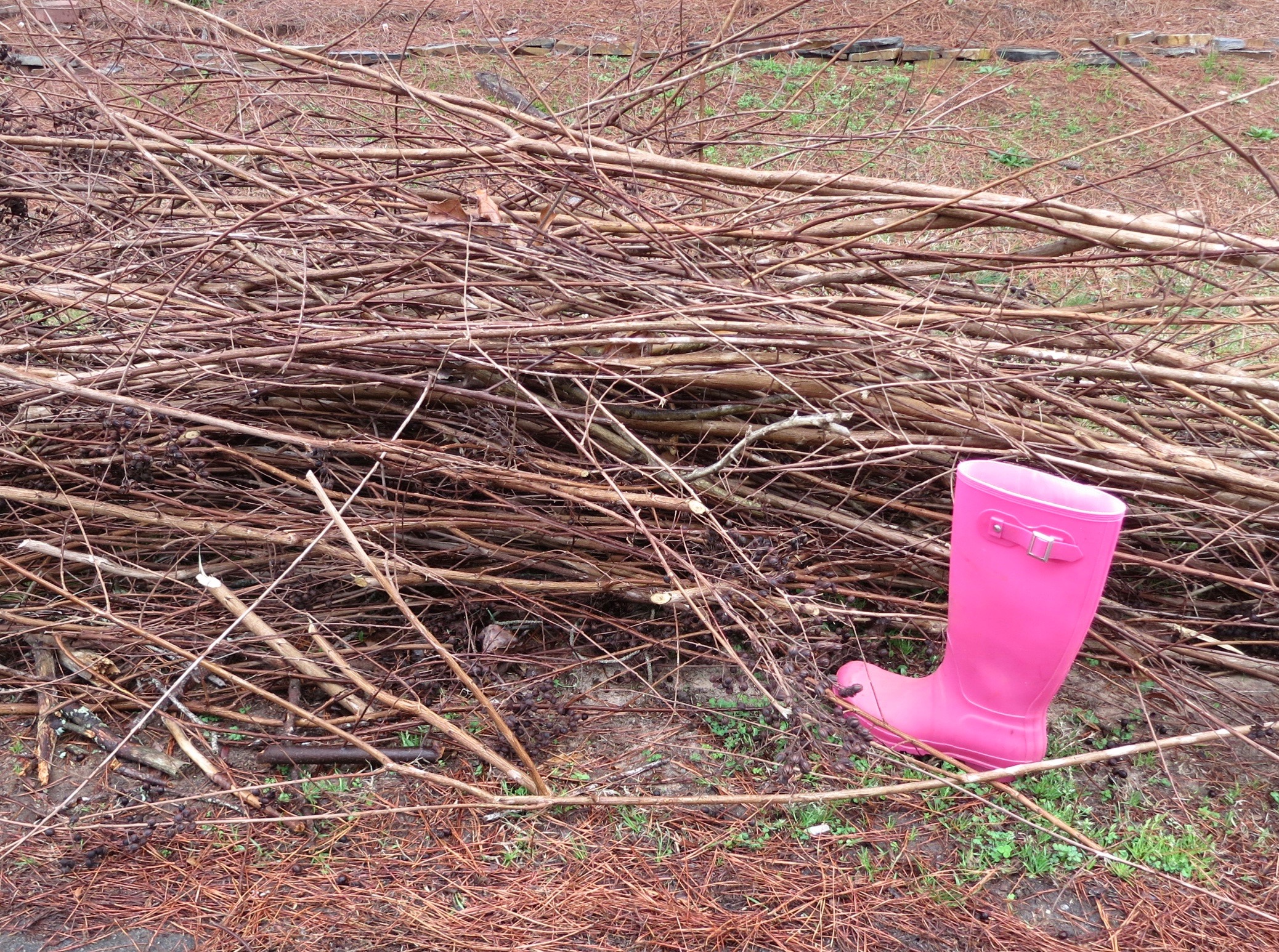
Charlie’s crime oriented brain has rubbed off on me, so this is what I did. I stuffed an old pair of jeans, stuck one of my bright pink wellies at the end of a leg, piled the branches on top of ‘the body part’ and took photos. My apologies to the new neighbors who don’t know what Charlie and I do in our spare time. 

Can’t possibly miss that bright pink wellie I showed you at the beginning?

This is what you’re searching for:
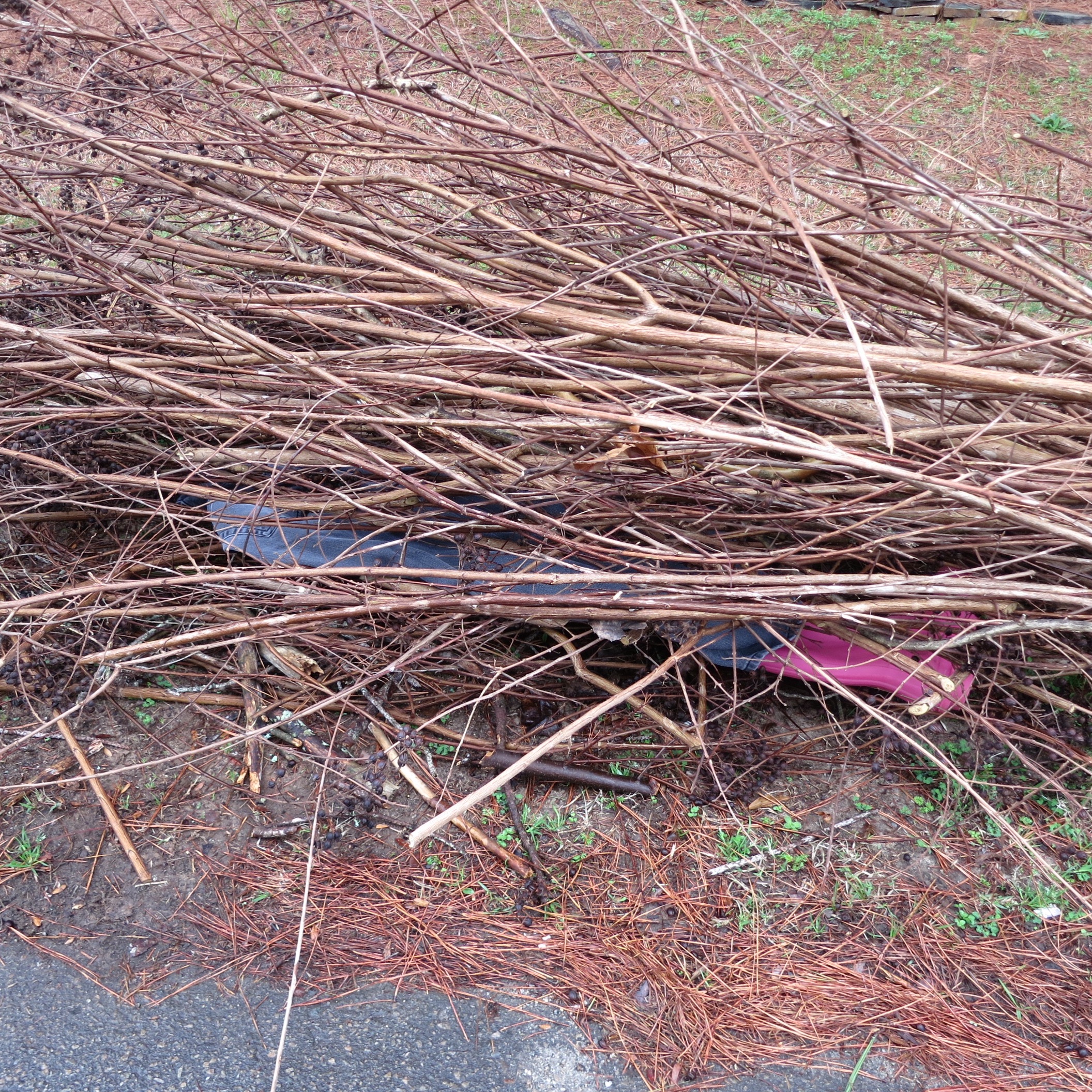


The ‘leg’ is fully visible from this angle, right?
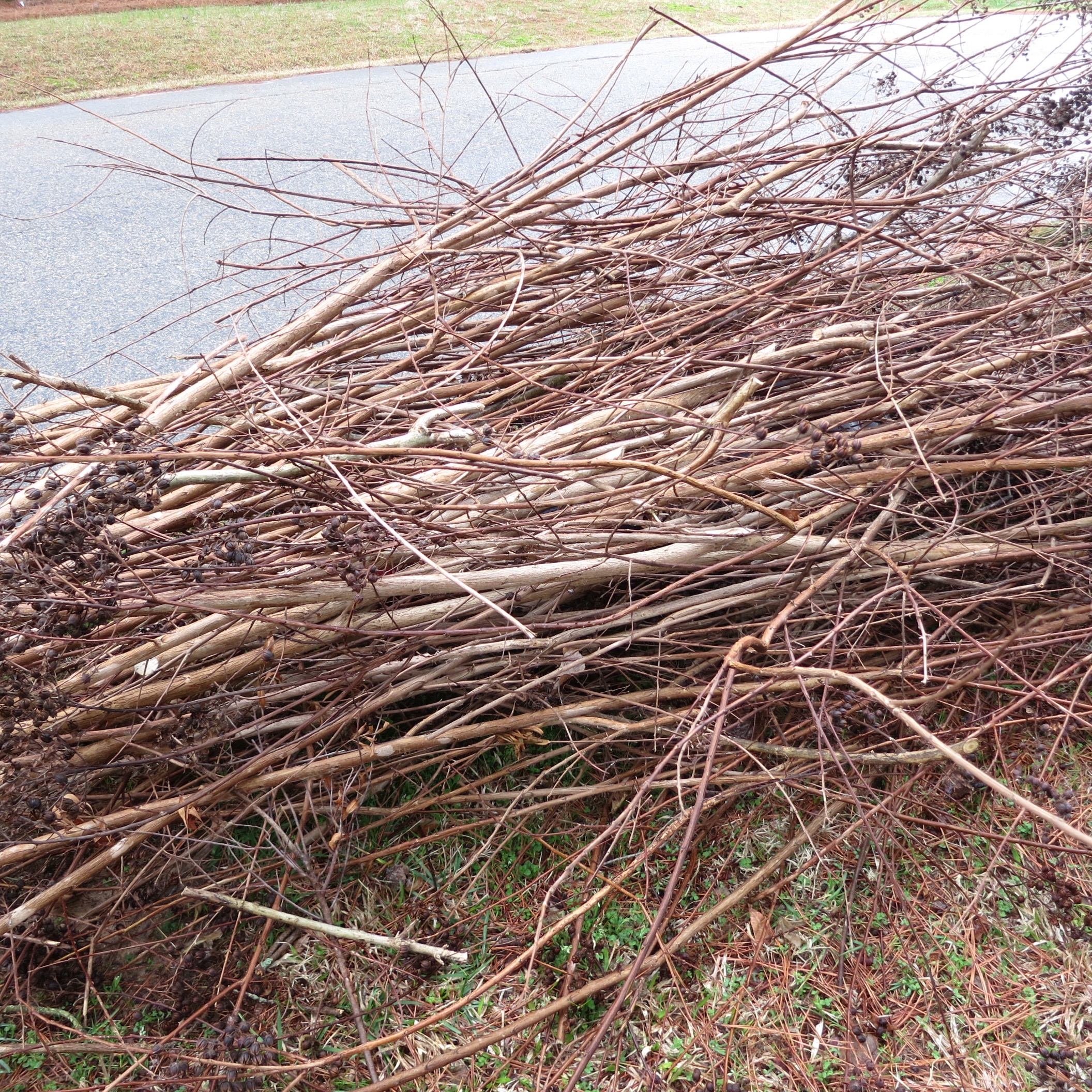


All I did was walk to the other side of the brush pile. A glimpse of the jeans can be seen, but not the bright pink wellie.
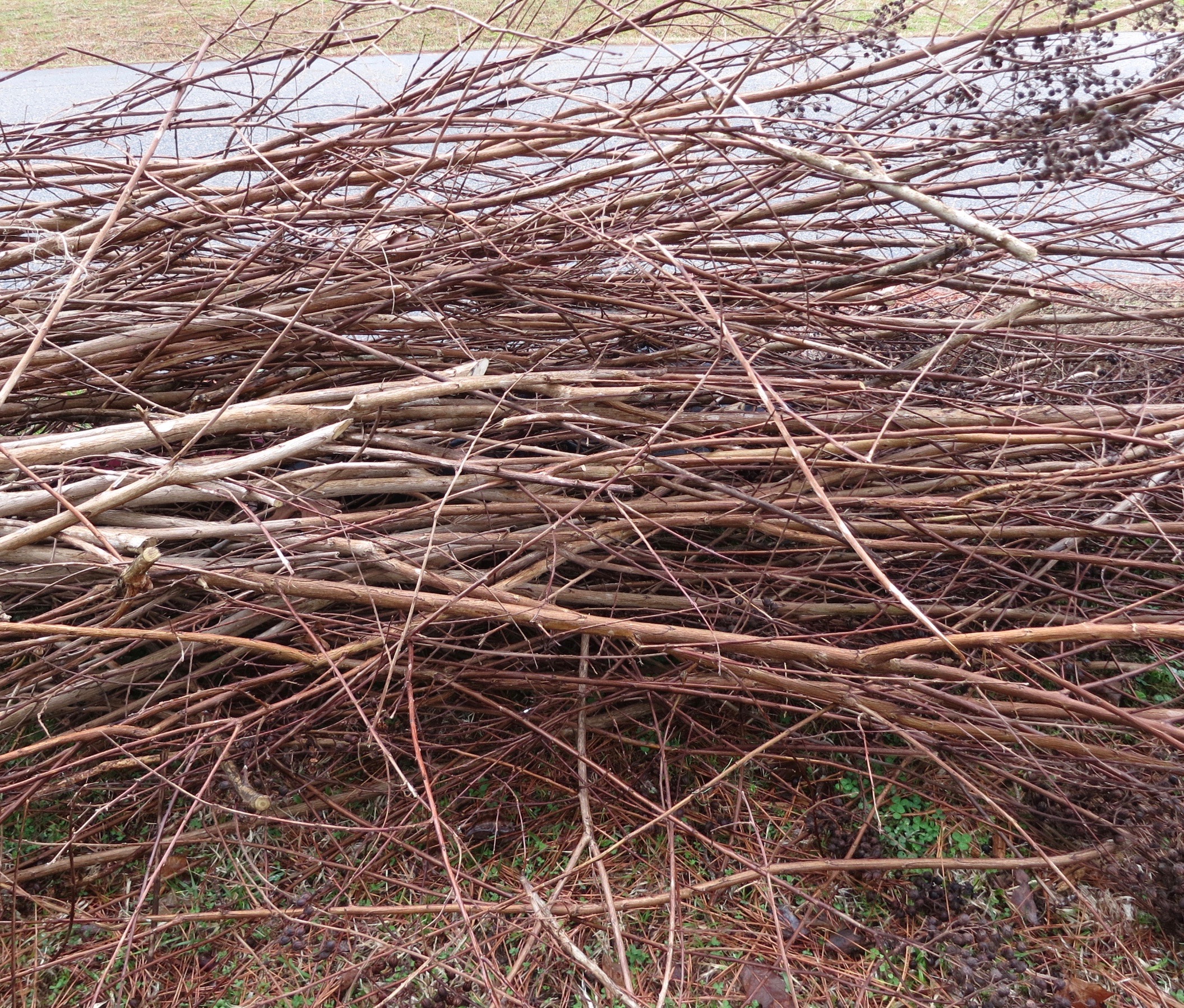
 

I did not remove ‘the body part’ before taking this picture, I promise you. I knew right where the jeans and wellie were and could not see them. Standing right over the ‘crime scene,’ and just because I was at a different angle, and a few steps in a different direction, the area looked quite innocent. Just another gardening pile, in the middle of a nice neighborhood, waiting for pickup from the city refuse truck.

This is why we need Search and Rescue teams walking close together, looking at every blade of grass in front of their feet. In this case, if the ‘body’ had been in the woods, the dogs would probably be called out as well.

Many thanks to all the hardworking volunteers who train vigorously in tough terrain to get certified and are ready to help whenever called upon.


Disclaimer: I did not use a real body part. The jeans were stuffed with t-shirts. Seriously.  😉


KN, p. 212 “Sheila Sees a Body in the Brush Pile” Read More »
KN, p. 271 “The Impact of Weather on Guns and Bullets”

BulletsIMG_2261

If there are no paragraph separations in this article, please double-click on the title to create a more readable version.

Not long ago, a writer mentioned in a Facebook thread that cold must have an adverse effect on firing accuracy. Well, yes and no. Assuming that the shooter is a crack shot, it depends on the firearm, the type of bullet, the type of shooting involved, and how extreme the weather is.

Both extreme heat and extreme cold can affect the trajectory of a bullet. ‘Extreme’ in this post refers to temperatures above 90 degrees Fahrenheit and below zero.

Cold air might cause a more noticeable variation in the bullet path than warm air. Cold air can slow down bullets because cold air is more dense, so it’s harder for the bullet to move through it when longer distances are involved. Hunters might choose a different shaped bullet to help with this issue, but the bullet shape and air density really only comes into play for most shooters when the deer is over 300 yards away – the distance of three football fields. But, even at 200 yards, tests have shown that any bullet drop caused by the cold is only going to be a tenth of an inch.

Cold can cause misfires as a result of using the wrong cleaning oil for the weapons – one that’s not meant for cold temperatures. Oil that gets gummy with temperature variation doesn’t help any shooter, whether using rifles or handguns. Read “Did you clean your gun this week?”


‘External ballistics’ refers to what happens after the bullet leaves the firearm.

It can get really windy in the dead of winter, what with huge storm fronts moving in. I wouldn’t want to step a foot away from my toasty house when the wind chill makes me miserable just to be outside, but law enforcement officers in our far Northern States sometimes don’t have a choice. SWAT teams have to take into consideration the effect that the wind, added to the cold, will have on any distance shots they need to take. Wind is unpredictable and rarely constant, and can affect the shot anywhere along the path of the bullet. However, most hostage situations or other interactions with the bad guys, take place at under a 100 yards, which greatly reduces the firing challenges law enforcement might face, to practically non-existent.

Over 300-400 yards (mainly applying to snipers in the field, or hunters in the mountains) a windy day does make a fairly large difference when adjusting for the shot. Experts and charts tell us that at temperatures around zero, a bullet can shift wide by as much as four inches off target and drop as much as 2 inches, than if the same shot was made at 90 degrees Fahrenheit at that range. Plus, the greater the distance, the more the variation.

Here’s an interesting comparison of shots made by those long distance shooters in different air temperatures, without wind or other factors to interfere.

The target is 1000 yards away – about ten football fields:

  • In 68 degree weather, moderate by most standards, the target can be hit dead center.
  • On a slightly colder day, 50 degrees, without making adjustments to body or gun position, the shooter will miss low, by 6-12 inches.
  • On a hot day of 86 degrees, again without making any body or firearm adjustments, the shooter will miss high, by 6-12 inches.

But wait. The gunpowder in the bullet can be affected by the cold as well. Some gunpowder is temperature sensitive, so if you load your own bullets and live in an area with extreme temperatures, you need to buy the temperature insensitive type. The wrong gunpowder in the bullet can slow its velocity. Added to the dense cold air issue, it’s a recipe for missing the long distance target. To be honest, today’s ammo manufacturers are more in tune with customers wanting fewer misses related to this issue, and several temperature insensitive options are readily available.

These days, there doesn’t have to be much guesswork involved in adjusting for wind and temperature variations. There are apps for that. If a phone has enough bars out in the woods, the average hunter can get online and check out a ballistic calculator with charts to help with corrections for the conditions being experienced.

Law enforcement officers in the steamy South face different obstacles when dealing with heat. Higher temperatures result in gunpowder burning faster, which then causes higher bullet speed. A competitive shooter from North Carolina shared that in the summer he shoots in the early morning, when temperatures never get all that high. But, he’s more concerned about his grip slipping because of the sweat on his palms than from any effect of the temperatures on his ammo. His experience taught him to purchase handguns with non-slip surfaces and grips. In any case, his targets are all under 100 yards away, so the only thing affecting his shots are a bad day at the range and his own sweat.

A gun store owner told me recently that hunters out in extreme temperatures are usually accompanied by big game guides who make sure the equipment is properly selected for the conditions.

Long distance shooters need to take these temperature variations into account. People using their handguns at under 100 yards? Not so much…

KN, p. 271 “The Impact of Weather on Guns and Bullets” Read More »

KN, p. 208 “Death by Freezing”

If there are no paragraph separations in this article, please double-click on the title to create a more readable version.

Most of the USA goes into a deep freeze at some point during the winter. Sadly, people have been known to die because they get stuck in their cars during blizzards. Some have frozen to death in their own homes when power was lost and the heat went off. Tragedies to be sure.

Why can’t humans survive in the severe cold? What happens to the body?

Damage to the eyes:
Your eyeballs can’t really freeze solid in ordinary outdoor activities, but you could do serious damage to them if you don’t wear goggles in extreme temperatures. Runners note: the eyes might tear a bit more, but the eyelids will blink, and deliver the salt (naturally found in tears) to coat the eyeball, effectively lowering the freezing point of the tears themselves. It is possible for the eyeball to freeze temporarily during extreme sports – like the challenging cross country Iditarod races in Alaska – but lesser symptoms (blurred vision, frostbite) can also impair a contestant’s ability to complete the course. Doctor intervention might be necessary if either of these problems occur, because otherwise, injury to the body can be permanent.

Damage to the skin/muscles:
Feet, fingers, and toes can freeze to the point of pieces falling off, or needing to be amputated. Frostnip can freeze the skin, but frostbite can freeze not just the skin, but muscles, tissues and fat beneath it. Plus, if the wind chill drops below -40F, your skin can freeze within minutes if you’re not wearing the proper gear.

I had the wrong gloves with me while on a ski trip in colder-than-we-expected temperatures years ago. True story: it only took ten minutes for my fingers to be in great pain. I knew there was a problem after five and headed to the lodge. I got first aid, and new gloves, but I stayed inside until the outside temperatures rose in the afternoon. My thumbs hurt now, just thinking about it.

Sound scary? How about this: the longer you’re exposed, the more likely it is that any damage will be permanent and/or involve amputation. I got lucky. I was minutes away from help.


Cold can kill:
Listen to the weather forecasters and government officials when they tell you to stay indoors during extremely cold weather. If you’re not dressed properly or are in a place without shelter, you might die in the wrong combination of circumstances. Every year, people in North America die from a variety of situations where exposure to the elements overtook the body’s ability to cope. In the first week of January, 2018, when temperatures dropped unexpectedly across wide swaths of North America, ten people died.

https://www.usnews.com/news/us/articles/2018-01-16/frigid-temperatures-trail-storm-dropping-more-snow-on-south


The human body maintains a core temperature of 98.6F (37 C) and when it drops, hypothermia can set in. Even a 4-5 degree drop, if accompanied by constant shivering, tiredness, and rapid breathing, can signal the onset.

We wear insulated jackets, gloves, and hats to avoid getting chilled. They trap the air around our bodies and keep in the heat.  But, if the clothes get wet (say you fall through the ice while skating) the insulating effects are gone and there will be rapid body heat loss, as if you weren’t wearing that winter jacket at all. Interesting factoid: Your body type also determines how quickly you lose heat: Tall, slender people become cold much faster than shorter, heavier types.

There are levels of hypothermia. In moderate hypothermia, symptoms might include poor coordination, slurred speech, confusion, and slowed breathing. In severe hypothermia, symptoms might make it hard to tell if the person is alive or dead. They’ll lose consciousness, their breathing might become too shallow to detect, the pulse will be weak, or irregular, and pupils will be dilated. Severe hypothermia is often fatal.

How could this happen? Why would people put themselves into a situation where they might lose limbs, or even die? That forgotten bottle of milk at the store that is 20 miles away? The unexpected emergency trip to a sick relative, when you left home before the storm arrived? Braving the elements to prove something to your friends? Extreme Sports competitions? You name it. Be prepared and most of the risk for a bad ending goes away.

Dress in layers, wear a hat and gloves, wear goggles or glasses when in the snow, cover exposed skin, bring pets indoors, stock the car with water and blankets. Read “Snow Shoveling and Heart Attacks,” and “Get Ready for the Blizzard” for more prevention/survival tips.

Now that you’ve read all the bad things about getting too cold for your own good, remember that First Responders – police, firefighters, and EMS personnel – have to be out in the worst of the worst conditions. They go to work so that you can be rescued or saved from harm.

Be kind. Follow directions. Stay home if you can. Dress appropriately, no matter what activity takes you out into the cold.

Stay alive.

For more information about the effects of severe cold on the body, see: http://www.princeton.edu/~oa/safety/hypocold.shtml


KN, p. 208 “Death by Freezing” Read More »

Scroll to Top