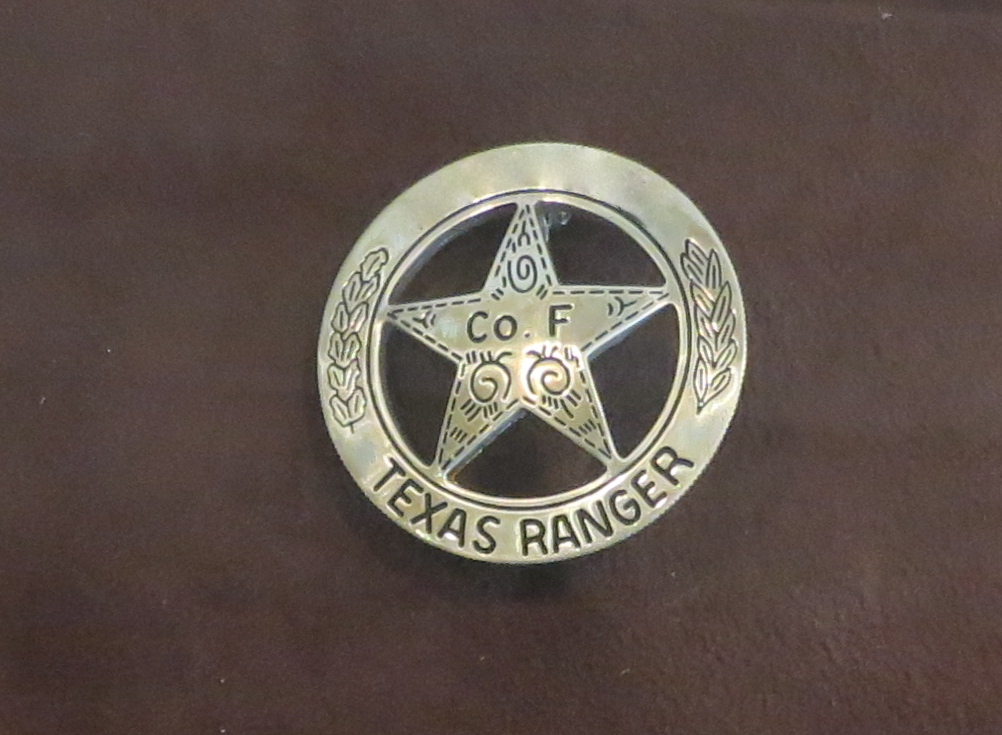
The modern Texas Ranger generally dresses in civilian clothes, and most of them wear a western hat and western boots in the course of their daily activities. Badges, still made from a Mexican peso, are pinned to a Rangers’ shirt above the left pocket. Today’s Rangers travel by car, airplane, helicopter, and sometimes by horse. Each Ranger is furnished an automatic, a 12 gauge shotgun, a semi-automatic rifle, and a crime scene kit (with materials for taking fingerprints and making plaster casts of tracks and tool marks, and other test kits)
Specialized equipment (sniper rifles, night vision scopes, tear gas guns, grenades, black lights, surveillance equipment, and gas masks) are on hand if needed. Their duties vary by assignment, but Rangers still have criminal investigative responsibilities while supporting local law enforcement.
Read “Who are the Texas Rangers?”
Read “What does a Texas Ranger do?”
If you’ve read the previous two articles, you’ve seen what an interesting job the Rangers have. You may even wish you could become one, since there is no maximum age for a potential candidate to apply. Yup, that’s right. If you’re 55 or 60 or even older, have a law enforcement background and can score better than all those young kids applying, the Ranger organization just might take you on. But first, you’d better check out the things you have to do in order to qualify.
First things, first…
Potential Texas Ranger applicants are always selected from the ranks of the Texas Department of Public Safety. There has never been a need to do any recruiting because 200 people often apply for one opening.
Basic Requirements For the DPS Trooper Academy
- U.S. Citizenship
- At least 20 years of age to apply and must be 21 years of age upon graduating from the Department’s Trooper Trainee Academy
- Must have 60 college credits from an accredited college/university or
- 24 months of Active duty military/full time law officer experience or
- 24 months of full time work experience with a qualifying Federal Agency or
- 6 years’ service in the Reserve or National Guard (730 retirement hours)
Only the most competitive candidates get to move on to the entrance testing phase. The written exam is a combination of questions testing 12th grade reading comprehension, grammar/writing skills, and math. Here is a sample of the questions a candidate might see:
If the applicant passes the written test, the next step is the Fitness Test. If you can’t pass this, it knocks you out of consideration. Truthfully, it’s not that different from tests given to military inductees or other law enforcement candidates, but it counts toward your overall ranking with the other applicants.
The minimum standard for the Fitness Test is the 50th percentile or above (according to their age and gender), but if that’s the best you can do, you more than likely will be cut at that point.
The old requirement was a three-event test (abdominal crunches, pushups, and a 1.5 mile run) but the most recent academy required the new recruits to pass the entrance physical readiness test on the Concept2 Rower instead.
Here’s an idea of what a 35 year old applicant would have to do in the three-event test:
- 48 Crunches in 2 minutes or less.
45 Push-ups.
30 minutes or less to complete the 1.5 Mile Run.
If you’re a little older or younger, there was an adjustment for age, but not much – only a few seconds or reps. Face it, ya gotta be in shape.
But wait… the newest applicants can’t take that test anymore. They have to complete the rowing test instead. Which means rowing 2000 meters (a little over a mile) in less than ten minutes. Adjustments are made for weight, age and gender, but again, not much. The video shows what the rower needs to do in terms of extension, etc.
Concept2 Rowing Video
How do you think you’d do? I might have been able to pass the three-event test before I got shot, but I have never been a rower. Oh, maybe across the pond while I’m fishing, but never distance rowing, ever. LOL
So, let’s say you pass the tests for entrance into the Trooper Academy and successfully complete the training. Time to actually do the work of a State Trooper before you can ever become a Texas Ranger.
Trooper Duties
DPS is a state police agency and as such, the Highway Patrol Division Troopers enforce traffic laws, assist during emergencies, investigate most traffic accidents, recover stolen vehicles and stolen property, apprehend wanted persons, and are responsible for security at the State Capitol in Austin, as well as the protection of the Governor while he travels.
After at least two years with the DPS, your career is going well and you decide you’d like to become a Ranger. Here’s the next set of…
Special requirements to become a Texas Ranger:
- Outstanding record of at least eight (8) years experience with a bona fide law enforcement agency (which could be the DPS), engaged principally in the investigation of major crimes (being an MP doesn’t count)
- Currently employed with the Texas Department of Public Safety, in the position of a commissioned officer with the rank of at least Trooper II
- Background check, which would reflect good moral character and habits
- Valid, clean Texas driver’s license
- 30 years old at the time of becoming a Ranger
An entrance examination is given, and selected applicants with the highest scores appear before an Oral Interview Board before final selection. The questions are not easy and most applicants don’t pass the first time. Even the wives are interviewed.
If you make it through…
As the needs of Texas have evolved, so have the duties of the Rangers. More and more of the Ranger budget is used to guard the border with Mexico, attempting to keep undocumented immigrants from crossing by land or water, as well as protect against the multiple drug and human trafficking rings. The Ranger companies are assigned to serve with the Border Patrol on a rotating basis, no matter where the home assignment is within the State.
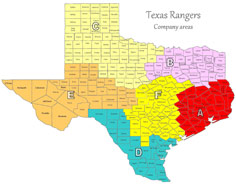
You read about the many investigative duties of a Texas Ranger in “What does a Texas Ranger do?” There are also…
Specialized Units
The Special Operations Group has six programs:
- The Special Weapons and Tactics Team (SWAT) is headquartered in Austin. When needed, they typically respond to: high-risk situations that include hostages, barricaded subjects, and/or active shooter incidents.
- The Bomb Squad is part of the SWAT Team in the Texas Rangers and is accredited by the FBI. They are the primary responders (and provide investigative support) to crisis situations involving any kind of explosive devices. Members of this highly skilled group train at Red Stone Arsenal, Huntsville, Alabama.
- The Ranger Reconnaissance Team carries out undercover missions along the Texas-Mexico border region or in out-of-the-way areas inaccessible by local law enforcement. The team gathers intelligence and disrupts drug cartel operations.
- Special Response Teams (SRT) are a blend of Highway Patrol officers, Criminal Investigation officers and Texas Rangers and are located in each of the areas covered by the Texas Rangers. They are the first responders to hostage situations, barricaded and/or active shooter incidents.
- Crisis Negotiation Teams (CNT) CNT members collect and evaluate information about various ongoing crises, relay that information to the Special Operations Commander, and are sometimes part of the active resolution of the incident.
- Border Security Operations Center (BSOC) – Joint Operations and Intelligence Centers (JOIC). The Border Security Operations Center (BSOC) is headquartered in Austin, analyzes border security/criminal information, and makes sure that new information is shared with the correct agencies.
In addition…
Unsolved Crimes Investigation Program
The Unsolved Crimes unit allows Texas law enforcement agencies the extra edge to investigate unsolved murders when there seems to be a link between several crimes. A local agency may investigate one crime, have no suspect after a reasonable period of time, and set the case aside until some clarifying piece of evidence shows up. The Unsolved Crimes unit has easier access to information about similar cases statewide or nationwide and may be able to tie all the information together and focus efforts on a particular suspect.
Texas Ranger Forensic Artists
Since the 1980s, the TXDPS has employed full-time Forensic Artists. They help criminal investigators by completing:
- Composite drawings of suspects
- Post mortem images of unidentified deceased persons
- 2-D and 3-D facial reconstruction images using skeletal remains
- Age-progressed facial images of missing persons or fugitives
The Forensic Artists sometimes testify in court as to their findings. They also work with the TXDPS Missing Persons Clearinghouse, the Unidentified Persons and DNA Unit.
In 2013, the average Texas Ranger was around 44 years of age, so the job is not about youth and daredevil showboating. The job is about experience, perseverance, a keen investigative mind, a willingness to be “subject to call” 24/7, and the ability to bring in the criminal, whatever it takes.
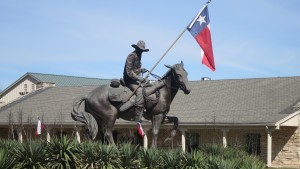
Many thanks to Texas Ranger, Ret., Richard (Dick) Johnson, for his generosity in sharing his experiences and expertise about the Texas Rangers. Thanks also to his wife, Connie Johnson, for introducing me to Sargent Johnson and sharing her own perspective about the Rangers and all the amazing things they do. Any errors in fact are mine, not theirs.
Photo credits:
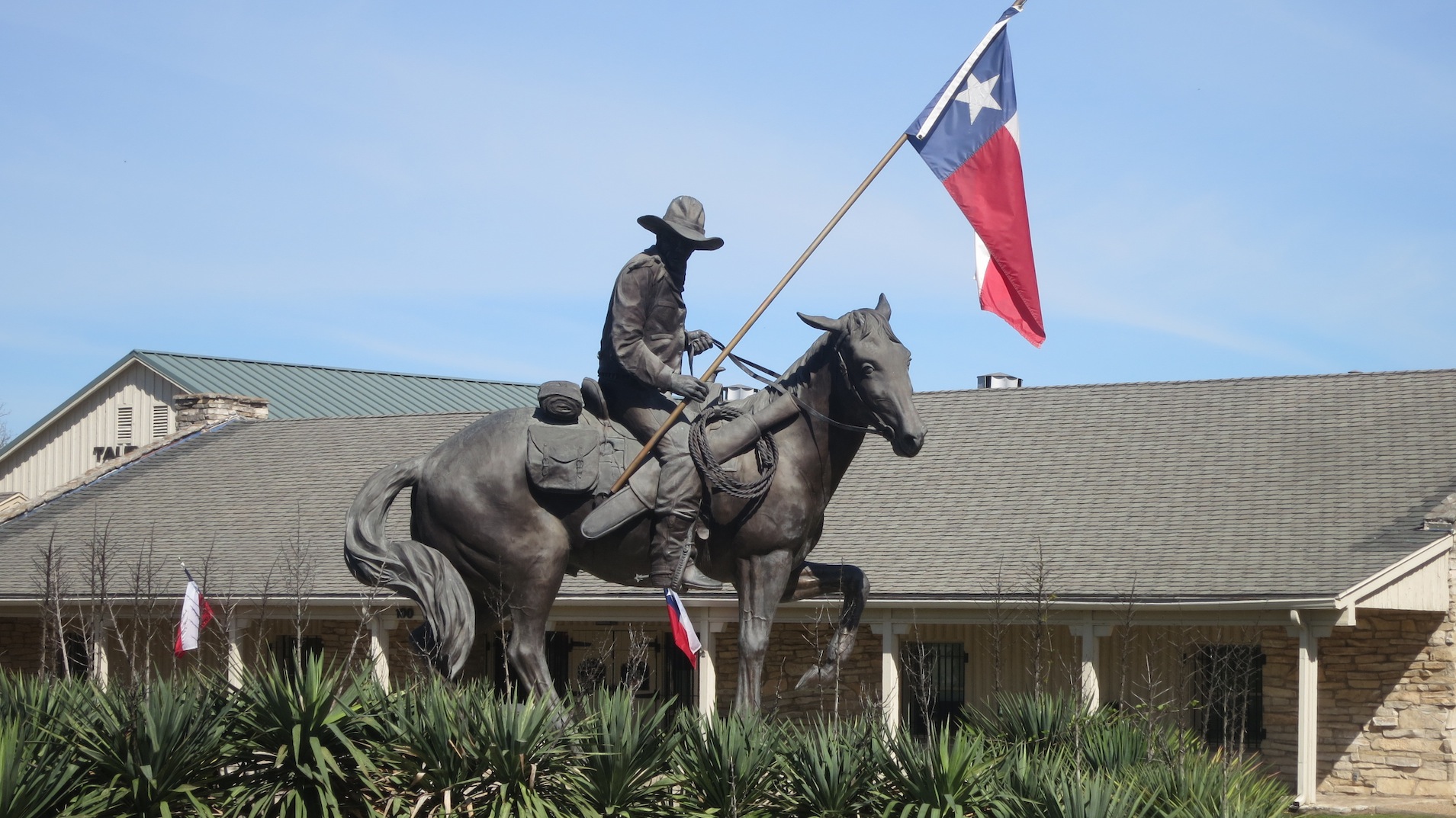
First and last photos taken by Patti Phillips at the Texas Ranger Hall of Fame and Museum in Waco, Texas
Map: the Texas Department of Public Safety