
crime

KN, p. 133 “What poisons were in Agatha Christie’s books?”
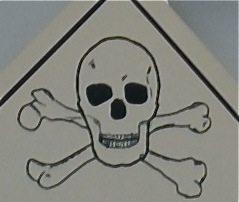
Sheila is a big mystery buff and last weekend had a chance to attend an event in honor of Agatha Christie. Dame Christie’s crime fiction has been more widely read than any literary work in history, except for the Bible and Shakespeare. Pretty good resume.

One of the facts that Sheila came home bubbling about was that lots of Christie’s books featured poison as the weapon of choice. So, she asked me to find out how common those poisons were during the time that Christie was writing in the mid 1900s.

The answer? Agatha Christie used both common and unusual poisons in her books, some readily available in the garden shed, some found under the kitchen sink and others found only in pharmacies. She had been a real-life nurse during WW1 and had lots of chances to learn about, as well as use, many drugs – some of which could have been poisonous if mixed incorrectly or administered in too high a dose. In Christie’s 66 novels, she killed off over thirty unsuspecting characters with poison, some of which are described below. Her choices were based on what she needed to happen in the plot; did the killer have time to get away or did the storyline require a slow, unsuspicious death?

Arsenic – arsenic is a tasteless, odorless powder that dissolves nicely in hot liquids like tea or coffee. The victim doesn’t die right away, so the ‘nice neighbor’ can serve tea with cookies or muffins, then get away with murder when the victim dies hours later at home with a high enough dose. I’ve been told that it’s not a pleasant way to go, involving painful tingling in the hands and feet, kidney failure, abdominal cramping, arrhythmia, etc. Arsenic was used in “4.50 from Paddington.”

Belladonna – belladonna is a nightshade plant, with both the berries and leaves being really toxic. It was used in “The Caribbean Mystery.” Victims might have rapid heartbeat, blurry vision, and hallucinations, but can be saved by using an antidote.

Cyanide – created most famously from the seeds of almonds or cherries, cyanide poisoning is a rapid way to get rid of a victim – dead in just minutes with the right concentrated dose. The person’s breath is reputed to smell like almonds and the skin is tinged with pink after death. Cyanide was the poison of choice in “And Then There Were None,” and several other Christie books.

Morphine – used as a painkiller in normal circumstances, morphine can be deadly if administered incorrectly – and Christie used that fact effectively in a pot of tea in “Sad Cypress.” A great twist in the storyline diverts attention away from the murderer while he ‘does the deed.’

Strychnine – it only takes two to three hours to die from strychnine poisoning and it’s not a nice way to croak. Muscle contractions start and spread, increasing in intensity, until the victim has respiratory failure. Christie chose this method for her first novel, “Affair at Styles.”

While poisons may be a fascinating way to kill somebody on the page, in fact, it’s not used that often in real life. And unlike blunt force trauma as a cause of death, the use of poison is not always obvious at the crime scene. Autopsies have to be performed to discover what happened, with special tox screens needed to pinpoint any poison used.

According to the FBI stats on murder victims in the USA as of 2011, over 8,000 people died because of firearms, and only 5 (five) because of a deadly dose of poison. If you include narcotics in that number, the victims increase to 34.

But, it certainly makes the poisoner that gets caught, unlikely to get a reduced sentence. I doubt that a lawyer could explain away arsenic in the tea.


*Photo by Patti Phillips

FBI data from:

http://www.fbi.gov/about-us/cjis/ucr/crime-in-the-u.s/2011/crime-in-the-u.s.-2011/tables/expanded-homicide-data-table-8


Save

KN, p. 133 “What poisons were in Agatha Christie’s books?” Read More »

KN, p. 51 “How big is that jail cell?”

Thinking of committing a crime?

Then let me show you where you’ll be living soon.

A life of crime is highly overrated by TV and the movies. Crooks do business in back alleys, abandoned buildings and isolated roads. Drugs are stored or processed in grungy apartments or warehouses. These days, there is no honor among thieves and some other gang is always trying to move in on your territory. You will be shot at, stabbed, or beaten if you don’t meet your boss’ quota or you happen to decide that he’s not giving you a big enough cut for taking all the risks. Your life is not your own, once you make a deal with scum.

And, if you think you can score big with a heist and live the life of luxury in a mansion somewhere…think again. If the cops don’t catch you right away, don’t worry…we will soon enough.

And, then your living arrangements will take a nosedive.

Let’s talk about privacy while you wait for trial behind bars. There is no privacy. None. And, the toilet is conveniently located right there with you in the see-through cell.

Then there’s the limited movement issue. Folks, look at the space. Some of the prisoners get to stay behind the bars for 23 hours a day, including meals. One hour in 24 outside the bars. Just sixty minutes, people.

Do you want the bedroom to be quiet and darkened at night, so that you can snooze? Not gonna happen. Ever. Plus, you might have to sleep on the floor if the jail is extra crowded that week. The big guy gets the cot.

I bet you like the smell of gun oil or aftershave or a steak cooking on the grill. Well, get used to the stink of open toilets, puke, and old sweat instead.

Think I’m exaggerating? Try a couple of nights in county and report back. If you’re smart, you’ll think again and settle for a job flipping burgers rather than selling drugs on the corner or becoming a convenience store robber. At least you get to go home at night.


*Photograph by Patti Phillips


Save

KN, p. 51 “How big is that jail cell?” Read More »

KN, p. 110 “Death at the Soccer Pitch”


(from the 2014 archives)

Warning: part of this post may be too intense for some readers.

In soccer, the ‘pitch’ is the field upon which the game is played. The USA, Canada, and Australia call it soccer. To most of the rest of the world, the sport is called football.

Soccer is the most popular sport in the world. Period. Second place? Cricket.


Over 710 million people worldwide watched the final match held in Germany in 2010. We tried to get tickets for at least one of the weeks of the month-long finals that year, but by the time we could make travel plans, we discovered that they had been sold out for over a year. This year’s finals will be held in Brazil, beginning on June 12th and ending a month later in July.


The World Cup Finals are held every four years, with over 200 teams from around the world competing for more than two years to narrow the field to the 32 teams that reach the Finals. The level of play during the competition is amazing, with headers and kicks and jaw-dropping goals that look physically impossible to make.


The team and fan rivalry is enthusiastic and can sometimes be intense. Sometimes, fans get so caught up in the moment that they lose all sense of reason if a call goes against their favorite player or team.


In 2013, a referee expelled a player from a game, a fight broke out and the referee in Brazil mortally stabbed the player. When friends and family of the player found out that he had died on the way to the hospital, they charged onto the field and stoned the ref to death. Then they quartered his body. They took his head and put it on a pike in the middle of the field. That’s not a typo, folks.

Just about a month ago, some fans were so annoyed by play at a match that they started tossing toilet bowls at the opposition fans. Yup, ripped out the plumbing and threw it, killing someone in the process.

http://www.bloomberg.com/news/2014-05-05/fan-killed-by-toilet-bowl-as-violence-hits-world-cup-host-brazil.html


Law enforcement agencies and fans of the sport have been working for several years to reduce the number of incidents, occasionally emptying stadiums before a match is finished so that a game can be completed without further harm coming to players or refs or the fans themselves. Serious scrutiny of various underlying causes for the riots, crowd mentality, and sometimes criminal behavior has even caused a change in how the games are played and/or policed.

I love the sport, and even played on the varsity soccer team when I was a kid, so I am not knocking the pure beauty of the game. People just get carried away from time to time, forgetting that it is in fact, just a game we play for exercise, sport and/or entertainment. Many of the top players in the world, in this pre-World Cup week, have said in interviews that they want to provide great entertainment for the fans. Of course they also want to win, but hooligans are not invited to the show.


We won’t be in Brazil this month, so we’ll have to be happy catching a match or two on TV. Plus, I have my ’94 World Cup t-shirt to wear whenever the USA plays.  😉


If you are lucky enough to watch some of the matches in person, here are some tips to remain safe and happy while you’re there. They work for any large sporting event, not just the World Cup.

  • If they are demonstrating against the World Cup, stay away from the protest.
    .
  • If you want to take pictures of people, make sure to ask first.
    .
  • Leave your valuable jewelry at home.
  • .
  • Take a taxi or walk with a group or a trusted guide.
    .
  • Do not flash around your cash, iphone, ipad and/or cameras. You can use them, but then, cover them up.
  • Don’t take your valuables to the beach.
    .
  • Drink bottled water.
    ..
  • Don’t get drunk, but if you’re going out, don’t bring your credit card and smartphone with you. Take some cash, bring the address from the hotel, and a copy of your passport.
    .

Stay safe and have loads of fun watching the best soccer players in the world compete.


*Photos by Patti Phillips


KN, p. 110 “Death at the Soccer Pitch” Read More »

Scroll to Top