evidence

FW: “Where are the Evidence Collection kits made?”

If there are no paragraph separations in this article, please double-click on the title to create a more readable version.

NOTE: This was updated in August, 2019 to reflect new information.  🙂

Part 2 – information about Evidence Collection Training Classes held at SIRCHIE.

Click here for Part 1 – PW: “Have you been fingerprinted?”
During the first two days of Evidence Collection Training, we used a number of chemicals, fingerprint powders, and brushes, and employed several different fingerprint lifting techniques on a variety of tricky surfaces. We discussed the benefits of both cheap and costly Alternate Light Sources.

 Our notebooks were filling up and theories of the perfect crime were flying around the class. We kept quizzing Robert Skiff, our instructor, (Sirchie Training Manager/Technical Training Specialist) about ways to ‘get away with the murder of the decade.’ But, as we learned, there is no perfect crime. That pesky trace evidence will always be waiting at every scene for the investigator to discover it, photograph it, tag it, bag it, and transport it without losing the integrity of the sample.

It was time to visit the plant – see how the powders, brushes, and other crime scene paraphernalia were made.

Sirchie manufactures most of its products in-house. The specialized vehicles for SWAT, bomb rescue, arson investigation, and surveillance work, etc., will now be built in North Carolina, along with the smaller products.

Security was carefully controlled throughout our tour. Most of our group writes crime fiction, so we are always looking for a way our fictional criminals can break in (or out of) a wild assortment of locations. As we walked through the stacks and aisles of products, we commented to each other on the smooth organization and many checks Sirchie had in place. Cameras everywhere. Limited access to the assembly floor. Labyrinths a person could easily get turned around in. If we got separated from the group while taking an extra photo or two, we were found and escorted back by an always friendly employee.


Of course, we couldn’t turn into rogue students anyway. Our fingerprints littered the classroom and they knew where we lived.

Security plays a part in the assembly model as well. Each product they create is put together from start to finish by hand. There are no assembly lines because of trade secrets and a dedication to preserving product integrity. Personnel are carefully screened before being hired and qualification for employment includes graduate degrees. No criminal history whatsoever is allowed. Every employee comes through the Evidence Collection Training Class so that they understand what Sirchie does as a whole.
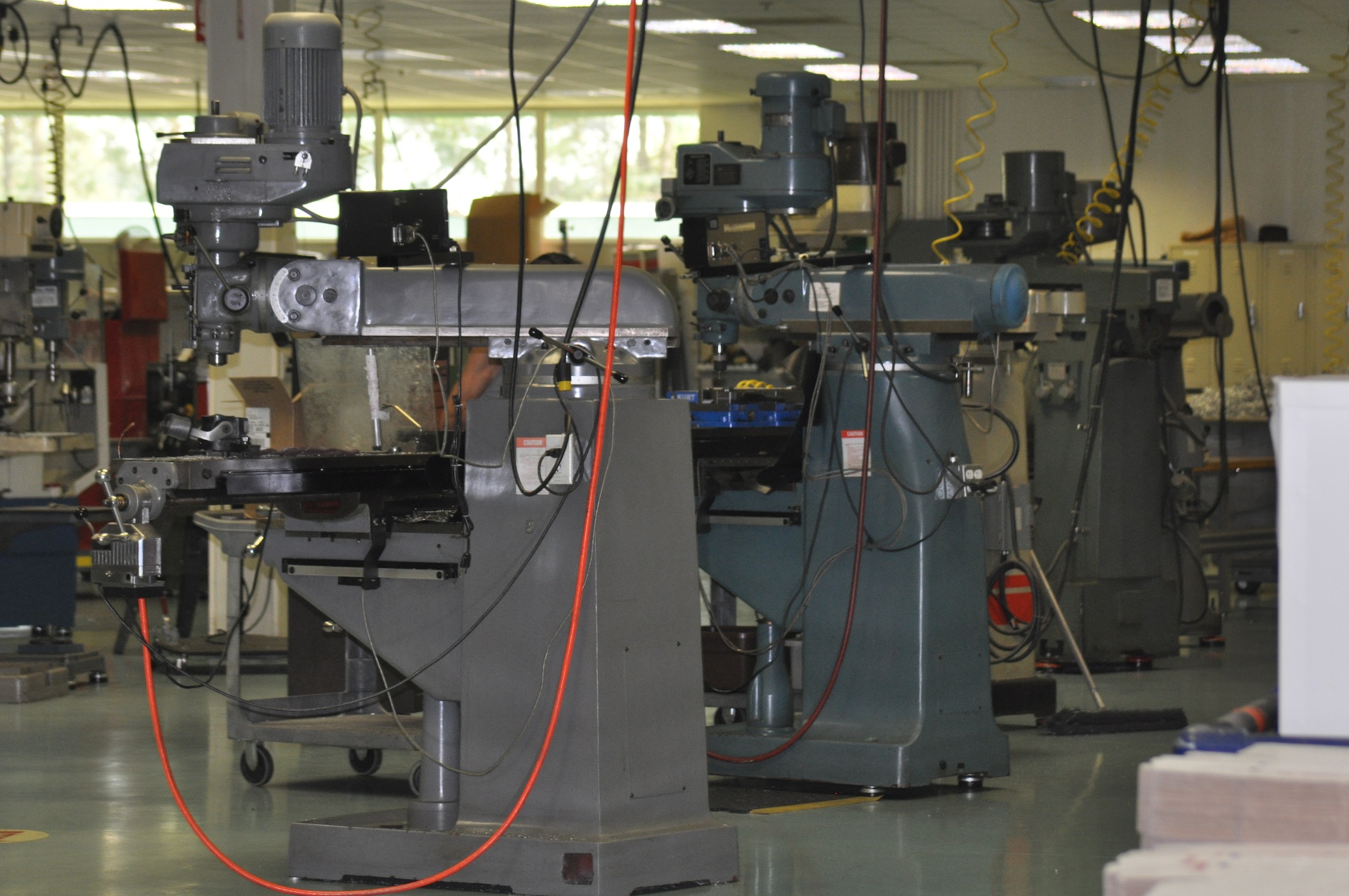
 

Tool and Die Machines


Templates for the various products are created in-house. The operators of these machines are highly trained experts. Quality control is paramount, so training is constant.
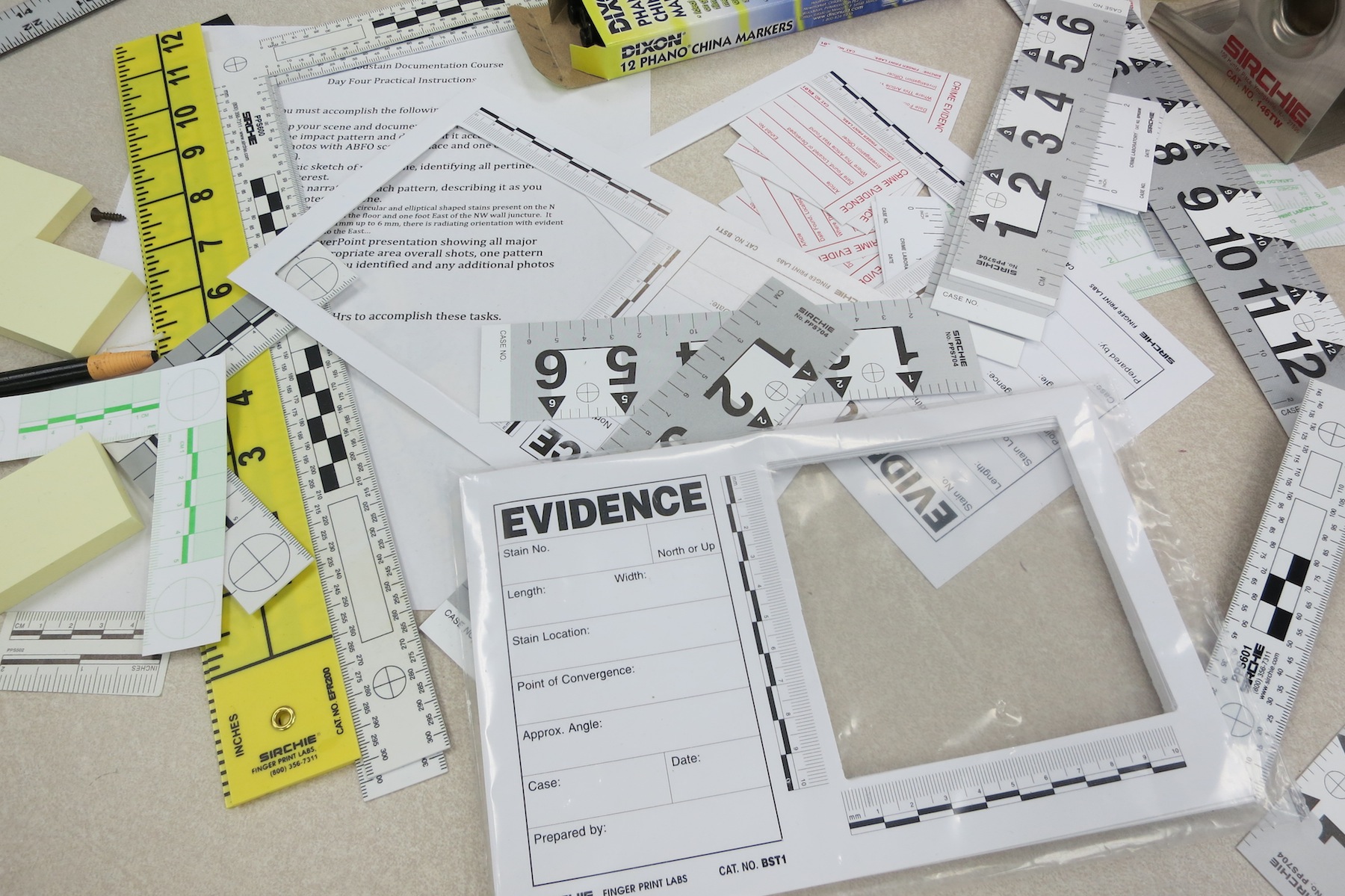
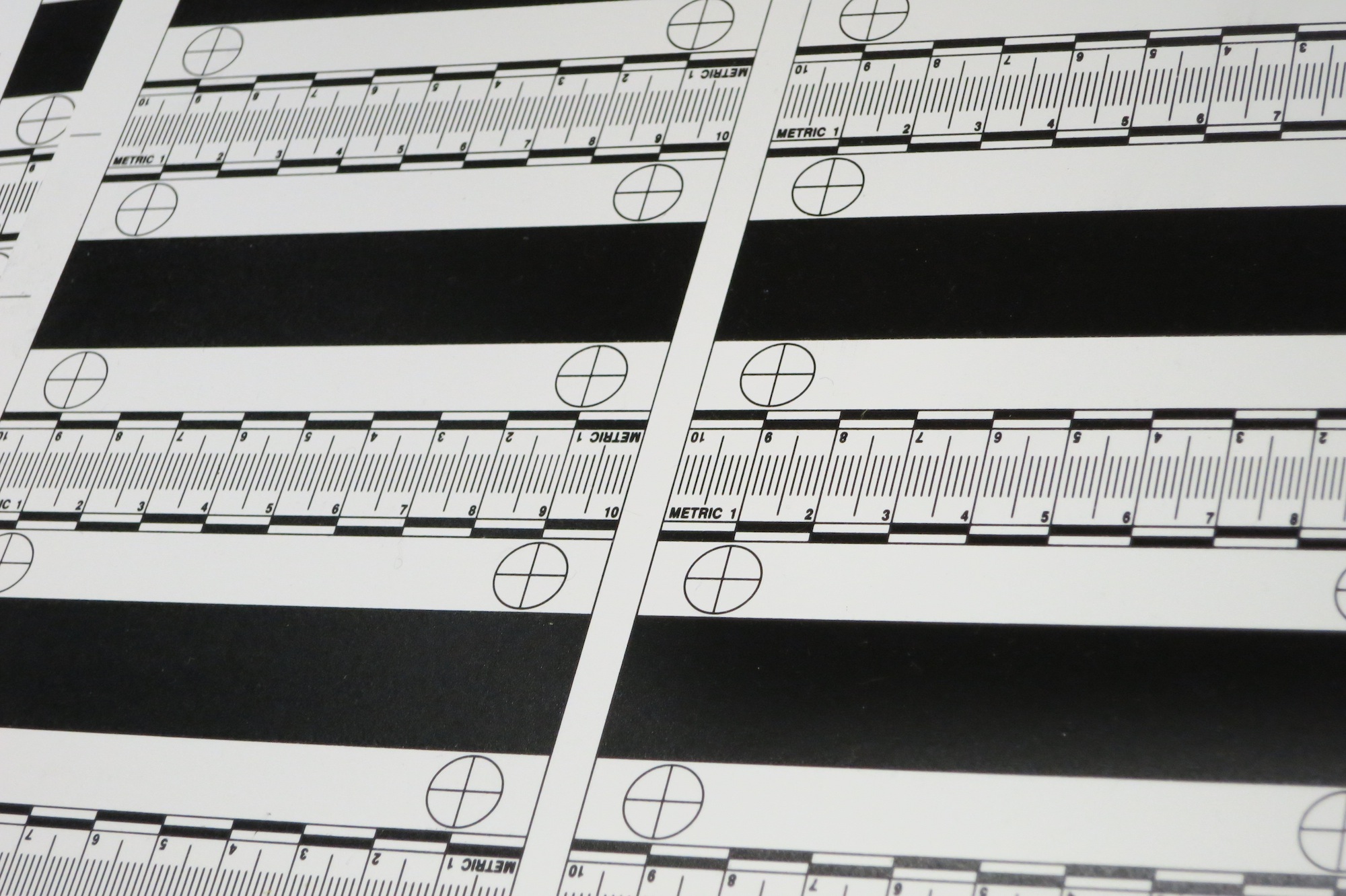


All the printing is done in-house. The printing area was stacked with cases of items being packaged for shipment. We saw strips large enough to process tire treads.
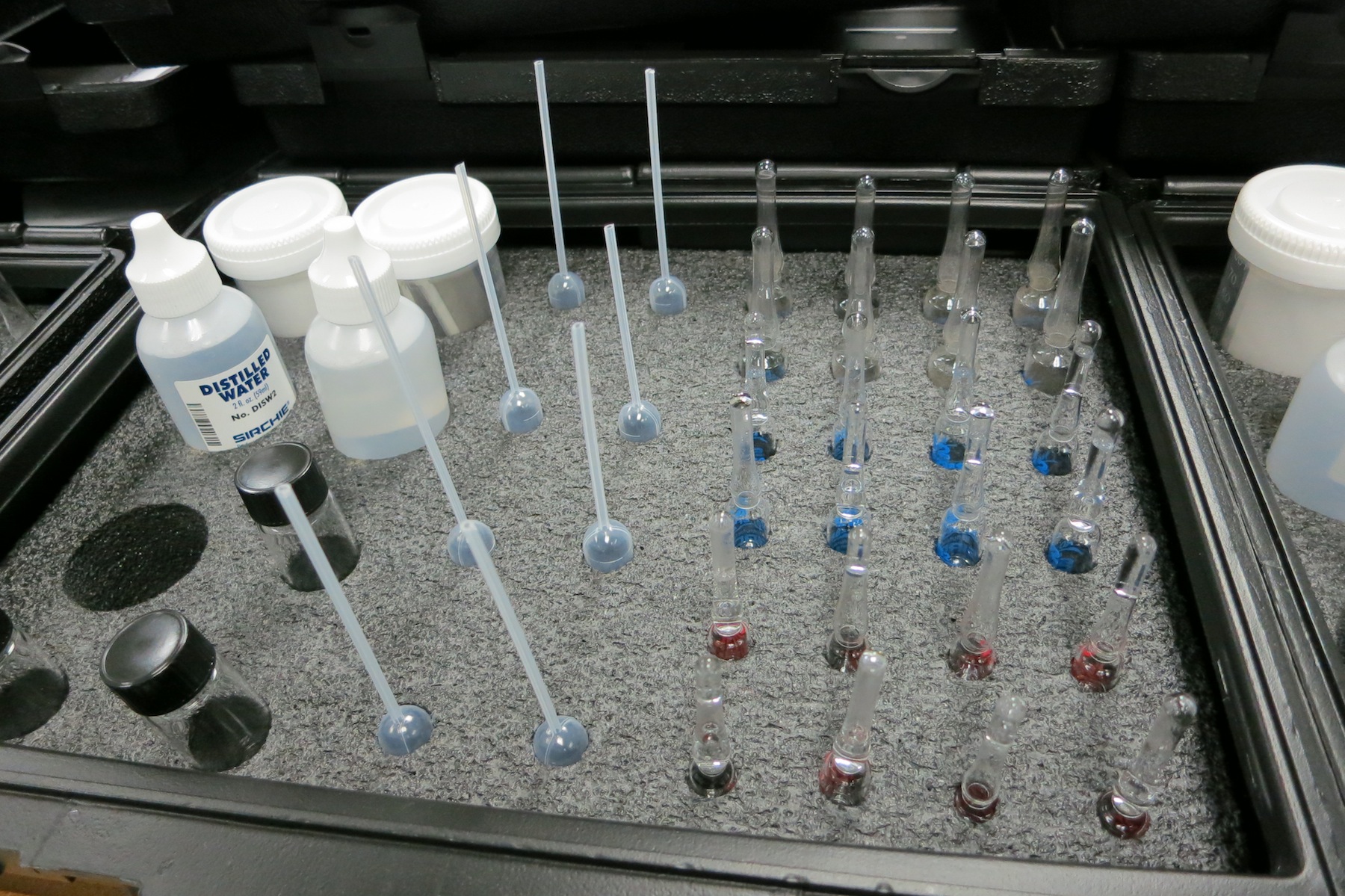


Field Kits are created for general use by investigators, but can be specifically designed for a special need. The small vials contain enough chemicals to test unknown stains and substances at the scene. Note the dense foam holding the vials and bottles firmly in place. The kits are usually kept in the trunk and probably get tossed around quite a bit. The foam insures against breakage during car chases and while bumping across uneven road surfaces.


There are fiberglass brushes, feather dusters for the very light powder, regular stiffer brushes, and magnetic powder brush applicators.
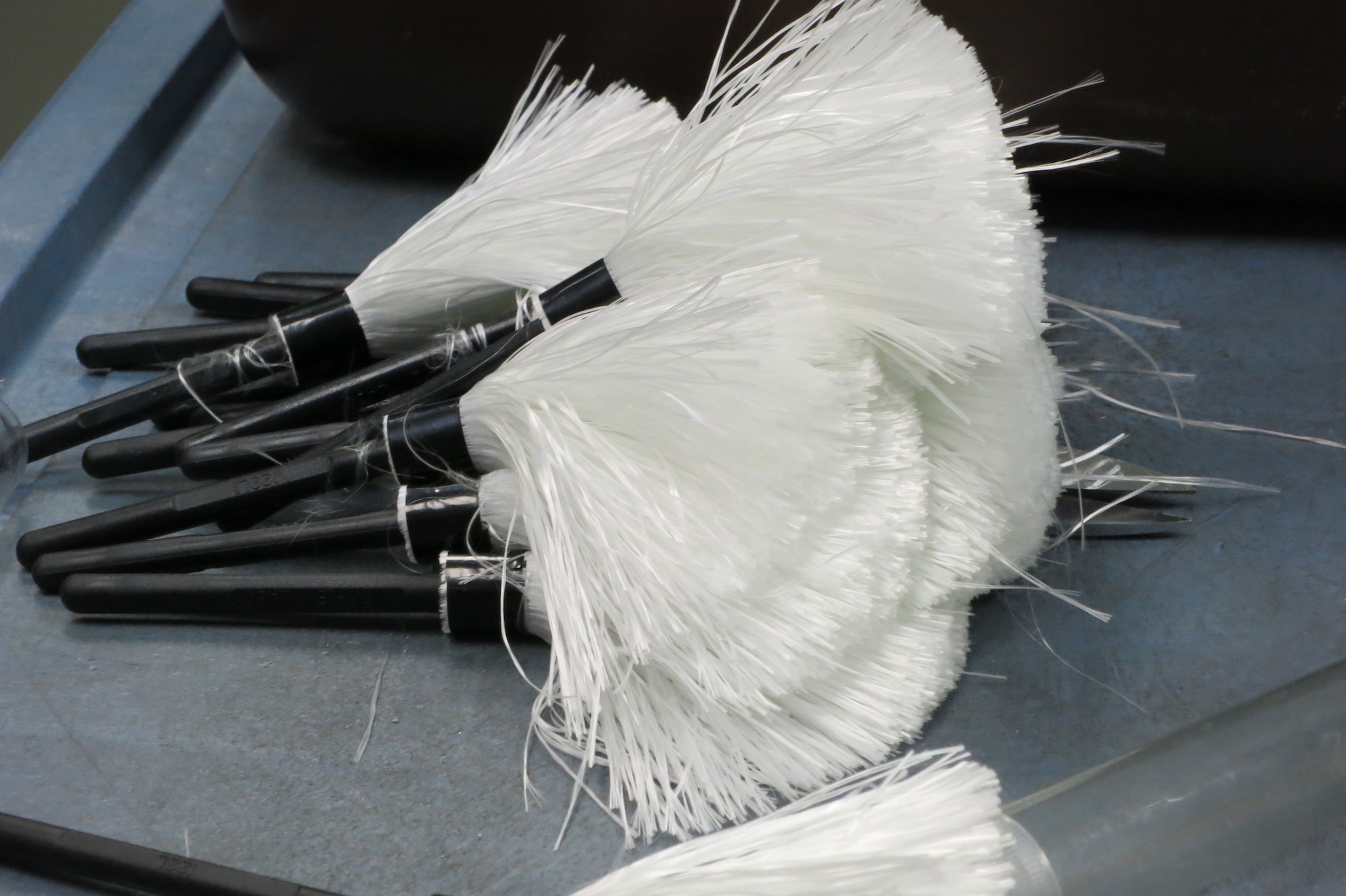
 

We were lucky enough to see fiberglass brushes being made.
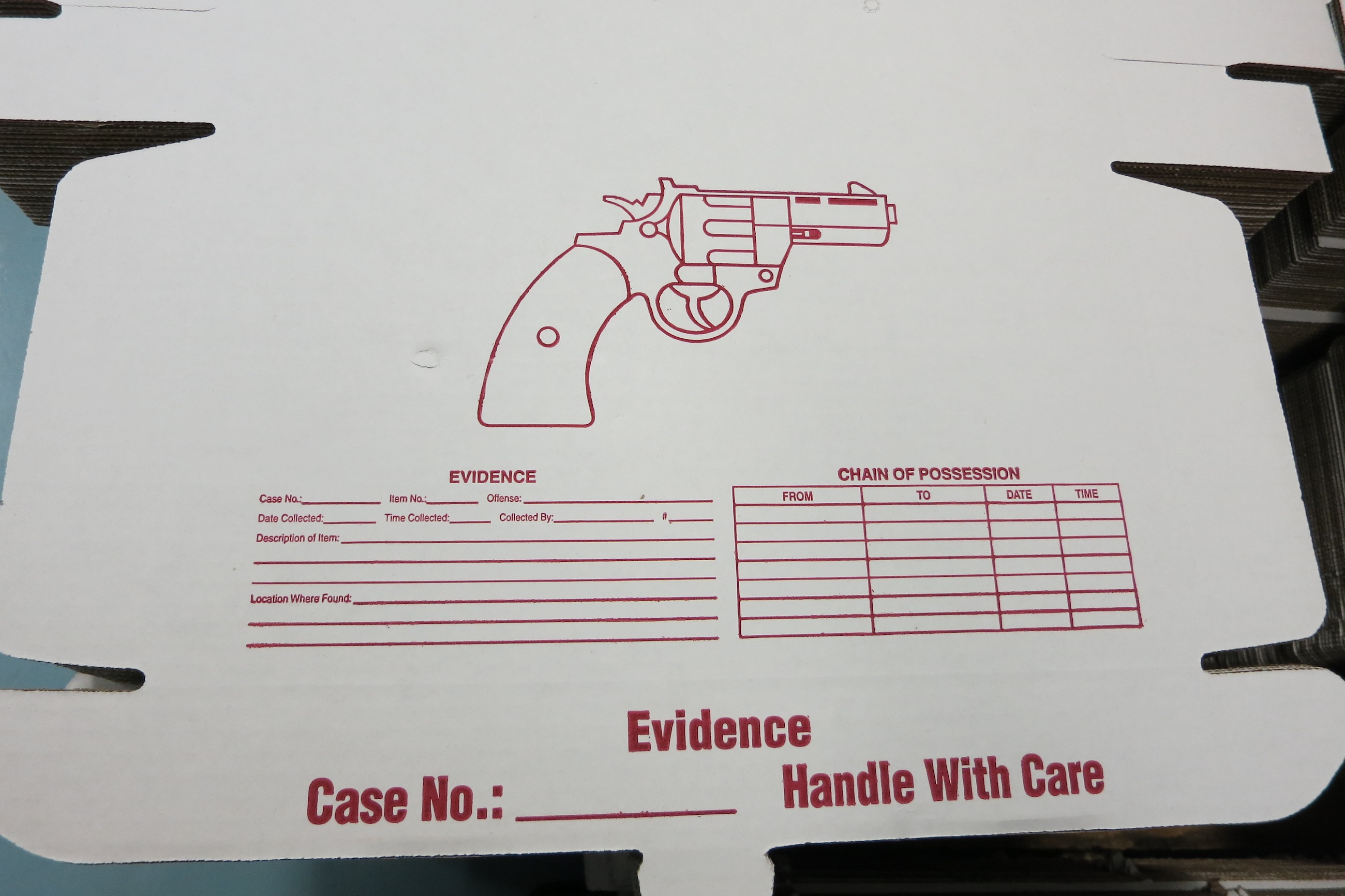
 

If a handgun is seized for evidence, there needs to be a simple, yet effective way to track chain of possession.

*Bag the gun to preserve the fingerprints and

*drop the gun in the box.

*Then fill in the blanks on the box.

*Easy to stack and store until needed.

Think of all the cases that may be ongoing in a large jurisdiction – the evidence is not sitting at the police station. It’s in a warehouse someplace, and needs to be easily identified when required for court. In addition to several sized boxes for guns and knives, etc. Sirchie also provides an incredible assortment of resealable plastic bags for preserving evidence like clothing, unidentified fibers, etc.
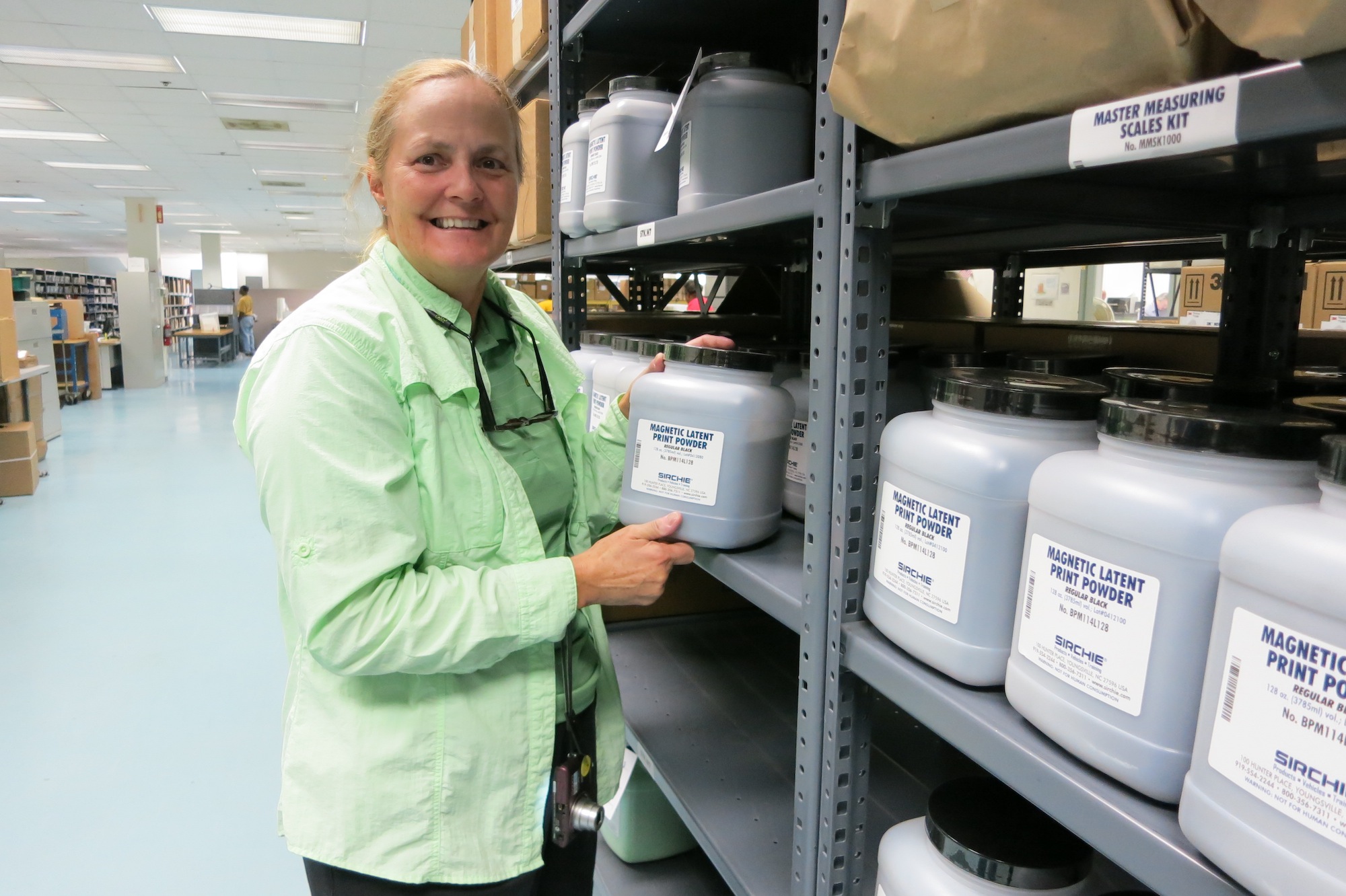
 

Magnetic powder was being processed that day and then put into rows and rows of jars and jugs. Before it is sent out to the customers, each lot is tested for moisture content, appropriate ratio of ingredients and other trade secret tests. We joked about taking some back to class for the next round of fingerprint study and were surprised by how heavy the jugs were.

No, she’s not making bullets. She is assembling the cyanowand cartridges used for fuming with superglue.
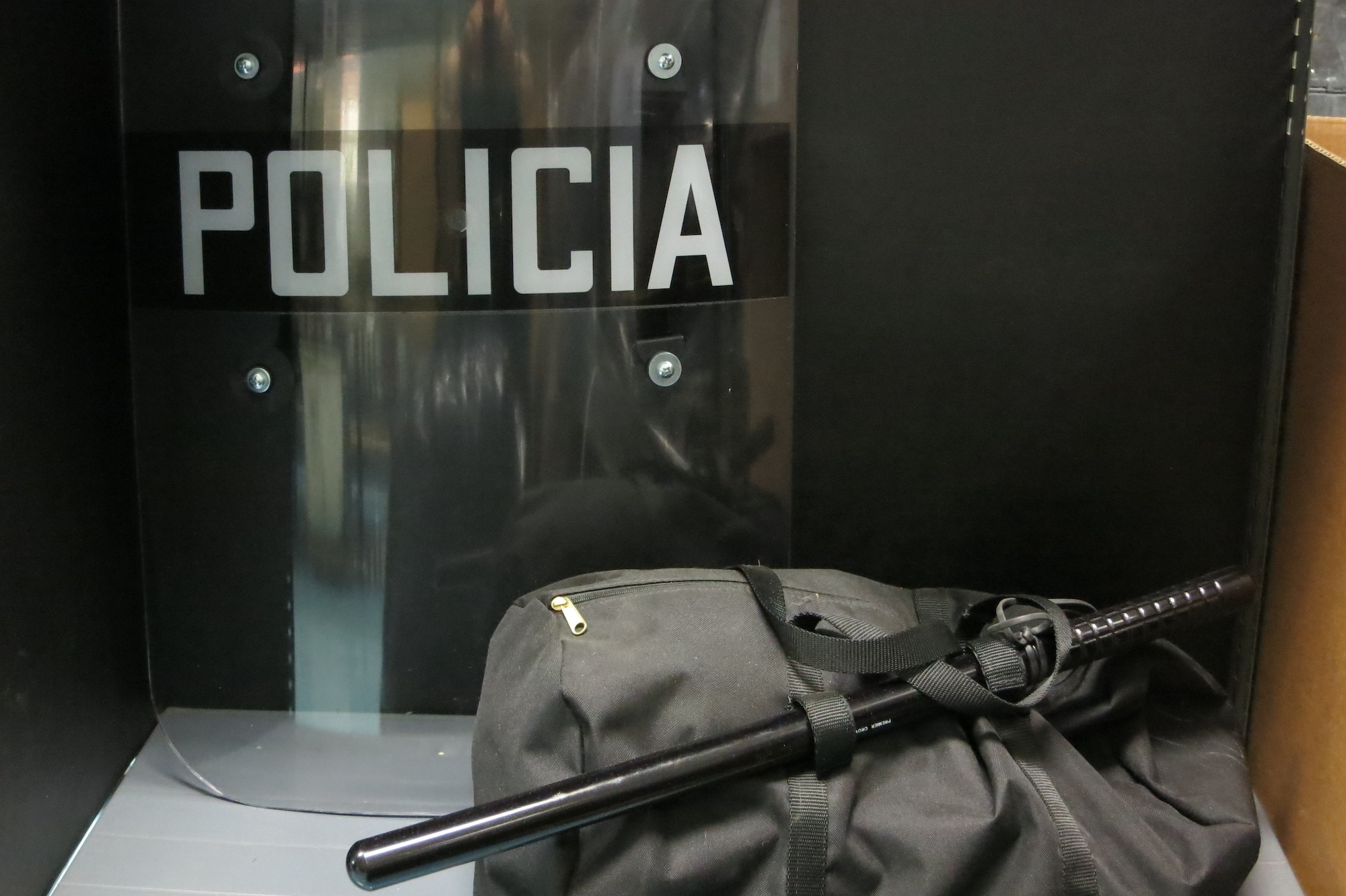
 

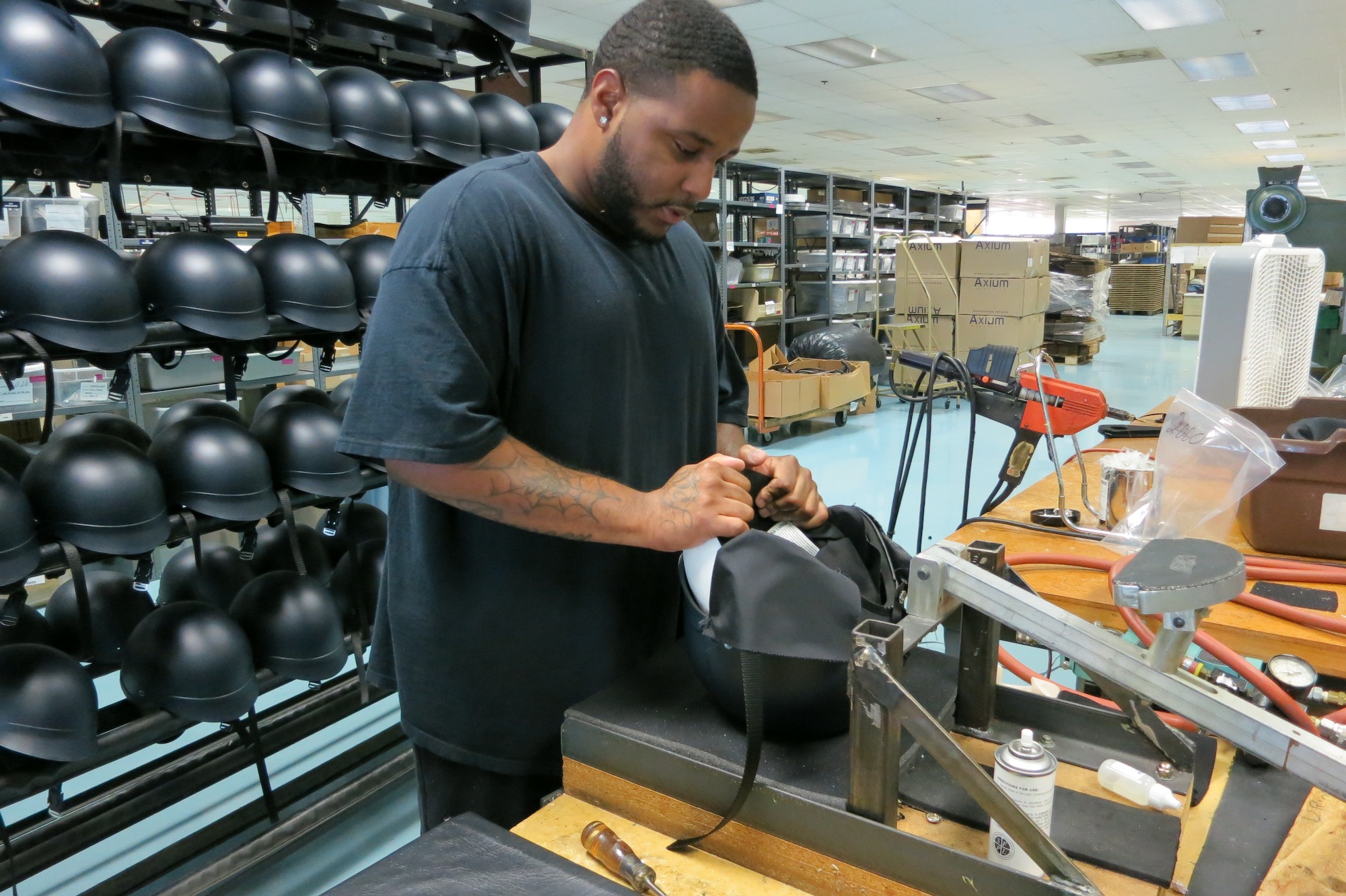
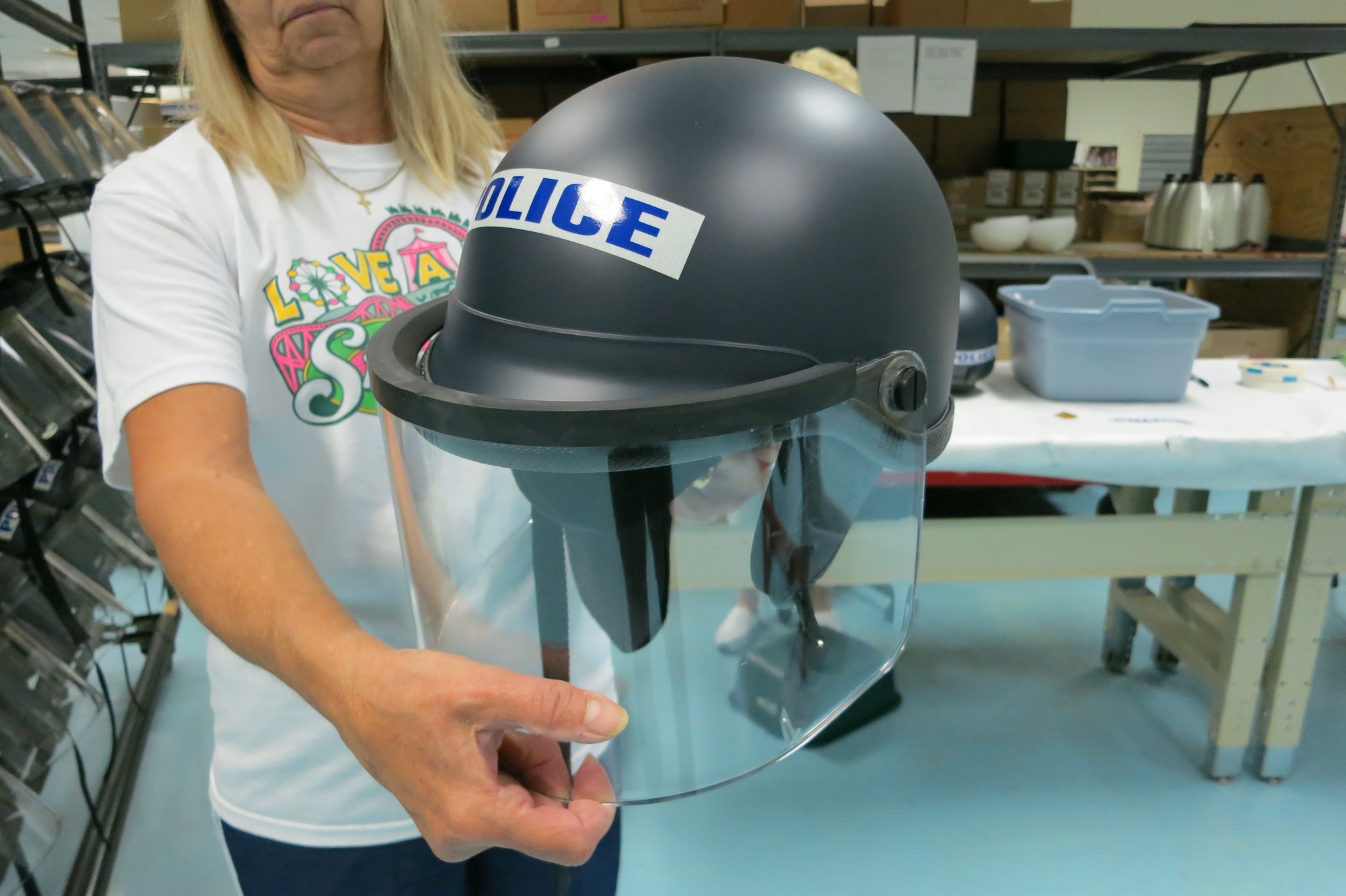
SIRCHIE makes riot gear.
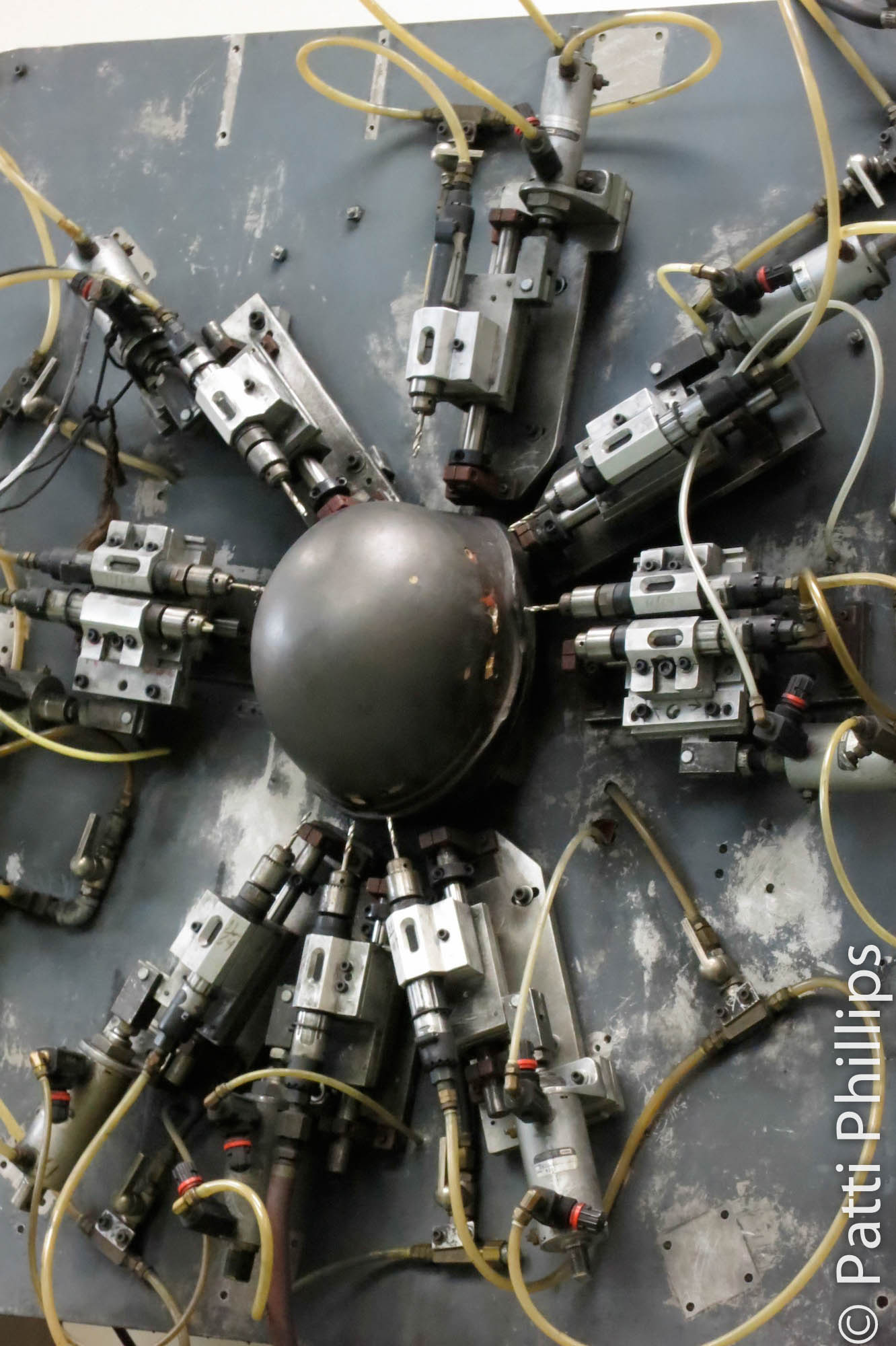
 

This is not a photo of something from a SyFy movie. At the center of the shot is a helmet template. The drills encircling the template are aimed at spots where holes are needed for each helmet, depending on the type of helmet in production. All the holes are drilled at the same time.
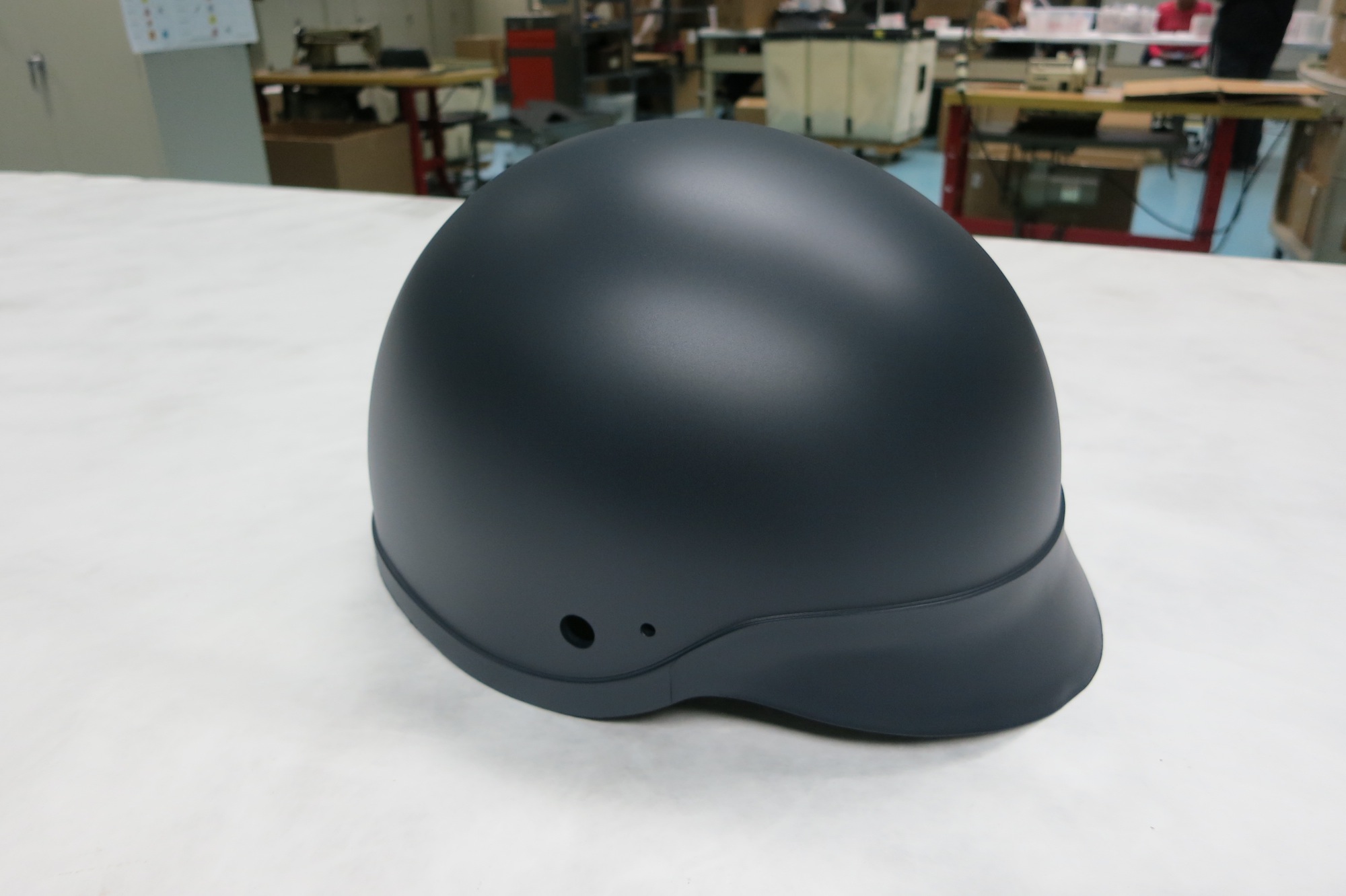
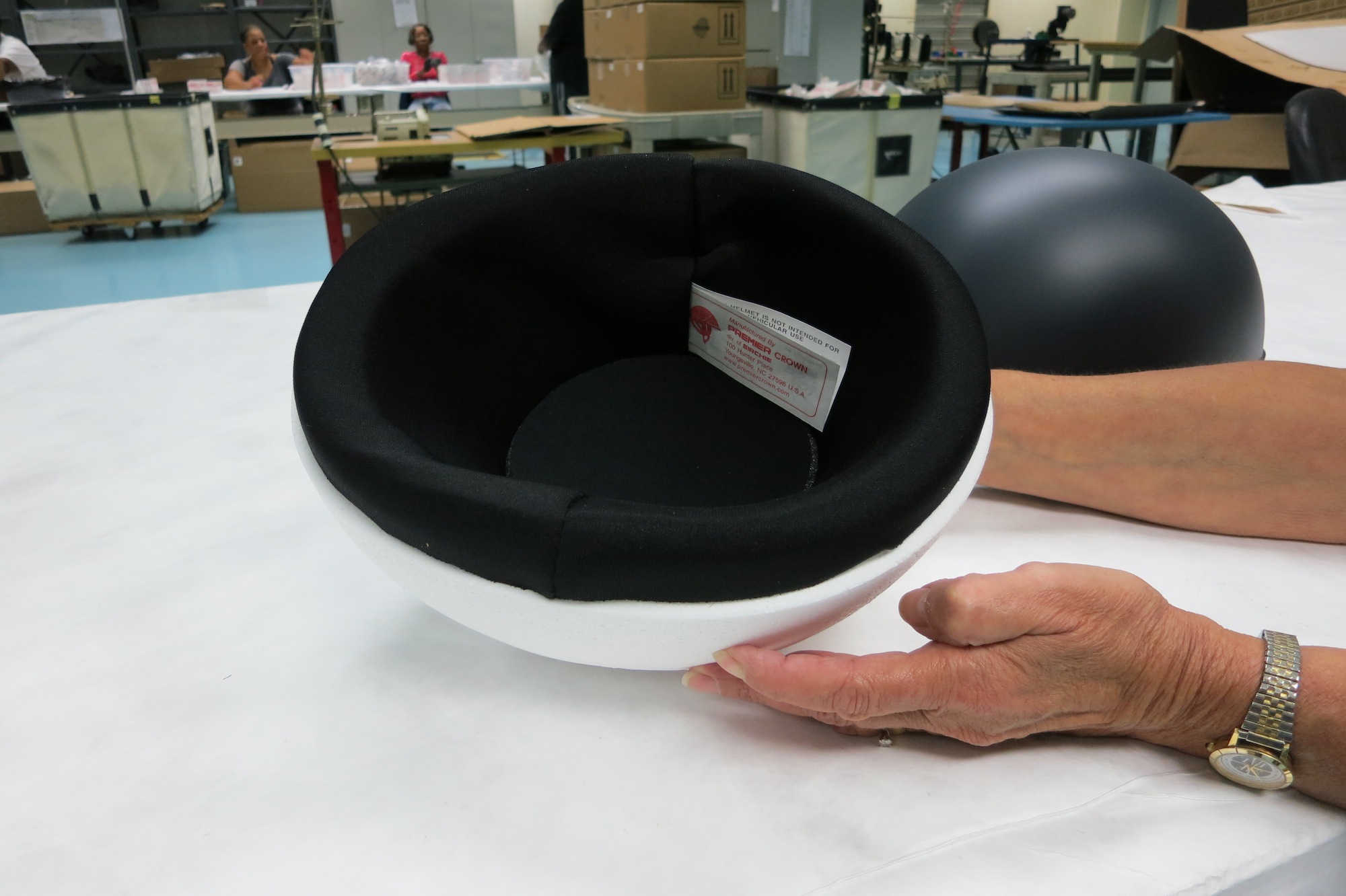
Helmet before anything has been added to it.
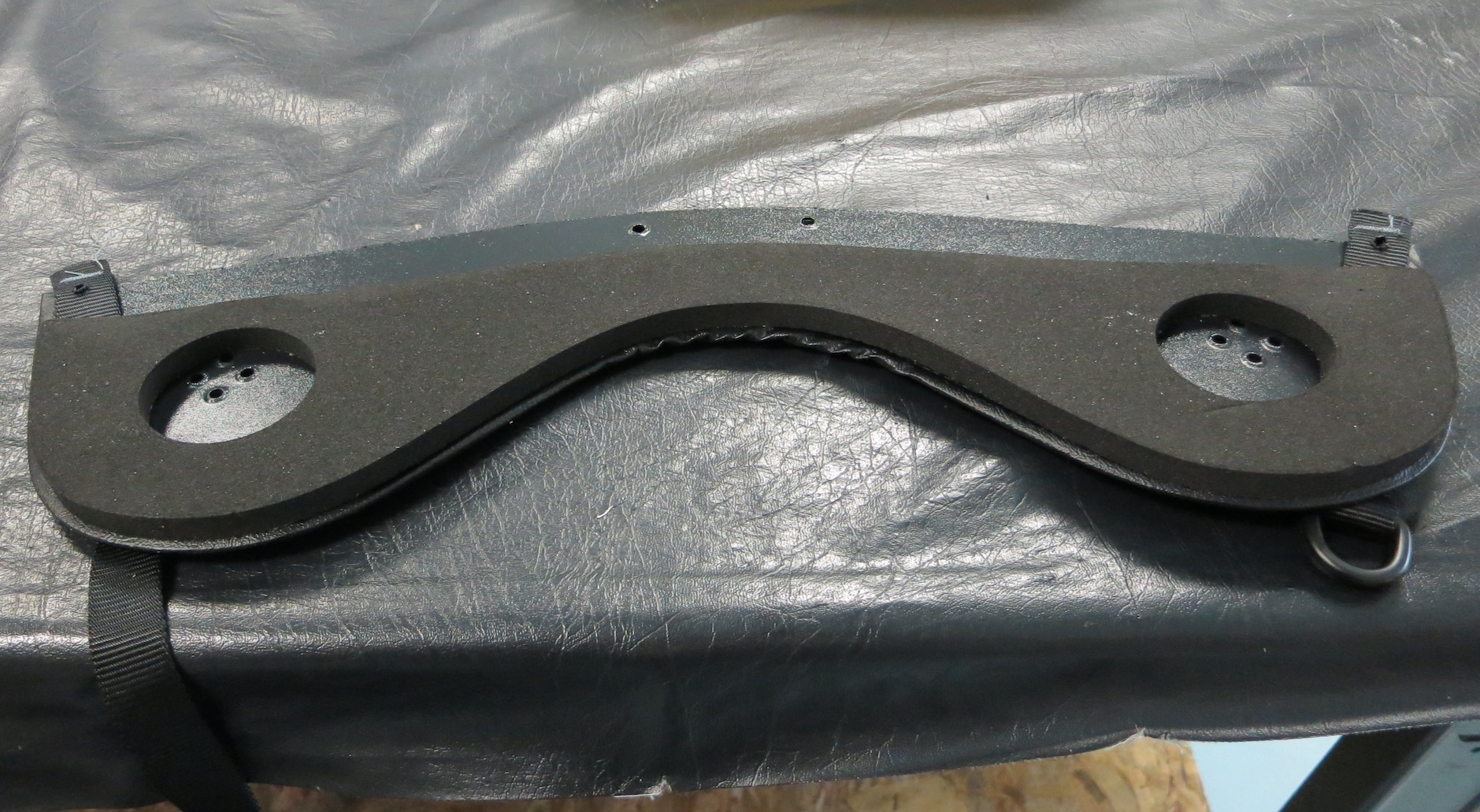
Helmet with padding.


Buckles for the helmets.
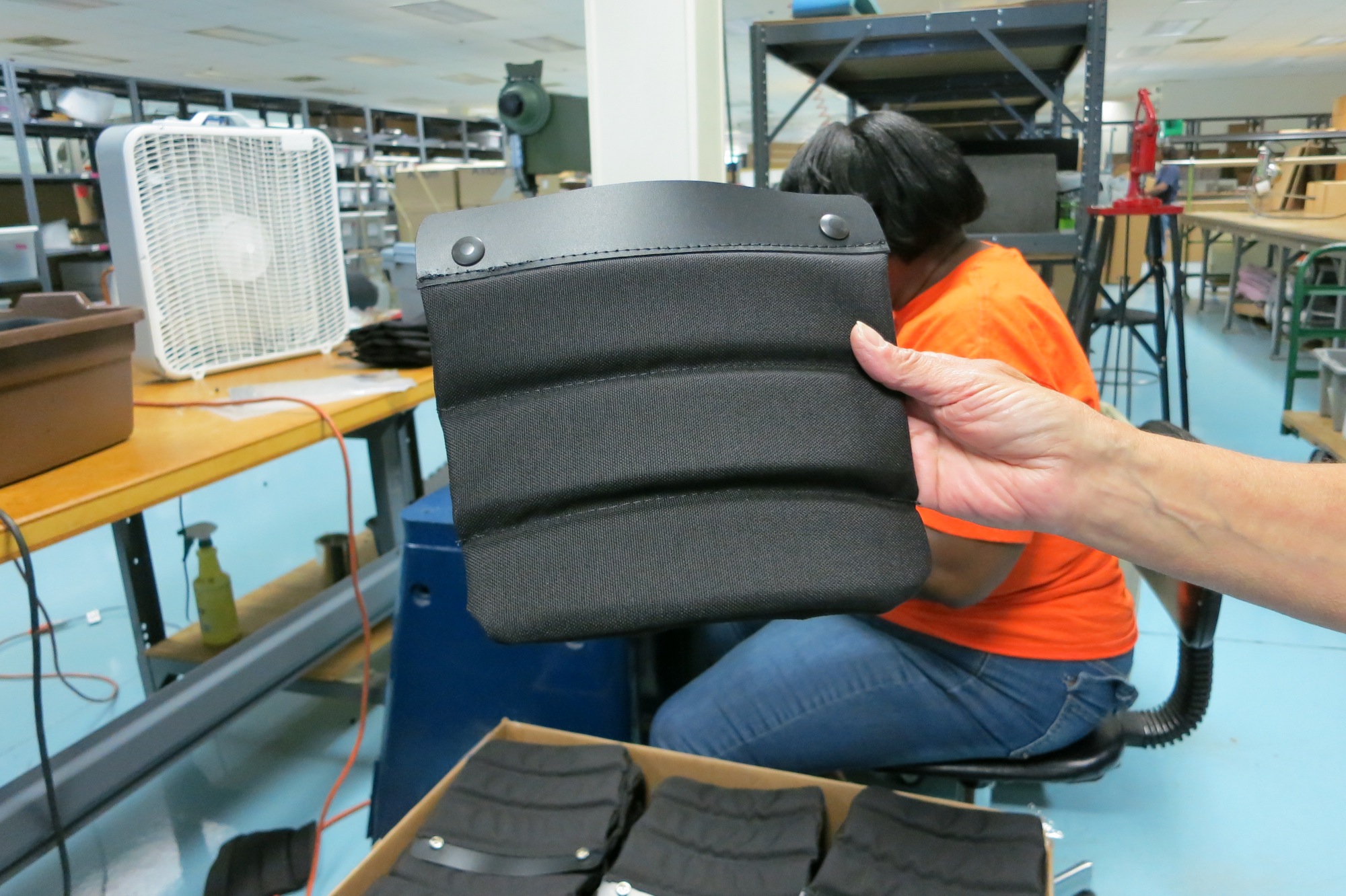
Padding is inserted after the buckles are attached.


Helmet component


Helmet component for neck


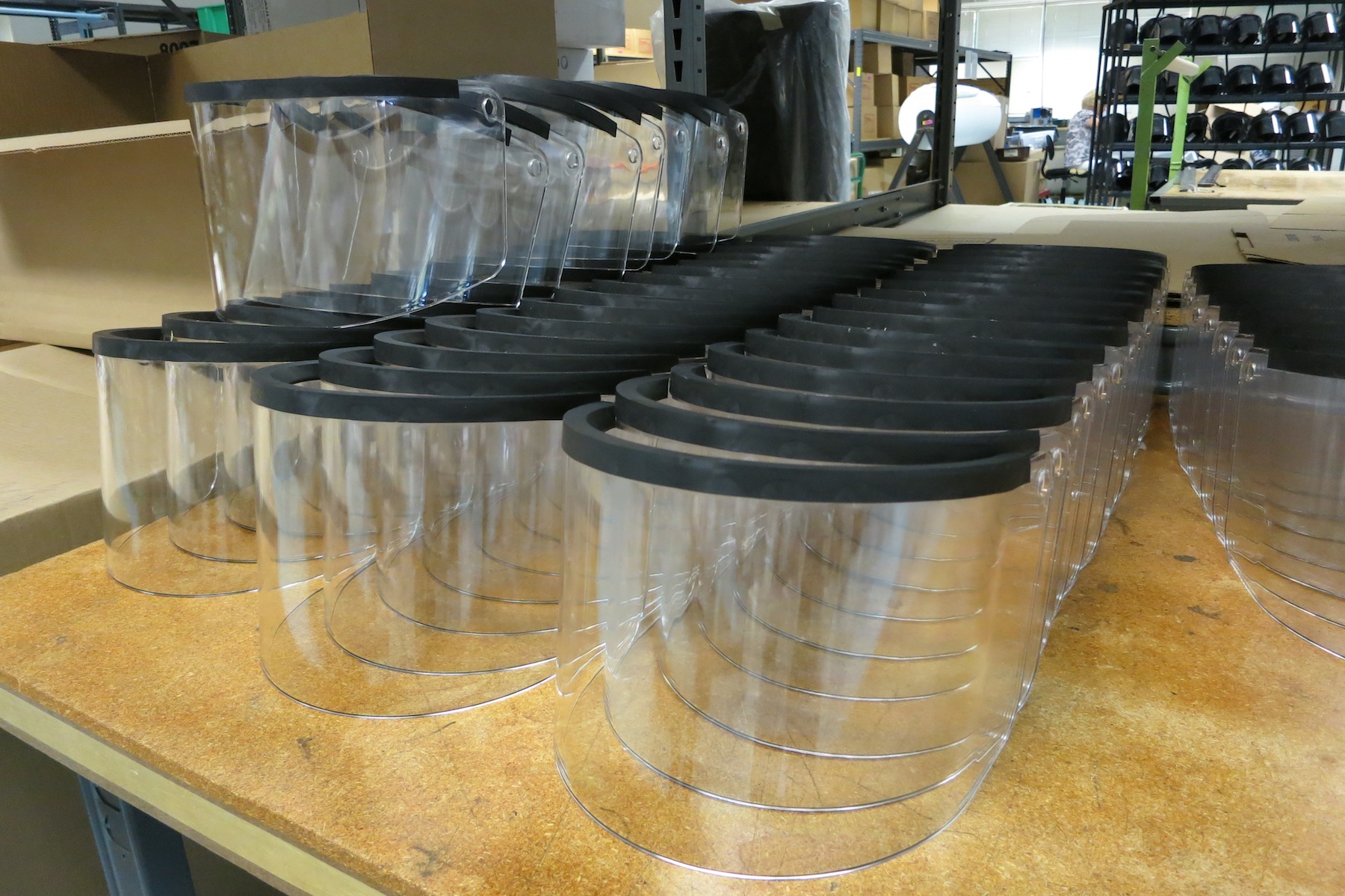
Helmet face guards.


Completed riot helmet.


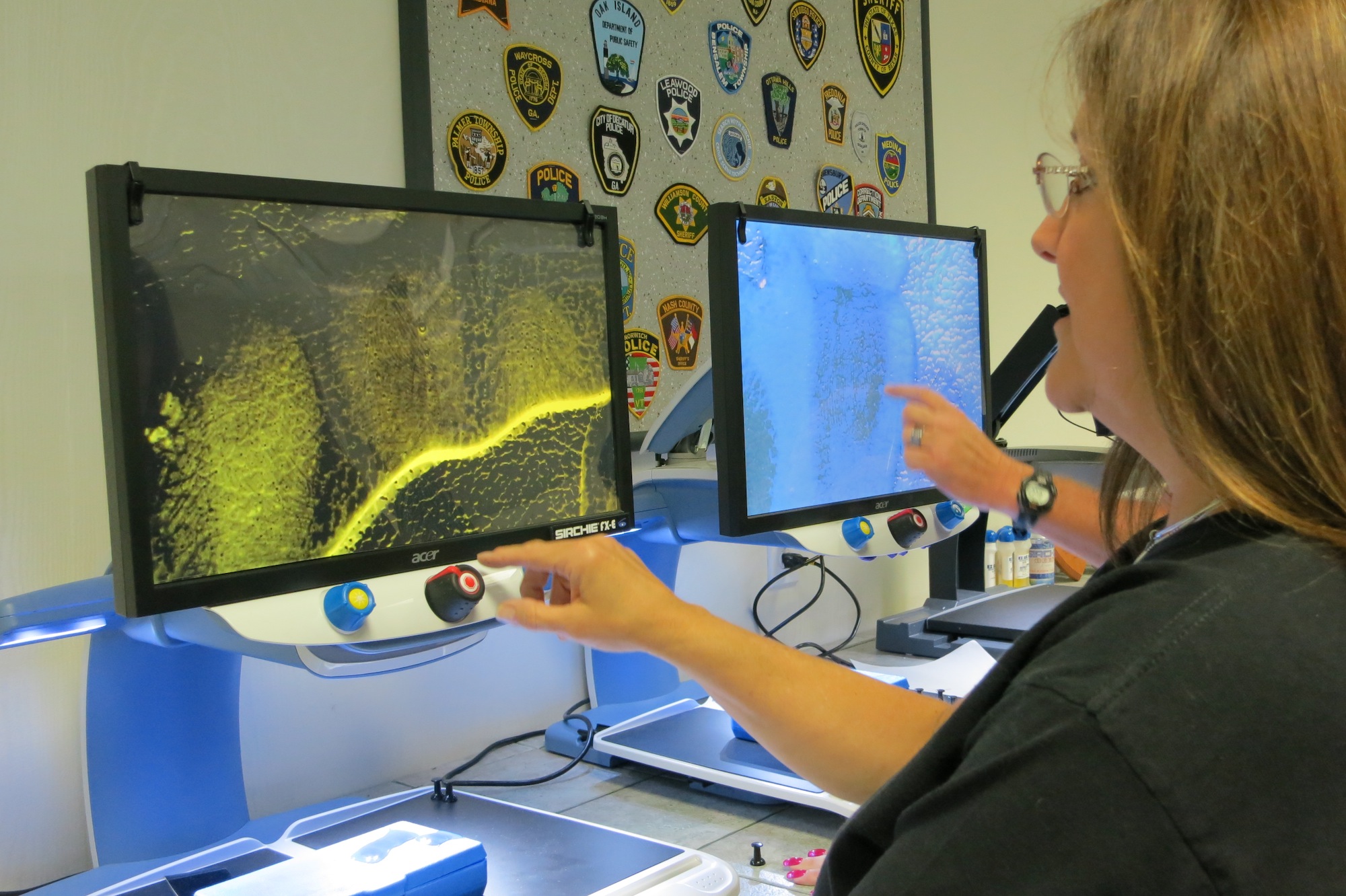
The Optical Comparator, as well as the other machines, is built to order by hand.

While in the warehouse, we learned that if a product is discontinued, it is still supported by Sirchie. That means that if a law enforcement officer calls up with a problem a few years after purchasing a machine, he can still get help. Reassuring for jurisdictions with a tight budget that can’t afford to replace expensive equipment every year or two.

Sirchie sends supplies to TV shows, so next time you’re watching a fave detective or examiner lift prints with a hinge lifter, it may have come from Sirchie.


Thanks to Lee Lofland, host of Writers’ Police Academy, for the opportunity!


*Photos taken by Patti Phillips at the Sirchie Education and Training Center in Youngsville, North Carolina.


FW: “Where are the Evidence Collection kits made?” Read More »
KN, p. 82 “Is that your footprint?”

If there are no paragraph separations in this article, please double-click on the title to create a more readable version.


It’s been raining off and on for days. It rained last week during a party, and people were tracking water and a little mud from the driveway runoff onto the porch all afternoon. We had so many different kinds of footprints that it would have made for a great crime scene demonstration.

Because, one of the most overlooked pieces of evidence at a crime scene is created by footwear.


Imagine: If a window breaks as a thief enters the premises during the commission of a burglary, the glass will fall into the house, and onto the floor or rug below the window. When the thief steps through the window, unless the thief has wings, he/she will probably plant a foot right in the middle of the glass. And walk through the house, most likely tracking minute pieces of that glass. That glass may also become embedded in the grooves of the sole of the shoe, creating a distinctive footprint.


If the investigating officer can place a suspect at the scene with the footprint, then there is probable cause to fingerprint that suspect and hopefully establish a link to the crime.


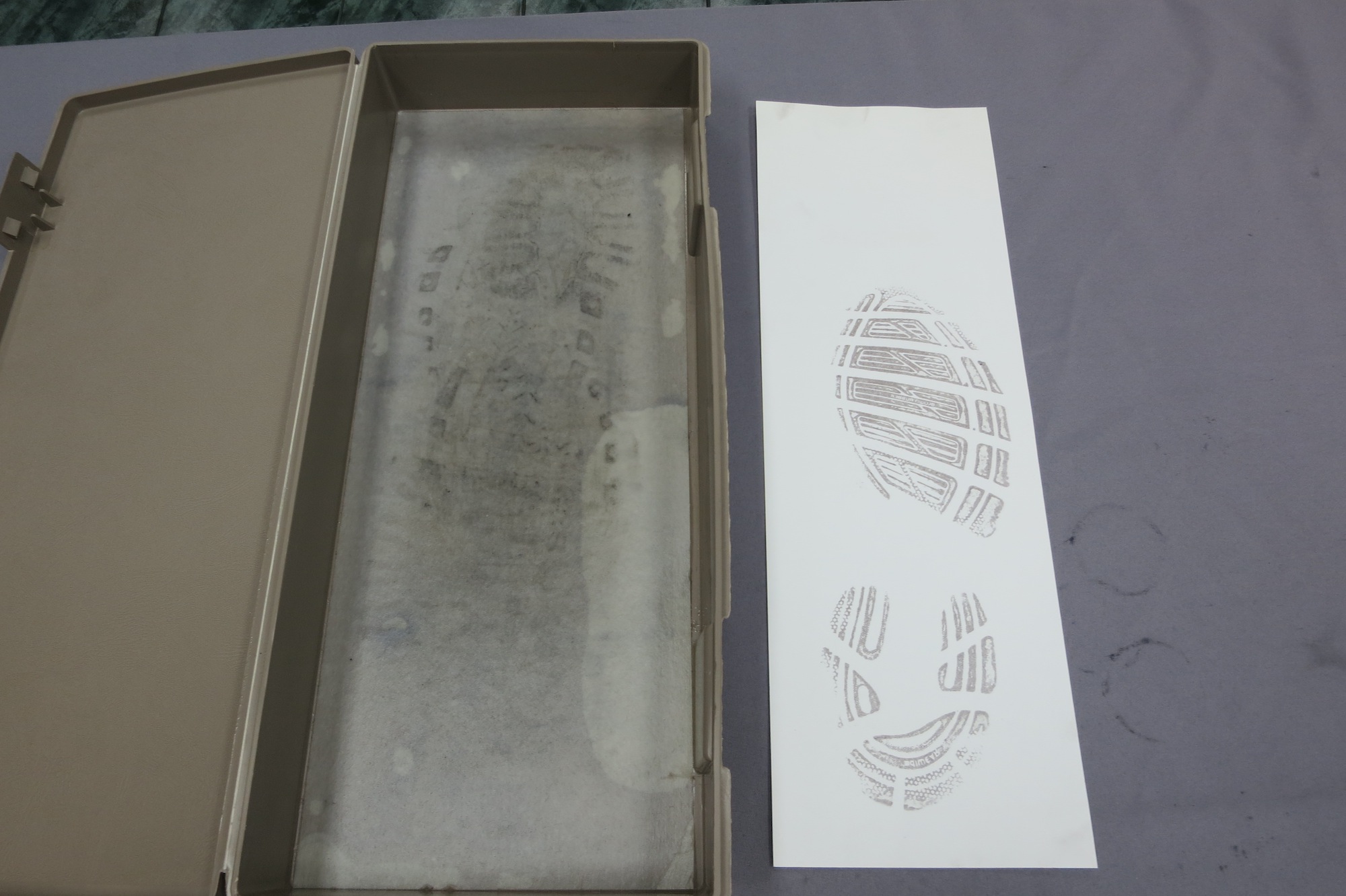
A new method of eliminating suspects right at the scene involves stepping into a tray that contains a pad soaked with harmless clear ink that doesn’t stain, then stepping onto a chemically treated impression card. No messy cleanup, immediate results, and it can even show details of wear and tear on the shoe. This can be a way to establish a known standard (we know where this impression came from) to compare with multiple tread prints at the scene.

Footwear Clear Ink Impression

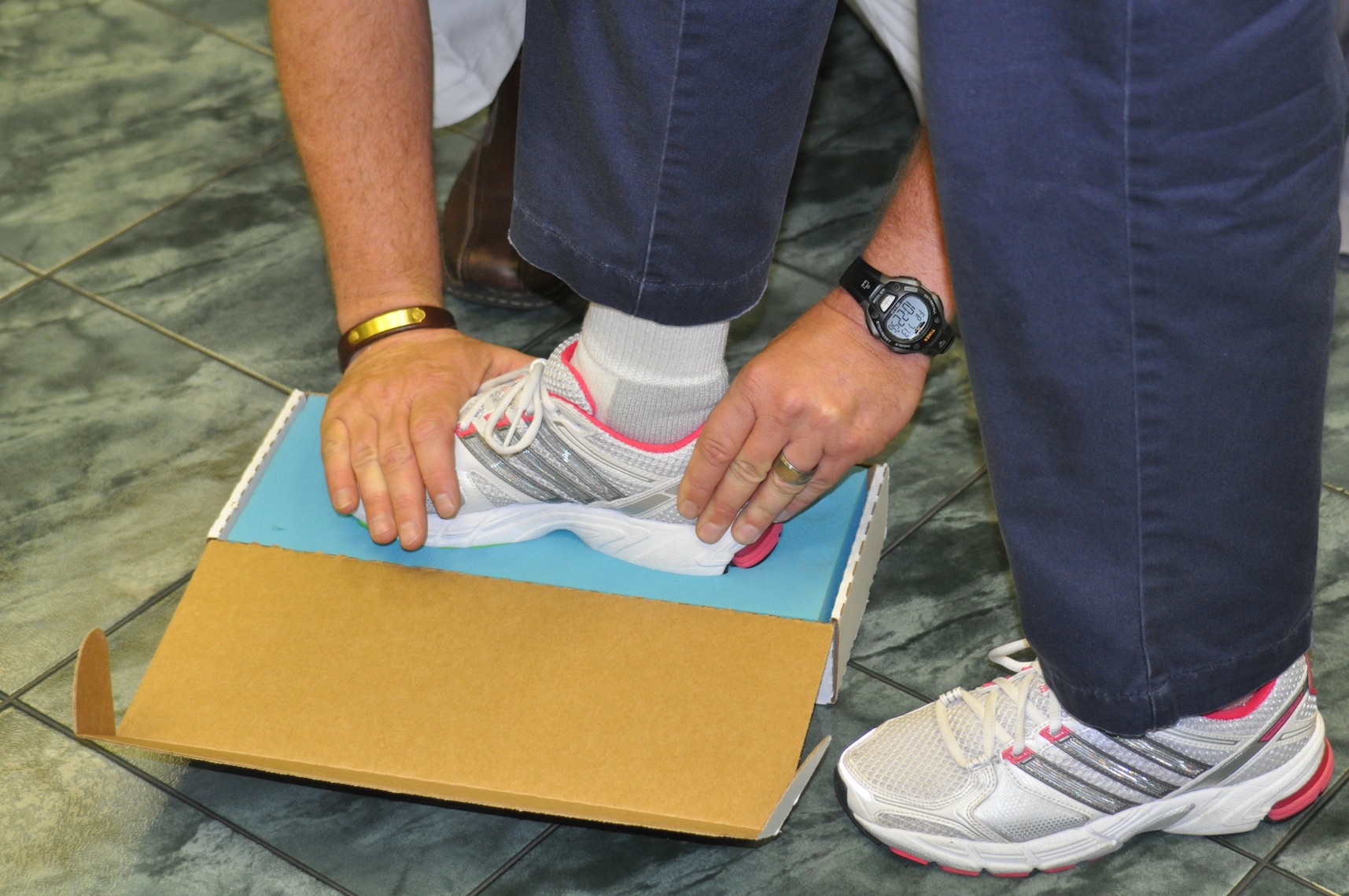
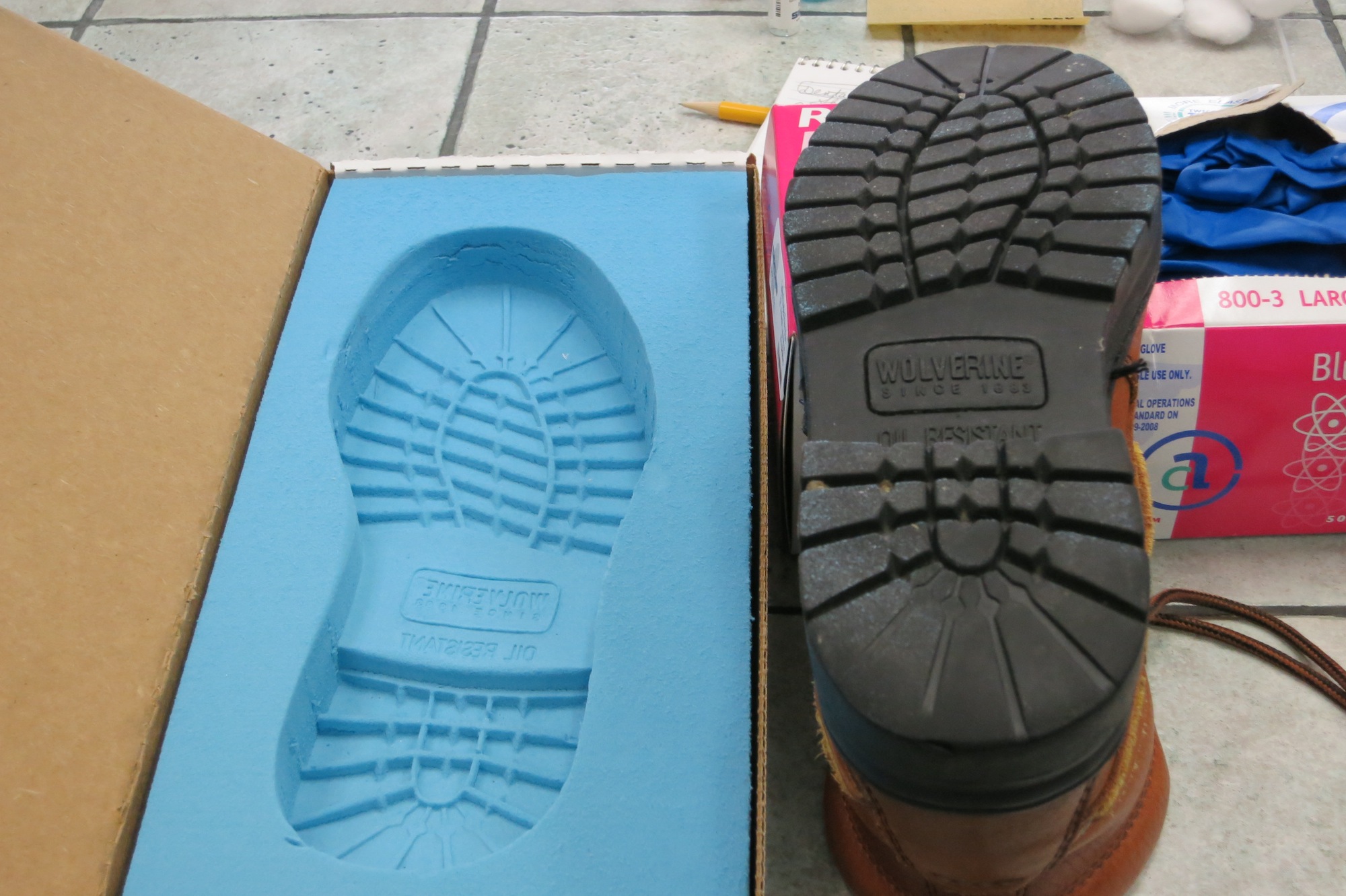
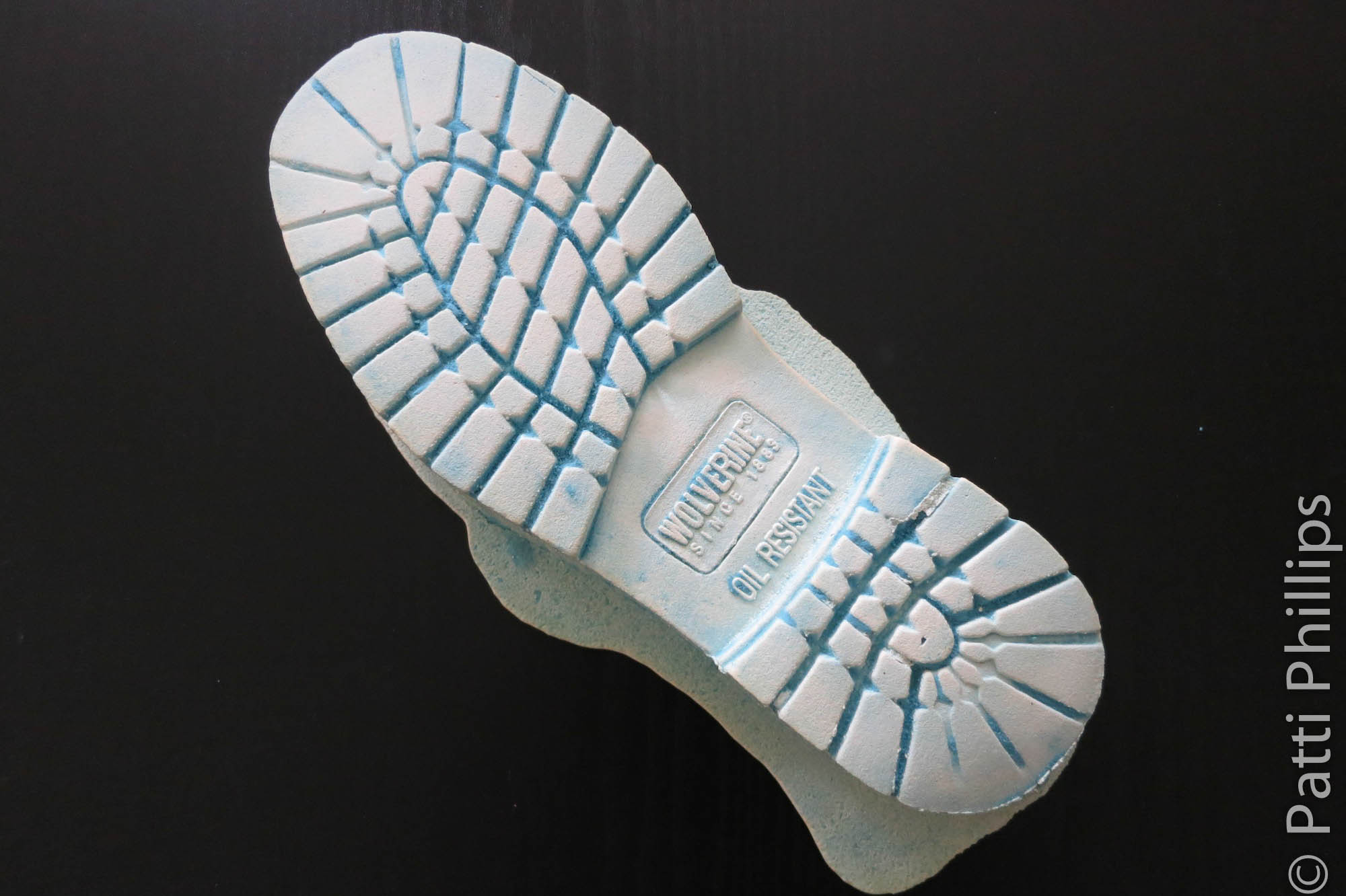
Another tool for creating a known standard is the foam impression system. It takes a bit longer, (24 hours) but clear, crisp impressions can be made, including of the pebbles and bits stuck deep into the grooves and the writing on the arch. Very helpful when trying to place suspects at the scene. A rock stuck in the sole is a random characteristic that can’t be duplicated, so becomes another point of identification.

This is how it works: Somebody steps into a box of stiff-ish foam – a bit like stepping into wet sand.


An impression is made instantaneously. The detail is great – down to the wear on the heel.

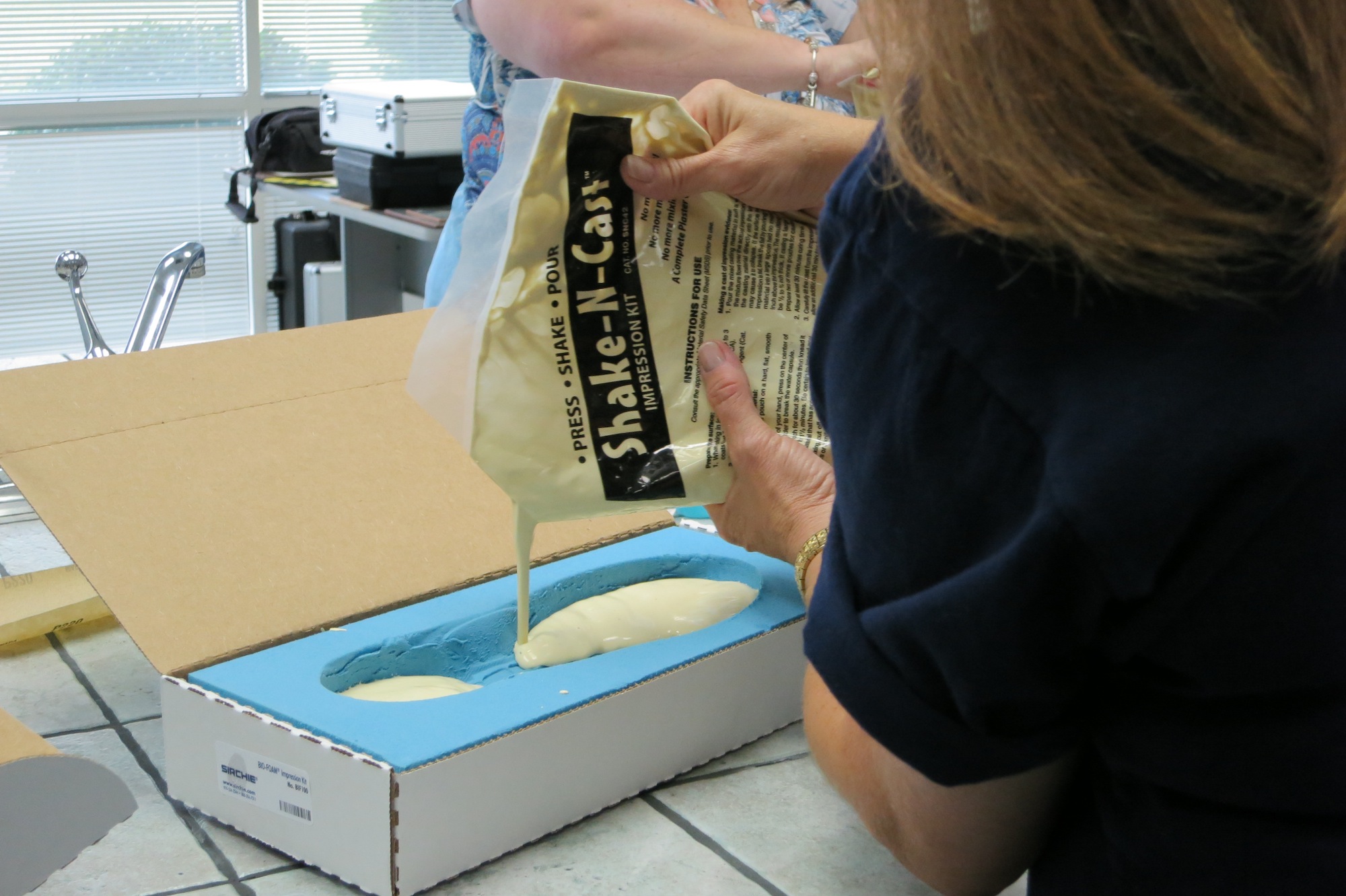
Pre-mixed dental stone (made with distilled water and the powder) is used to fill the impression.

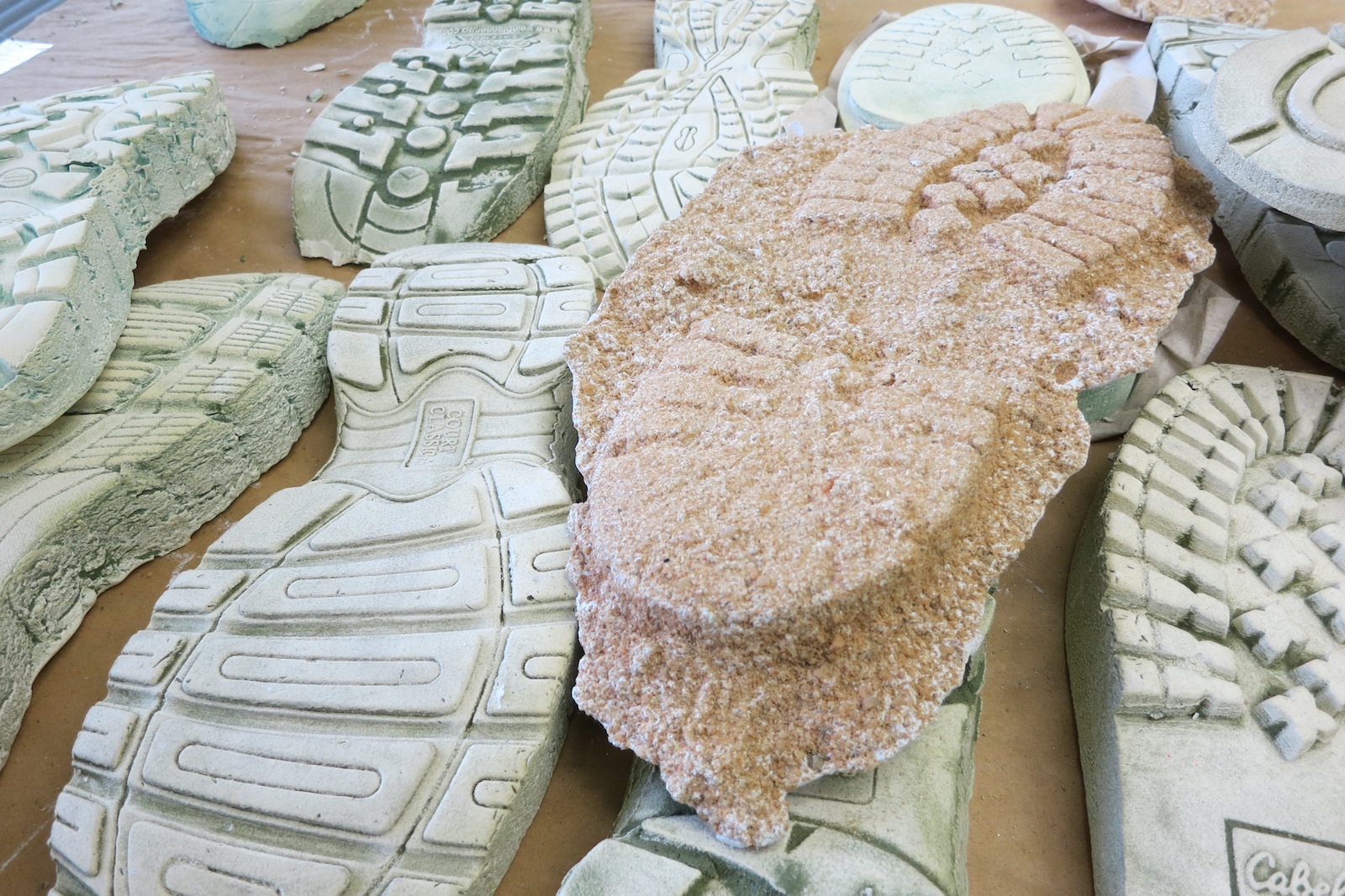
It takes 24 hours for the cast to become firm enough to pop out of the foam. We now have a permanent record of the footwear tread, which could be used for comparison to other prints found at the scene.

Footwear Casts

Occasionally footprints are found on the ground outside a window or in the gardens surrounding a house after a burglary or homicide. Ever see a crime show on TV where the fictional investigator makes a snap judgment about the height and weight of the owner of the footprint because of the depth of the impression? That’s merely a plot device and is not scientific evidence in real life. A crime scene photographer or investigator can photograph the footprint (next to a measurement scale), make a take away cast, and then compare the impression with those of the suspects or other bystanders at the scene. Beware: making a cast of the print destroys the print, so a photograph must be taken before pouring that first drop of dental stone.

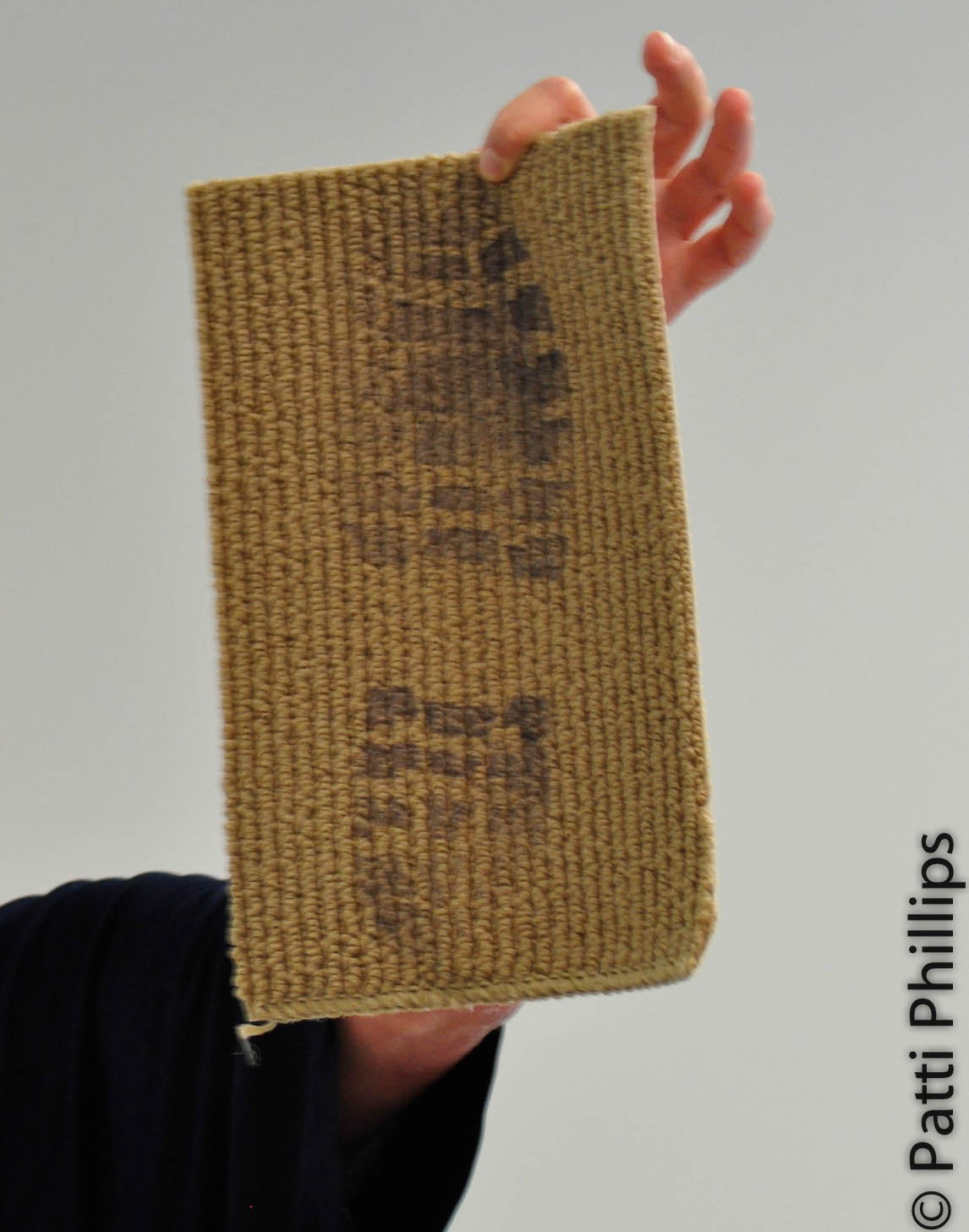
Footprints can be found at bloody crime scenes as well. The suspect walks through the blood, tracks it through the house, cleans it up, but the prints are still there, even though not obvious to the naked eye. Blood just doesn’t go away, no matter how hard you try to get rid of it. It seeps into the cracks and crevices of a floor and even behind baseboards.


A savvy investigator will collect sections of carpet (or flooring) taken from where the suspect might have walked during the commission of the crime, then conduct a presumptive test for blood (LCV – Aqueous Leuco Crystal Violet), find a usable footprint, compare it to a known standard, and then be able to place the suspect at the scene.


Be careful where you walk. That footprint can be used as evidence.


*Photos taken by Patti Phillips


KN, p. 82 “Is that your footprint?” Read More »

KN, p. 218 “What Does the Federal Bureau of Investigation Do?”

If there are no paragraph separations in this article, please double-click on the title to create a more readable version.

“The Federal Bureau of Investigation (FBI) is an intelligence-driven and threat-focused national security organization with both intelligence and law enforcement responsibilities.”*  It is the chief fact-finding branch of the Department of Justice and helps other agencies by sharing that information and providing training.

Its mission is:

“To protect the American people and uphold the Constitution of the United States.”*

In 1908, the United States had about 100 cities with 50,000 people. The rest of the population (about 83 million) was spread throughout the rural areas of the country. Law enforcement personnel at the local level were often poorly paid (and were sometimes volunteer) members of the community. Murders were handled by local investigators and still are to this day. For the majority of the cases, murder is not a federal crime, unless carried out across State lines.

Prosecution of border security issues or organized crime was limited in 1908 since there was no adequate way to enforce the law at a national level. In fact, few criminal laws even existed at a federal level. For the most part, individual States and local jurisdictions handled their own criminal investigations, and sometimes that led to political corruption, corporate criminal behavior, and even slave labor in factories. Federal agencies were stretched thin or were nonexistent in some parts of the country.

President Teddy Roosevelt supported the idea of modernizing law enforcement, so when his Attorney General hired 34 of his own investigators (including nine seasoned Secret Service agents) to assist the Department of Justice, Roosevelt wholeheartedly endorsed the action. A few months later, the Bureau of Investigation was officially created. Hardly a large force, but it was a start.

At the beginning, incidents involving car theft across State lines, civil rights, and various kinds of fraud were the typical cases. The FBI also took on treason and domestic terrorism, and Congress (previously reluctant to loosen the purse strings) began to see the value of a national law enforcement agency.

It’s interesting to note that the Mann Act or “White Slave Traffic Act,” was passed in 1910 to help stop interstate prostitution and human trafficking, and the FBI had a role in the early investigations. One hundred years later, it has become an international problem and requires cooperation from many different agencies to obtain successful prosecutions.

World War 1 brought us the problems of sabotage by foreign agents against our military ships and munitions plants, as well as international smuggling. The FBI had entered the so-called spy business and worked hard to eliminate those threats.


In 1924, it was recognized that fingerprinting was a reliable way of connecting (or eliminating) individuals to a particular scene, and to collect that information in a central location would be helpful to other law enforcement agencies in the United States. Now, the FBI gathers and classifies fingerprints from convicted felons and other criminals, military personnel, federal applicants and employees, and shares that information with appropriate agencies. Additionally, fingerprints of military detainees and other persons of national security interest are being collected for national security purposes.

Formerly called Automated Fingerprint Identification System (AFIS), the program processes over 63,000 prints a day, is now integrated with other forms of identification and called IAFIS, and can deliver digital information in as little as two hours. It is used in connection with biometric databases (facial and voice recognition) for more accurate identifications. Next Generation Identification (NGI) combines biometrics, fingerprints, and palm prints to expand identification possibilities.

One of the programs developed by the FBI is the ‘Ten Most Wanted’ list. It began in 1950 as a way to call attention to fugitives who might otherwise remain at large. Each new list is posted in United States Post Offices and on the FBI website.

Since 1950, 518 fugitives have been on the list, and 484 have been apprehended or located. The stats below are from the FBI site:

    • 162 fugitives have been captured/located as a result of citizen cooperation.
    • Two fugitives were apprehended because of visitors on an FBI tour.
    • The shortest amount of time on the list was two hours, by Billy Austin Bryant.
    • The longest amount of time on the list was over 32 years by Victor Manuel Gerena.

With the advent of increased world-wide terrorism, the computer and cyber-security age, more complex corporate crimes, and a global awareness of human trafficking, the focus of the FBI has shifted.

At the end of 2017, there were over 35,000 employees, made up of intelligence analysts, field agents, language specialists, scientists, and information technology specialists. They are tasked with investigating:

  • Terrorism
  • Counterintelligence
  • Cyber Crime
  • Public Corruption
  • Civil Rights
  • Organized Crime
  • White-Collar Crime
  • Violent Crime
  • WMD (Weapons of Mass Destruction)

Stay tuned for posts about Quantico and training for the FBI, and interviews with former FBI agents.


*Photo and quotes credit: (from FBI website)

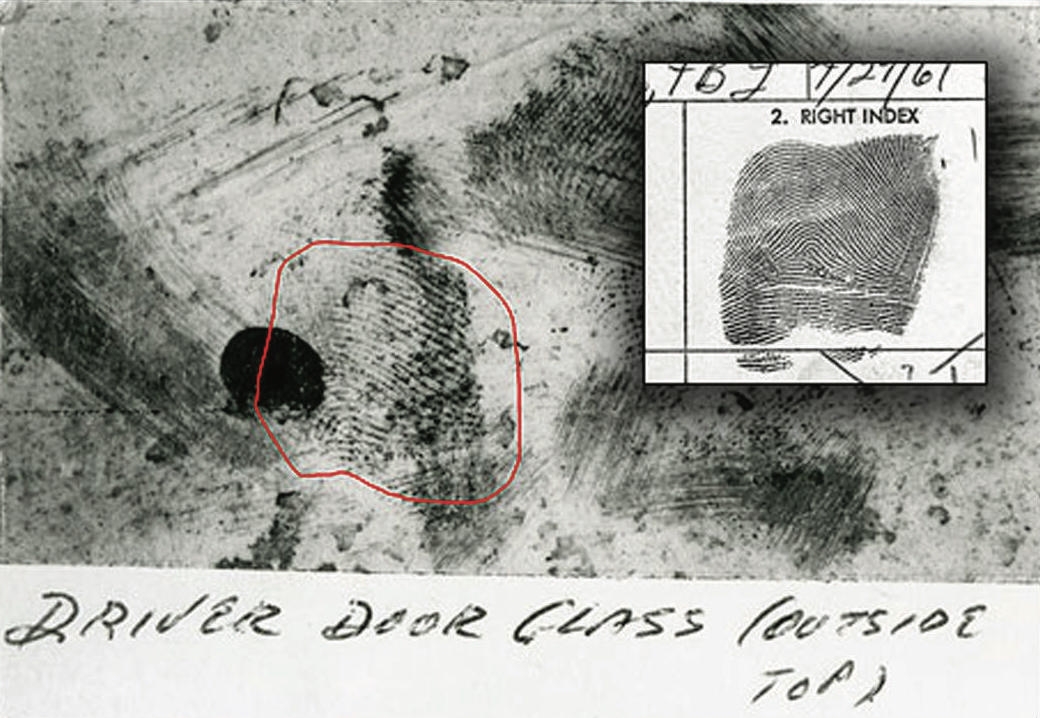
1969 Latent Print Match
A latent print removed from a 1969 murder victim’s car was later determined to be a match to the suspect’s fingerprint (inset) contained in the FBI’s Integrated Automated Fingerprint Identification System (IAFIS). The Houston police detective and Texas Department of Public Safety latent print technician instrumental in solving the cold case were honored by the FBI with the 2011 “Latent Hit of the Year” Award.


KN, p. 218 “What Does the Federal Bureau of Investigation Do?” Read More »

Scroll to Top