murder

KN, p. 123 “Is that a body in the rug?”


The painting is done in the office! Prepping really wasn’t as stressful as I thought it would be, mainly because I didn’t have to worry about splatters on the old rug. The result is pretty good if I do say so myself. Sheila just gave me a ‘thumbs up,’ so the job passed inspection.

The guys at the paint store really did a nice job of matching colors to the rug. They’ve been in business for a long time and we’re happy to go there rather than to a big box warehouse. It’s easy to give word-of-mouth referrals to such a reliable, helpful operation.

We had a local flooring company do the new rug. They pulled out the furniture, tore up the old rug, laid the new rug, and moved the furniture back in – all in about three hours. Great crew, well-organized, nice guys.

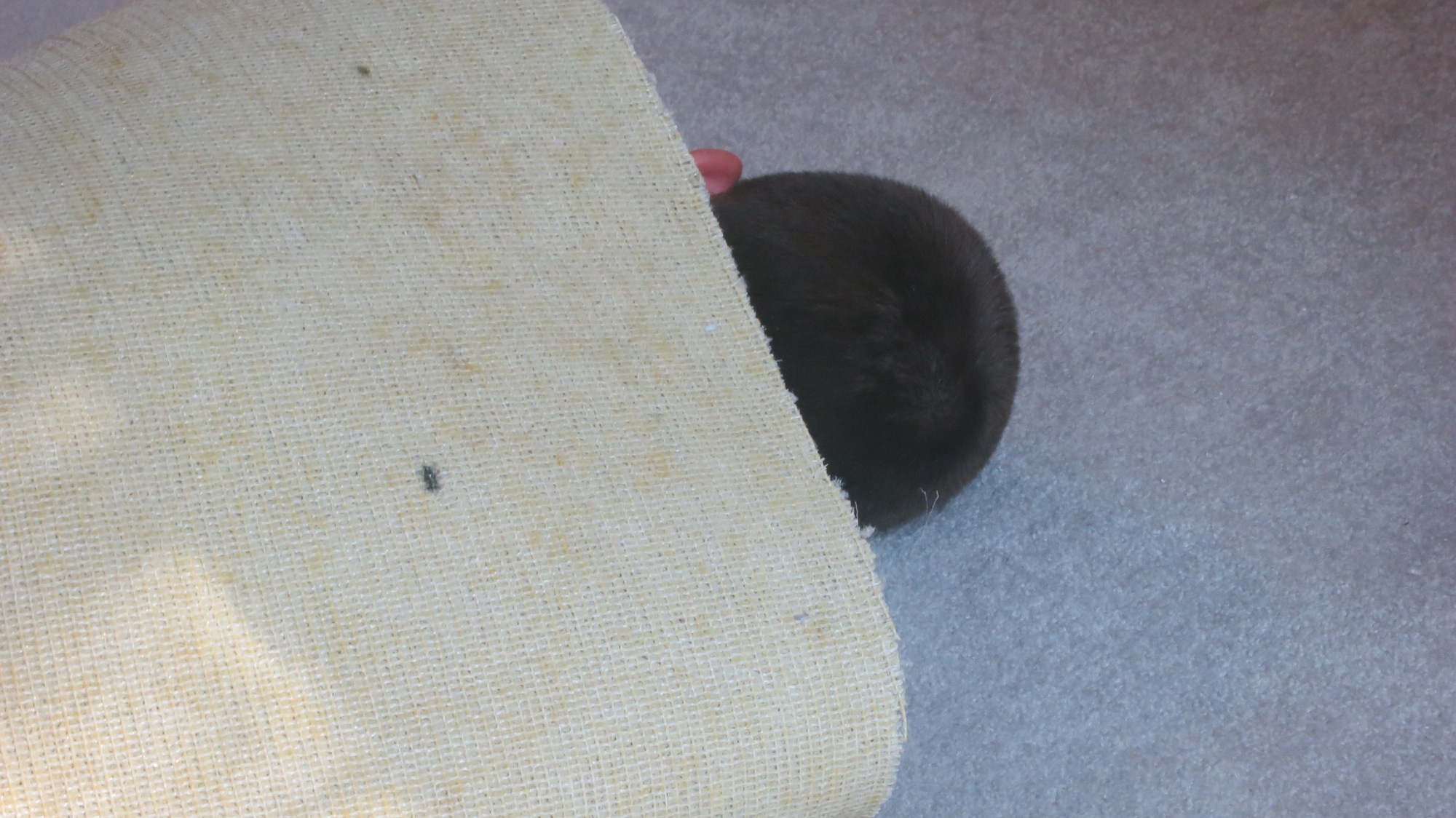
I hung around most of the time, ‘supervising,’ and told them about ‘Kerrian’s Notebook.’ At first, there were surprised looks when I described some of the pages, but after a while they relaxed and had a few laughs. I even got one of the guys to agree to be rolled up in the old rug so that I could take a picture before it was carted off. Honest – the young man is fine and was only inside the rug for five minutes.

Then, the very night that the rug was put in, a TV show aired that had a body in a rug as part of the storyline – “How to Get Away with Murder.” Great cast, fun basic concept so far. I can’t give anything important away, but the rug pops up more than once.

I started thinking about all the times that rugs have been used as a way to hide bodies in the movies and on TV. Kidnappers carry the victims out of their homes, murderers dispose of bodies, terrorists get rid of the targets… it seems to be an easy way to dispose of (or hide or move) the evidence without raising suspicion even in broad daylight. Or at least delay discovery of the crime.

And, the method is perfectly believable, as long as the deed is carried out correctly.

There are physical realities to be dealt with – rugs are heavy and bulky. There’s a reason that carpeting is sliced up into smaller pieces before the crew carries it out to the curb. It’s more manageable then.

After seeing the guys work with the old carpeting in my house, it makes sense that more than one person should carry the body-in-the-rug on TV or in the movies. One guy or gal at either end of the rug and probably one to support the middle. Bodies flop and bend, so somebody needs to hold up the sagging section if a lightweight area rug is being used. And, keep in mind that most adults weigh anywhere from 120 to 220 pounds. No way is anybody except a body builder going to toss a rug and a body over one shoulder. Too bulky. It’s possible for one person to drag a body-in-a-rug to move it within a house, but if any lifting has to be done, the weight will be a factor and that’s where at least a second person is needed.

Years ago, I watched an average sized woman in a made-for-TV movie, roll up her tall, dead husband in a rug, lift and carry that body all by herself out to a car and put it in the trunk. At no time did she have help. I wanted to throw popcorn at the screen.

The funnier episodes have arms slipping out of a less than well-tied edge, or feet sticking out an end as the partners-in-crime carry the bodies out to the waiting vans – in full view of the neighborhood. What? You think that everybody has a big enough piece of rug to hide a body in, right when they need it?

Would you wonder about the neighbors if you saw a rug being carried to the car? Would you start counting family members?


*I promise, no rugs have been used to hide any actual dead bodies during the writing of this post.


*Many thanks to Blake Lee for ‘posing’ inside the rug. He was a great sport!


KN, p. 123 “Is that a body in the rug?” Read More »

KN, p. 225 “Is that poison in your tea?”

If there are no paragraph separations in this article, please double-click on the title to create a more readable version.
Our local TV station provider has one channel dedicated to movies from the late 1940s, 50s and 60s – mostly westerns and mysteries. Last week, a screening of “Arsenic and Old Lace” was in the listing, so we grabbed some snacks and settled in for an evening of murder most nefarious, with a side of laughter.

After discovering a body in his aunts’ house, the sweet little old ladies reveal to their nephew (played by the horrified Cary Grant) that they had spiked their dead guest’s elderberry wine with arsenic, strychnine, and a “just a pinch of cyanide.” And there are more bodies in the cellar.

“Arsenic and Old Lace” was a hit on Broadway in the early 1940s before making it to the big screen, where it became a success as well.

There are several other popular movies that have featured poison as a method of dispatching the victims, but instead of the tried and true ASC (arsenic, strychnine, and cyanide) combo, employ poisonous mushrooms. The victims eat their way to nausea, gastric distress, and death, instead of drinking a ‘lovely’ cup of ‘tea.’

1971’s “The Beguiled” (remake 2017): Confederate soldier takes refuge at a girl’s school, but when he betrays two of the women, he is fed toxic mushrooms.

2017’s “Phantom Thread”: dress designer falls in love with the wrong woman. She makes him toxic mushroom tea, nurses him back to health, and when he doesn’t do what she expects, cooks him a mushroom infused meal. He remains sick enough for her to control him.  

Important dating rule to remember: if your girlfriend cooks for you, always treat her well.

Mushroom poisoning symptoms range from the less severe upset stomach to renal failure and death, which may take days. It all depends on which mushroom is chosen for the deed. Agatha Christie had her favorite chemical poisons in her books and selected them according to whether or not the poison was readily available to the criminal and how much time was needed for the bad guy to get away. Read “What poisons were in Agatha Christie’s books?” here.

All poisonous mushrooms cause vomiting and abdominal pain. Testing and experience has shown that mushrooms causing symptoms within two hours are less dangerous than those that cause symptoms after six hours.

Other movies with poisons in the forefront:

In 1949’s “D.O.A.” (remake 1988): a man, lethally poisoned, rushes around trying to find out who poisoned him and why.


“The Young Poisoner’s Handbook” (1995) was based on a real case. TheTeacup Murderer kills two of his co-workers by poisoning their tea with thallium, a highly toxic ingredient used at the camera factory where he works. He continues to select and at least sicken targeted people until new cups are put in place, confusing his plan.

I mentioned “White Oleander,” a movie from 2002, in Kerrian’s Notebook, Volume 2: Fun, Facts and a Few Dead Bodies. Oleanders grow all over the southern United States, so it’s a really good idea to stay on great terms with that neighbor with the oleander hedges. Don’t bug her about returning the weed whacker. Seriously.


Photo credits: taken by Patti Phillips in Cameron, NC.


KN, p. 225 “Is that poison in your tea?” Read More »

KN, p. 182 “Deadly Poisons in the Animal Kingdom”

If there are no paragraph separations in this article, please double-click on the title to create a more readable version.

Have you ever been bitten by an insect? How about a snake? Or a frog? Or a snail? I’ll take a fire ant bite over the bites of some of the animals in this article any day.

I would bet that most of you have endured the after effects of a mosquito bite – the itchiness, the redness, the swelling, but rarely does anyone die from it. There are nasty diseases that a mosquito can carry – i.e., Malaria and the Zika virus – but the everyday, backyard variety generally just delivers an annoying couple of days of discomfort. We can’t tell the difference by just looking at them as they dive at us, so we use insect repellent to ward them off. There are couple of great products that golfers use to keep pesky gnats, horse flies, and skeeters away, but, there is no magic spray that works to chase away the deadliest animals that co-exist with us on the planet. We have to rely on treatment after the fact, or the best idea of all: avoidance.

Here are ten of the worst:

Some animals have developed neurotoxins to dispatch their victims. The worst spider in the world is found in Australia – just in Sydney, to be exact. The Sydney Funnel Web Spider can kill a human or a monkey within 15 minutes. Apparently, no other animal is susceptible to the poison. There is an anti-venom, but you’d have to be really close to the hospital to get treated in time.

The South African Spitting Scorpion uses three neurotoxins to protect itself – one to stun, one to paralyze and one to kill. It spits the lightest dose when chasing the victim away, but it only needs a billionth of a gram of the deadly dose to kill a small animal. Death is not pleasant, with tremors and convulsions that go on even after death.

The Lonomia Caterpillar is responsible for over 500 deaths in the past twenty years and kills by causing hemorrhaging near the site of the bite. The victim’s blood no longer clots and this condition spreads as the body tries to cope. Scientists don’t yet know the composition of all the toxins involved.

Unlike other poisonous animals, the Poison Dart Frog creates its toxin from its diet. Scientists have discovered that in captivity, the frog is rendered harmless by changing its diet. That means that even if the frogs in my photo above had escaped, they would have hopped around, doing no damage to me at all if they had touched me. Good thing, because one little wild frog from Central or South America has enough toxin to kill about ten fully adult humans. Hop, hop, hopping about, enticing us to touch its pretty skin, doing its worst by causing heart attacks.

The famed Puffer Fish carries a neurotoxin that is 100 times deadlier than potassium cyanide. What may not as widely known is that same toxin can zap you if you touch certain varieties of sea snails as well as the blue ringed octopus, a small but nasty bit of sea life. Contact with one of these unfriendly sorts can cause blindness, paralysis, and/or death. And while the Marbled Cone Snail may be gorgeous to look at, there is no known antidote for a strong enough dose of its venom. I’ve never been a strong ocean swimmer, but when I stick my toe in a wave at the shore, I expect to be alive afterward, pretty sea snails or not. Maybe I’ll forgo the next snorkeling trip.  😉

http://listverse.com/2012/12/26/10-animal-poisons-with-amazingly-specific-purposes/

The Inland Taipan is among the deadliest snakes on Earth. Anybody that gets bitten by one of these can die within 45 minutes. It’s an Australian snake and there is anti-venom for the bite, but I wouldn’t want to count on getting back to civilization in time to get the treatment. If I was a snake handler Down Under or if I lived in the Outback, I’d think seriously about keeping a vial of the remedy on hand.

The King Cobra can strike fear into the heart of anyone that gets within spitting distance. Just a 1/4 ounce of its venom (about 7 ml) can kill a full grown elephant within minutes. To put that into perspective – about twenty grown men could die from that same 1/4 ounce dose. The good news is that unless you’re traveling to India or China, or the local zoo lets one escape, you’re safe.

Several varieties of Jellyfish can deliver stings that cause a great deal of pain and sometimes death. They are physically brainless, but their make-up is all about survival. Tentacles can be anywhere from less than an inch (the translucent Irukandji) up to ten feet long (the Portuguese Man O War). They are found in oceans all over the world, can be almost invisible or quite colorful (the Sea Nettle found near the Chesapeake Bay in the USA). My advice? If you see one, swim away as fast as you can.

http://www.conservationinstitute.org/7-deadliest-poisonous-jellyfish-world/

If you’re using the information in a book you’re writing, choose your poison source carefully. Somebody has to gather that poison before it can be injected or mixed with food. Will it be the villain or someone she/he hires?  There are medical uses for some of the neurotoxins – those can be purchased legally with the proper credentials. On the other hand, snake venom is not easy to collect, and somebody might actually have to catch the snake first.  Snake bags anyone?

Do you have a favorite villain in literature that has used a rare animal-based poison to do his/her evil work? Please share in the comments below.  🙂


*Photo credits:

Poison Dart Frog & Jellyfish – Patti Phillips

Puffer Fish – ListVerse


Save

Save

Save

Save

Save

Save

Save

Save

KN, p. 182 “Deadly Poisons in the Animal Kingdom” Read More »

Scroll to Top