murder

KN, p. 191 “Is he/she a serial killer?”

If there are no paragraph separations in this article, please double-click on the title to create a more readable version.

Warning: Some content may be too intense for some readers.

In 2005, the FBI conducted a symposium in Texas for law enforcement officers and defined serial murders in this way: “The unlawful killing of two or more victims by the same offender(s), in separate events.”

As terrifying and brutal as these events are, the FBI reports that serial murders occur in less than one percent of all murders committed in any given year.

That doesn’t mean that law enforcement treats serial murders any less seriously, just that most cops will never encounter that kind of case. When they do, the hardest part of the investigation might be recognizing that two or three murders committed across several counties could be linked in some way. Different personnel spread through different jurisdictions might not see all the facts in evidence and never see the connections, hence the reason that some serial killers are never caught.

Although not every point is true for all serial killers, there seems to be a common thread in the backgrounds of most, starting in their childhoods. Here are a few of the behaviors that appear to tie the Serial Killer category together.

  • Childhood abuse and/or neglect
  • Lousy grades in school or poor work performance, despite a high IQ
  • Damage to the brain’s frontal lobe – childhood head injuries
  • Bedwetting
  • Arson
  • Animal Torture

As possible suspects are investigated, and/or eliminated, more weight is given to those on the list who have those behaviors somewhere in their history.

Serial killers like Ted Bundy, Jeffrey Dahmer, and John Gacey all had above average intelligence, as evidenced by their ability to commit multiple crimes and evade capture (and even detection) for so many years. But Dr. Katherine Ramsland, Forensic Psychologist, maintains that even the smart ones can do dumb things.

“…serial killers range from Ivy League caliber to downright moronic. Self-defeating habits or failure to plan wisely have brought many down. It’s not all about IQ. Even smart ones can be idiots at just the wrong time.”

Examples:

  • Ted Bundy drove erratically in a stolen car.
  • Randy Kraft had a dead body in his passenger seat when the highway patrol stopped him for suspected drunk driving.
  • Joel Rifkin was also “transporting,” but without a license plate.

As Dr. Ramsland said, “You’d think if you had a corpse with you, you’d at least try to be inconspicuous.”

https://www.psychologytoday.com/blog/shadow-boxing/201612/stupid-stuff-stopped-serial-killer

Dr. DP Lyle, cardiologist, forensic expert, and crime writer, interviewed Dr. Ramsland on his Writers Forensics blog, discussing the various descriptions of serial killers being used today.

Dr. Ramsland said, “The behaviors that stand out for budding psychopaths who are the most apt to become violent involve unmotivated deception, tendency to blame others, callous disregard, and ADHD – a combination of them all. Such children will tend to manipulation, deflect responsibility, damage property, steal, do poorly in activities that require sustained discipline and focus, and play cruel pranks. They will also exercise their need for control on others who are weaker, including animals, and this could involve experiments, mutilation and killing.”


https://writersforensicsblog.wordpress.com/2009/06/25/forensic-psychologist-dr-katherine-ramsland-talks-about-serial-killers/


Some serial killers are angry for imagined (or real) slights and seek revenge against those who were “mean” to them.


https://www.psychologytoday.com/blog/shadow-boxing/201611/power-assertive-murder

For more information about the criminal mind, Dr. Ramsland is the author of dozens of books and articles on the subject. One of her titles, “Confessions of a Serial Killer,” is the untold story of Dennis Bader, the BTK killer. Scary stuff.

The average person is unlikely to interact with a serial killer, but many law enforcement officers or profilers get specific training in order to keep it that way – to keep the community safe from predators. It has been found that not all serial killers work alone, and a good percentage (around 15%) are women.

How do you keep from becoming a victim?

  • Don’t go out with people you don’t know.
  • Don’t get into cars with people you don’t know.
  • Don’t go shopping at night by yourself.
  • Park your car in well-lit areas and lock it.
  • If your car has a flat tire in a grocery store parking lot, go back into the store to get help. Don’t accept assistance from a stranger who just happens to be near your car.
  • Become familiar with self-defense techniques. Take a class to become proficient.

Use common sense, be extra aware when alone, and stay safe!


*Photo credit: Ted Bundy – Wikipedia


Save

Save

Save

Save

KN, p. 191 “Is he/she a serial killer?” Read More »

KN, p. 142 “CSI Techs – What is that smell?”


Last week’s article about what Crime Scene Techs really do can be read here.

Warning: parts of this article are extremely descriptive about the work of a CSI at a murder scene.

A Crime Scene Investigator (also known as an Evidence Recovery Technician) is a forensic specialist. A well-trained, experienced CSI tech has an organized plan of action when processing a crime scene. Most go through extensive training, if not in the classroom, then in the field while working with seasoned law enforcement officers, before being allowed to work solo. They study how to recognize evidence, how to document the process and the proper way to prioritize, recover, handle, and package that evidence at the crime scene.


Challenges

Some of the TV shows and movies touch on the challenges in the job of a CSI, but generally the scriptwriters try not to gross out the viewing audience.

Occasionally, the collection of the evidence requires a strong stomach. If the CSI works a homicide or accidental death scene, they will likely be dealing with strong odors.  Although air/water temperature may affect the rate of decomposition, a dead body begins to stink fairly quickly. Think rotting meat. CSIs have various ways of dealing with the odors. Some apply Vicks under their noses, some use medical masks, but some just get used to it.

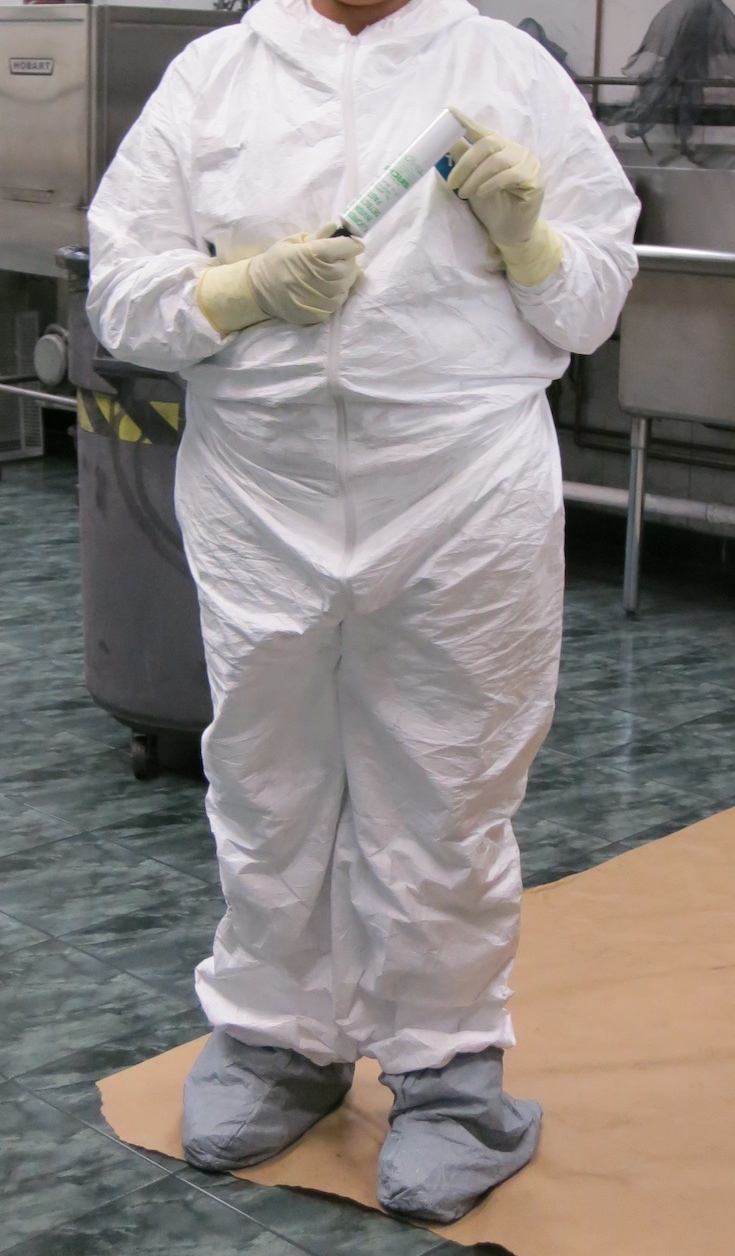
In case you were wondering:  A former CSI told me that the Tyvek suits we see at crime scenes during British TV shows, work very well to keep unwanted fibers and DNA samples away from the scene, but do not block the odors at all.


Sometimes, bodies are dumped in the water, and that affects the rate of decay. The condition of the body recovered from water is a surprise to most law enforcement officers the first time they see it. Unless recovered within the first day or so, the skin and muscle begin to change at such a rate as to become almost unrecognizable for what they are. Special bags are needed to contain the remains while bodies are removed from lakes or ponds. The bags have holes in the sides to allow the water to escape, without losing the body parts.

The condition of a body recovered in the heat can be a challenge on several levels. The body swells up and can pop if not handled correctly. In ‘cold cases,’ where the body has been sitting outside for months, perhaps only the skeleton will remain, requiring identification through dental records or bits of clothing still attached to the bones.


Homicide and some accident scenes can be bloody. It’s fair to say that most law enforcement personnel are deeply affected by the surprising amount of blood found at a murder scene or a particularly horrific accident scene. It’s tough to get used to that part of the job, however much experience you’ve had. But, it’s important to stay detached while collecting the evidence, taking the blood spatter photographs, and detailing the information, so that the victims can be represented properly in court.

On rare occasion, gloves and protective clothing that a CSI wears can rip or tear, exposing the CSI to possible infection or disease.


Stress and even grief can be factors that might affect the CSIs or ERTs. Working on fraudulent documents or stolen property is worlds away from dealing with dead bodies. Some larger departments offer (and even require) grief/stress counseling after emotionally tough cases, but the smaller departments just don’t have the resources for that. Imagine waking up night after night, reliving a crime scene in nightmares. In cases involving multiple deaths or children, the stress level can be especially high.


Rewards

So, with all the possible negatives/challenges in the job of a CSI, why would anybody do it?

Because of the result. A job well done helps to put the bad guys away.


Training

The job of a CSI changes based on geographic location and the needs of the department. Some towns have no budget for a full-time CSI and hand off cases requiring special evidence collection to County or State personnel. In general, big cities have more homicides and other crimes, so require full-time CSIs.  In small towns, the Police Chief or Police Officer might do the investigating, collection and analysis of the evidence.

With those factors in mind, training requirements vary from region to region and from decade to decade. Some departments require college degrees (i.e. Criminal Justice or Forensics) for their law enforcement personnel, with the understanding that specialized training (i.e. photography, computers, etc) might be required as cases come up.

Then after getting hired, the CSI tech will spend some time as an apprentice to a more experienced person – think the ‘probies’ on NCIS, the TV show.

One realistic test to see if possible candidates are really suited to the job of CSI at a murder or accident scene is to have them visit a morgue or an ER. If they get through a busy, bloody night at an ER, they might be able to work in Homicide.

If not, I’m told that there is lots of work in Forensic Accounting and CyberCrimes for CSIs, that does not involve blood or body parts.


*Photos by Patti Phillips


KN, p. 142 “CSI Techs – What is that smell?” Read More »

KN, p. 206 “Top Ten Fan Favorites – 2017”


Krav Maga class, Wichita Falls, Texas

More than ever, it seems as if readers and professional writers that follow the Notebook most enjoy learning about the nuts and bolts of crime as well as the crime fighters that take care of the bad guys. It was fun to see that two of our (always taste-tested) recipes made the list this year as well.

Here are the Top Ten Fan Favorites for 2017, listed in reverse order. Click on the links to re-read the articles (or enjoy them for the first time) and let us know in the comments whether your faves made the list.  Happy sleuthing, one and all.  🙂

10. “Sheila’s Chick Pea Dip” https://bit.ly/2k1v4lf created originally for last year’s Super Bowl party, it has become our family favorite as well as for many of you.

9. “The Blue Flu” https://pattiphillipsbooks.com/kerriansnotebook/vrnj my own bout with the flu caused me to write this one. The research behind this historically accurate piece was fascinating.

8. “An Garda, Irish National Police” https://bit.ly/2mhg6WL After the wildly successful series of articles about the Texas Rangers, it seemed that Kerrian followers wanted more information about law enforcement groups, even in other countries.

7. “Bodies on the Golf Course” https://bit.ly/2prGhKX  I keep saying that golf courses are lousy places to hide bodies, but the bad guys aren’t listening. 😉

6. “Training for An Garda, Irish National Police” https://bit.ly/2mLqAzz Rigorous and getting more so as the competition for a limited number of spots increases.

5. “Kerrian’s Mac & Cheese” https://bit.ly/2kXv0Vg Yummy. We guarantee it. Made and enjoyed by numerous followers.

4. “Is he/she a serial killer?” https://bit.ly/2lhXE1P I kept alllll the lights on while doing the research for this one.

3. “Deadly poisons in the house.” https://bit.ly/2l6cHZH Inspired by an accidental combining of cleaning products.

2. “Krav Maga, self-defense for the real world.” https://bit.ly/2wFwOnT A real-world way for people of all shapes, sizes, and ages to defend themselves.

And the most read new post of 2017?

1.   “200 ways to die an unnatural death.” https://bit.ly/2jmDIeE


Take a look at “Kerrian’s Notebook, Volume 2: Fun, facts, and a few dead bodies,” Download to your e-reader and enjoy!  🙂


Happy New Year, everyone!


KN, p. 206 “Top Ten Fan Favorites – 2017” Read More »

Scroll to Top